



AD
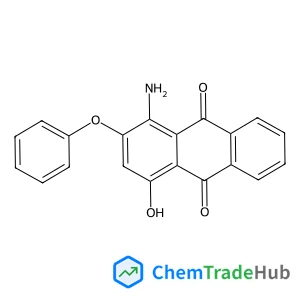
1-Amino-4-hydroxy-2-phenoxy-9,10-anthraquinone(CAS: 17418-58-5)
CAS Number
Related Products
![Cobalt(2+) sodium 2-[({3-[(2Z)-2-{1-[(2-chlorophenyl)carboximidato]-2-oxopropylidene}hydrazino]-4-oxidophenyl}sulfonyl)amino]benzoate (1:4:2)](https://static.chemtradehub.com/structs/716/71603-79-7-73e8.webp)
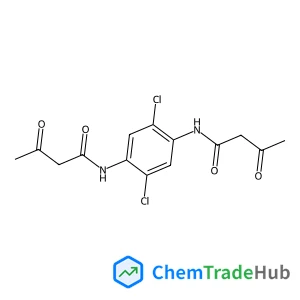
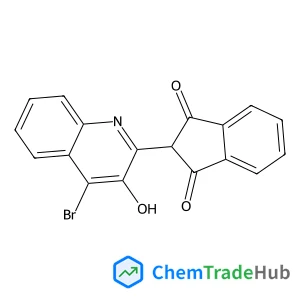
C.I. Acid Brown 283
CAS Number: 12219-66-8
C.I. Acid Black 168
CAS Number: 12238-87-8
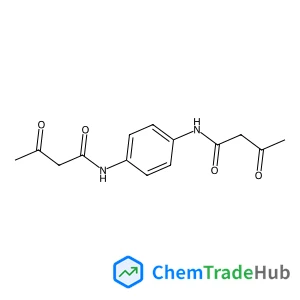
N,N'-1,4-Phenylenebis(3-oxobutanamide)
CAS Number: 24731-73-5
Acid Red 308
CAS Number: 12220-36-9
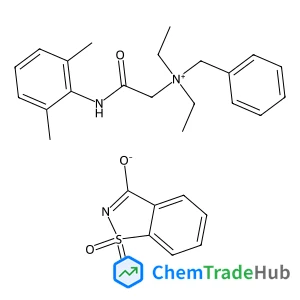
Denatonium saccharide
CAS Number: 61724-46-7
![[1-(2-Diphenylphosphanyl-5,6,7,8-tetrahydronaphthalen-1-yl)-5,6,7,8-tetrahydronaphthalen-2-yl]-diphenylphosphane](https://static.chemtradehub.com/structs/617/61724-04-7-70c6.webp)
Other Suppliers for 1-Amino-4-hydroxy-2-phenoxy-9,10-anthraquinone



Basic Information
Molecular Formula
C20H13NO4
Molecular Weight
331.33 g/mol
Physical Properties
Melting Point
185ºC
Boiling Point
570.3°C at 760 mmHg
Chemical Identifiers
SMILES
O=C1C2=C(C=CC=C2)C(C3=C(O)C=C(OC4=CC=CC=C4)C(N)=C13)=O
InChIKey
MHXFWEJMQVIWDH-UHFFFAOYSA-N
Database References
MDL Number
MFCD00071826
FAQ
1-Amino-4-hydroxy-2-phenoxy-9,10-anthraquinone is a crystalline solid with a molecular weight of approximately 340.25 g/mol. It is slightly soluble in water and has a pKa of around 9.5. The compound is reactive towards nucleophiles and can undergo substitution reactions. It also exhibits strong absorption in the UV-Vis region, which is characteristic of anthraquinone derivatives.
1-Amino-4-hydroxy-2-phenoxy-9,10-anthraquinone is usually synthesized via the oxidation of phenoxyanthraquinone followed by nucleophilic substitution at the amino position. Common methods include use of nitric acid and sodium nitrite for the oxidation step, and sodium hydroxide for the subsequent reaction. The yield is generally around 70-80%, with good selectivity towards the desired product.
1-Amino-4-hydroxy-2-phenoxy-9,10-anthraquinone is utilized in the pharmaceutical industry for the synthesis of intermediates and dyes, in polymer production as a UV absorber, and in the manufacturing of sensors due to its photochemical properties. It is also applied in the semiconductor industry for certain photolithography processes.
When handling 1-Amino-4-hydroxy-2-phenoxy-9,10-anthraquinone, it is essential to use appropriate personal protective equipment (PPE), including gloves, goggles, and a lab coat. Work should be conducted in a well-ventilated area or fume hood. Spills should be carefully cleaned up using appropriate absorbent materials, and the area should be rinsed with water. Always consult the Safety Data Sheet (SDS) for detailed emergency procedures and handling guidelines.
Safety Notice
Please verify product specifications and safety data before use. Contact the supplier for detailed safety information.
Always follow proper handling procedures