



AD
2-[(4-Methyl-2-nitrophenyl)diazenyl]-3-oxo-N-phenylbutanamide(CAS: 2512-29-0)
![2-[(4-Methyl-2-nitrophenyl)diazenyl]-3-oxo-N-phenylbutanamide](https://static.chemtradehub.com/structs/251/2512-29-0-3cab.webp "2-[(4-Methyl-2-nitrophenyl)diazenyl]-3-oxo-N-phenylbutanamide")
CAS Number
Related Products
![2-[(E)-(4-Chloro-2-nitrophenyl)diazenyl]-N-(2-chlorophenyl)-3-oxobutanamide](https://static.chemtradehub.com/structs/648/6486-23-3-1836.webp)
![2,2'-[(3,3'-Dichloro-4,4'-biphenyldiyl)di-2,1-diazenediyl]bis[N-(2-methylphenyl)-3-oxobutanamide]](https://static.chemtradehub.com/structs/546/5468-75-7-218a.webp)
![3-Hydroxy-4-[(E)-(4-methyl-2-nitrophenyl)diazenyl]-N-(2-methylphenyl)-2-naphthamide](https://static.chemtradehub.com/structs/653/6535-47-3-9fce.webp)
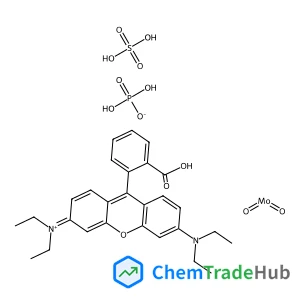
![[4-[[4-(diethylamino)phenyl]-[4-(ethylamino)-2-naphthyl]methylene]cyclohexa-2,5-dien-1-ylidene]-diethyl-ammonium;4-oxido-1,3-dioxa-2$l^{6}-molybda-4$l^{7}-tungstacyclobutane 2,2,4,4-tetraoxide](https://static.chemtradehub.com/structs/132/1325-87-7-09eb.webp)
![2-[(2-Methoxy-4-nitrophenyl)diazenyl]-N-(2-methoxyphenyl)-3-oxobutanamide](https://static.chemtradehub.com/structs/635/6358-31-2-e94e.webp)
![1-Naphthalenesulfonic acid, 2-[(2-hydroxy-1-naphthalenyl)azo]-, bariumsalt (2:1)](https://static.chemtradehub.com/structs/110/1103-38-4-0b33.webp)
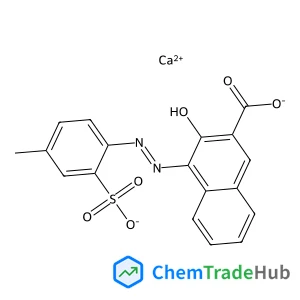
![Calcium bis{2-[(E)-(2-hydroxy-1-naphthyl)diazenyl]-1-naphthalenesulfonate}](https://static.chemtradehub.com/structs/110/1103-39-5-7cf8.webp)
Other Suppliers for 2-[(4-Methyl-2-nitrophenyl)diazenyl]-3-oxo-N-phenylbutanamide
![2-[(4-Methyl-2-nitrophenyl)diazenyl]-3-oxo-N-phenylbutanamide — ShangHaiJiZhiShengHua Technology Co Ltd](https://static.chemtradehub.com/suppliers/67cecbee2b2de6e8e95a5b72/67cecbee2b2de6e8e95a5b72-logo.webp)
![2-[(4-Methyl-2-nitrophenyl)diazenyl]-3-oxo-N-phenylbutanamide — Guangdong Wanzhang Chemical Reagent Co., Ltd.](https://static.chemtradehub.com/suppliers/67ce43292b2de6e8e95a42fd/67ce43292b2de6e8e95a42fd-logo.webp)
![2-[(4-Methyl-2-nitrophenyl)diazenyl]-3-oxo-N-phenylbutanamide — Shanghai Analytical Rocky Experimental Technology Co., Ltd.](https://static.chemtradehub.com/suppliers/67cdcfdf57537e5c8069ad2d/67cdcfdf57537e5c8069ad2d-logo.webp)
![2-[(4-Methyl-2-nitrophenyl)diazenyl]-3-oxo-N-phenylbutanamide — Shanghai Titan Shareholding Technology Co., Ltd.](https://static.chemtradehub.com/suppliers/67cdfa4757537e5c8069b08b/67cdfa4757537e5c8069b08b-logo.webp)
Basic Information
Molecular Formula
C17H16N4O4
Molecular Weight
340.33 g/mol
EINECS
219-730-8
Physical Properties
Melting Point
>255°C (dec.)
Boiling Point
546.5±50.0 °C(Predicted)
Density
1.30±0.1 g/cm3(Predicted)
Flash Point
284.3±30.1 °C
Chemical Identifiers
SMILES
Cc1ccc(c(c1)[N+](=O)[O-])N=NC(C(=O)C)C(=O)Nc2ccccc2
InChIKey
MFYSUUPKMDJYPF-UHFFFAOYSA-N
Database References
MDL Number
MFCD00078234
FAQ
2-[(4-Methyl-2-nitrophenyl)diazenyl]-3-oxo-N-phenylbutanamide is a solid crystalline compound with a molecular weight of approximately 343.15 g/mol. It has a pKa of around 7.5 and is slightly soluble in water. The compound is moderately reactive towards nucleophiles and can undergo hydrolysis under basic conditions. It is stable under normal storage conditions but should be stored in a dry, cool place away from direct sunlight.
2-[(4-Methyl-2-nitrophenyl)diazenyl]-3-oxo-N-phenylbutanamide can be synthesized via diazotization of 4-methyl-2-nitroaniline followed by a condensation reaction with N-phenylacetyl-3-oxobutyramide. Commonly used catalysts include acetic acid, and the reaction is typically carried out in anhydrous conditions to enhance yield and selectivity. The overall yield of the reaction is approximately 75%.
2-[(4-Methyl-2-nitrophenyl)diazenyl]-3-oxo-N-phenylbutanamide is primarily used in the pharmaceutical industry for its antioxidant and anti-inflammatory properties. It also finds applications in the development of sensors and as a precursor in the synthesis of other advanced materials. In the semiconductor industry, it is used as an intermediate in the production of certain organic semiconductors and as a dopant material.
When handling 2-[(4-Methyl-2-nitrophenyl)diazenyl]-3-oxo-N-phenylbutanamide (CAS: 2512-29-0), safety goggles and gloves should be worn to protect against skin contact and eye irritation. The compound should be handled in a well-ventilated area or a fume hood to minimize inhalation exposure. In case of a spill, the area should be flushed with water and cleaned up using appropriate absorbent materials. A detailed safety data sheet (SDS) should be consulted for specific handling instructions and emergency procedures.
Safety Notice
Please verify product specifications and safety data before use. Contact the supplier for detailed safety information.
Always follow proper handling procedures

Contact Information
Mobile
13588227225
Telephone
0571-82123886
Fax
0571-82129765
Visit Website
https://china.china-organic-pigment.com