



AD
8-Chloroisoquinoline(CAS: 34784-07-1)
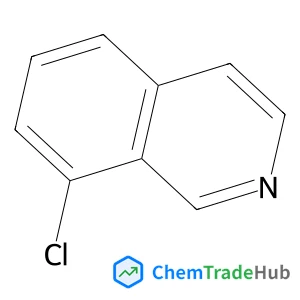
CAS Number
Related Products
![4-[3-(3-Bromophenyl)propyl]morpholine](https://static.chemtradehub.com/structs/113/1133116-11-6-7242.webp)
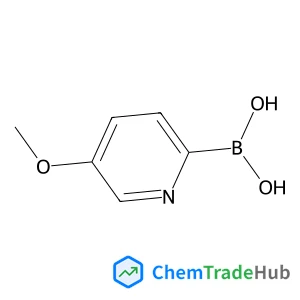
(5-Methoxy-2-pyridinyl)boronic acid
CAS Number: 1142944-78-2
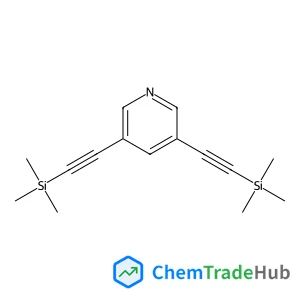
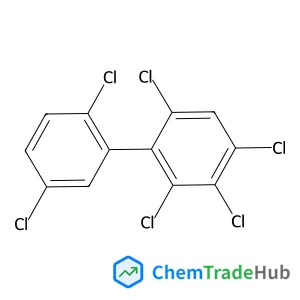
2,2',3,4,5',6-Hexachlorobiphenyl
CAS Number: 68194-14-9
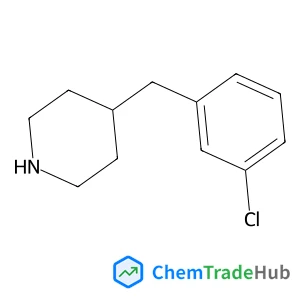
4-(3-Chlorobenzyl)piperidine
CAS Number: 251107-31-0
![4'-Bromo-[1,1'-biphenyl]-2,4-diol](https://static.chemtradehub.com/structs/141/1418117-89-1-a5a3.webp)
4'-Bromo-[1,1'-biphenyl]-2,4-diol
CAS Number: 1418117-89-1
Other Suppliers for 8-Chloroisoquinoline





Basic Information
Molecular Formula
C9H6ClN
Molecular Weight
163.61 g/mol
Physical Properties
Boiling Point
289.5°C at 760 mmHg
Density
1.27
Flash Point
156.4°C
Chemical Identifiers
SMILES
C1=CC2=C(C=NC=C2)C(=C1)Cl
InChIKey
OXAMVYYZTULFIB-UHFFFAOYSA-N
Database References
MDL Number
MFCD07644622
FAQ
8-Chloroisoquinoline (CAS: 34784-07-1) falls under the classification of hazardous chemicals under the Globally Harmonized System of Classification and Labeling of Chemicals (GHS). It is subject to REACH regulations in the European Union, requiring manufacturers and importers to register substances with the European Chemicals Agency. In the United States, the Environmental Protection Agency (EPA) and the Food and Drug Administration (FDA) have specific regulations for the handling, storage, and disposal of this compound. Compliance with these guidelines is essential for safety and legal compliance.
While 8-Chloroisoquinoline (CAS: 34784-07-1) is a useful intermediate in organic synthesis, alternatives include other isoquinolines such as 8-aminooxazoloisoquinoline and 8-aminoperhydroisoquinoline. Common reagents for its synthesis include chlorinating agents like thionyl chloride or phosphorus oxychloride. These alternatives can offer similar functional group transformations but with varying degrees of reactivity and selectivity.
The market for 8-Chloroisoquinoline (CAS: 34784-07-1) is driven by its applications in pharmaceuticals, agrochemicals, and research. Recent trends show an increasing demand for this compound due to its role as an intermediate in the synthesis of various bioactive molecules. Research is also exploring its use in new drug development and as a starting material for organic synthesis. The market is expected to grow with ongoing innovation in these fields.
Waste containing 8-Chloroisoquinoline (CAS: 34784-07-1) should be collected in appropriate containers, ensuring they are sealed to prevent spillage. The waste should then be safely transported to a professional waste disposal facility. Incineration is a common method of disposal, but it must be conducted in compliance with local environmental regulations. For environmental protection, it is crucial to follow safety guidelines and ensure minimal environmental impact during the disposal process.
Safety Notice
Please verify product specifications and safety data before use. Contact the supplier for detailed safety information.
Always follow proper handling procedures

Contact Information
2355265332@qq.com
Mobile
13311756052
Telephone
021-60526763 13311756052 13311756131
Visit Website
http://www.shyijisy.com/