



AD
2,6-Dimethyl-L-tyrosine(CAS: 123715-02-6)
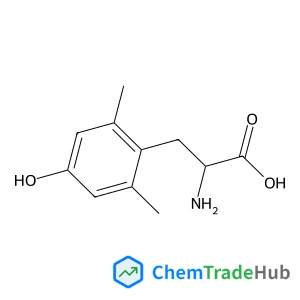
CAS Number
Related Products
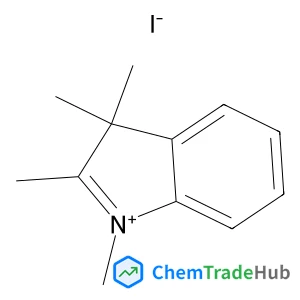
1,2,3,3-Tetramethyl-3H-indolium iodide
CAS Number: 5418-63-3
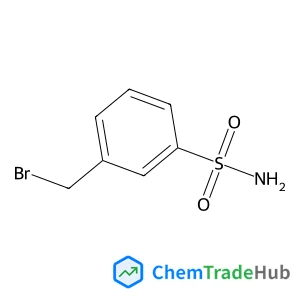
3-(Bromomethyl)benzenesulfonamide
CAS Number: 220798-52-7
![3,3'-(1,1,1,3,3,3-Hexafluoro-2,2-propanediyl)bis[6-(allyloxy)aniline]](https://static.chemtradehub.com/structs/257/2573217-07-7-f3dd.webp)
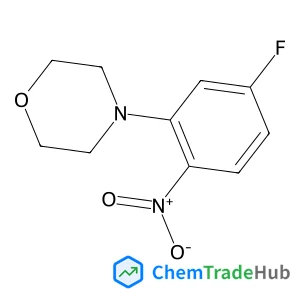
4-(5-Fluoro-2-nitrophenyl)morpholine
CAS Number: 536977-34-1
Other Suppliers for 2,6-Dimethyl-L-tyrosine







Basic Information
Molecular Formula
C11H15NO3
Molecular Weight
209.24 g/mol
Physical State
Yellow to Brown Solid
Physical Properties
Melting Point
Not available
Boiling Point
412.8 °C at 760 mmHg
Density
1.242
Flash Point
203.4 °C
Chemical Identifiers
SMILES
CC1=CC(=CC(=C1CC(C(=O)O)N)C)O
InChIKey
LSNDLIKCFHLFKO-JTQLQIEISA-N
Database References
MDL Number
MFCD06659984
FAQ
2,6-Dimethyl-L-tyrosine (CAS: 123715-02-6) must comply with various regulatory guidelines, including GHS for hazardous communication, REACH for European Union registration, evaluation, authorization, and restriction of chemicals, and FDA and EPA requirements for safety and environmental impact assessments. It is essential to follow local and international regulations for handling, storage, and disposal to ensure safety and compliance.
There are several alternatives to 2,6-Dimethyl-L-tyrosine in synthesis, such as 2,4-Dimethyl-L-tyrosine and 3,6-Dimethyl-L-tyrosine. Other common reagents used in similar reactions include L-tyrosine and its derivatives. These alternatives may offer different reactivity profiles and may be more suitable based on specific experimental conditions and objectives.
The market for 2,6-Dimethyl-L-tyrosine is growing due to its applications in pharmaceuticals, cosmetics, and food additives. Research trends focus on its potential as an antioxidant and its use in personalized nutrition. Additionally, there is increasing interest in its role as a tyrosine-based precursor in biotechnology and its potential as a bioactive compound.
Waste containing 2,6-Dimethyl-L-tyrosine should be stored in sealed containers and disposed of according to local regulations. Incineration or professional waste disposal services are recommended for environmentally safe disposal. Proper precautions should be taken to prevent environmental contamination, and waste should be treated to minimize the risk of leaching and groundwater contamination.
Safety Notice
Please verify product specifications and safety data before use. Contact the supplier for detailed safety information.
Always follow proper handling procedures
Contact Information
Contact Person
Zhang Manager
angela@labgogo.com