



AD
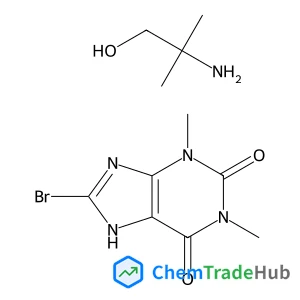
8-Bromo-1,3-dimethyl-3,7-dihydro-1H-purine-2,6-dione - 2-amino-2-methyl-1-propanol (1:1)(CAS: 606-04-2)
CAS Number
Related Products
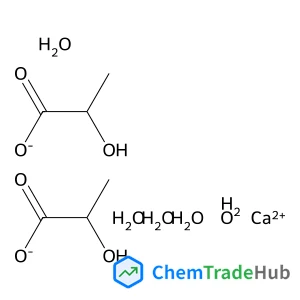
Calcium Lactate Pentahydrate
CAS Number: 5743-47-5
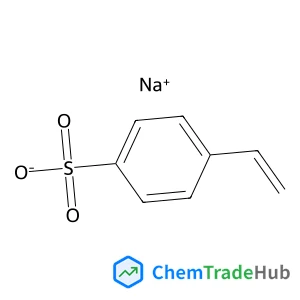
Sodium 4-vinylbenzenesulfonate
CAS Number: 2695-37-6
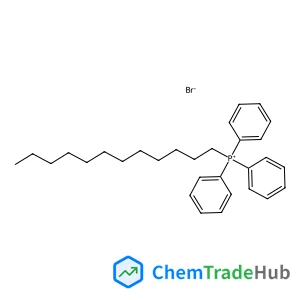
Dodecyl(triphenyl)phosphonium bromide
CAS Number: 15510-55-1
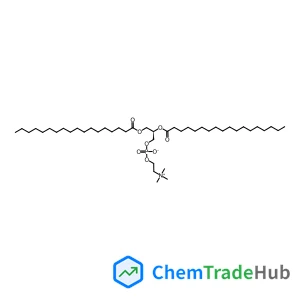
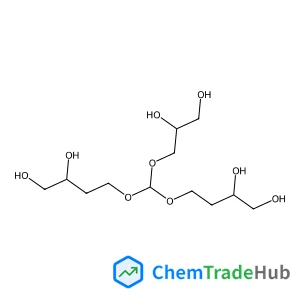
Poly(Propylene Glycol)
CAS Number: 25791-96-2
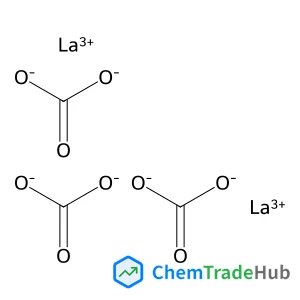
LANTHANUM CARBONATE
CAS Number: 587-26-8

Copper(1+) chloride
CAS Number: 1344-67-8
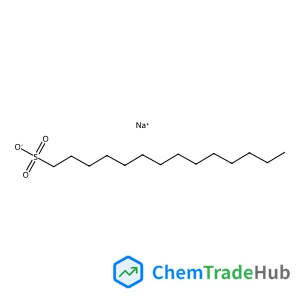
Sodium 1-tetradecanesulfonate
CAS Number: 6994-45-2
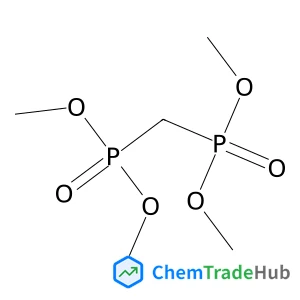
Tetramethyl methylenebis(phosphonate)
CAS Number: 16001-93-7
Other Suppliers for 8-Bromo-1,3-dimethyl-3,7-dihydro-1H-purine-2,6-dione - 2-amino-2-methyl-1-propanol (1:1)




Basic Information
Molecular Formula
C11H18BrN5O3
Molecular Weight
348.2 g/mol
Physical Properties
Melting Point
295°C(dec.)(lit.)
Boiling Point
469.5°C at 760 mmHg
Flash Point
237.7 °C
Chemical Identifiers
SMILES
CC(C)(CO)N.CN1C2=C(C(=O)N(C1=O)C)NC(=N2)Br
InChIKey
ATOTUUBRFJHZQG-UHFFFAOYSA-N
Database References
MDL Number
MFCD00867328
FAQ
The compound has a crystalline form with a molecular weight of approximately 352.05 g/mol. It is slightly soluble in water and other polar solvents. Chemically, it is reactive towards nucleophiles and can undergo substitution reactions. The compound is stable under normal conditions but should be stored away from strong acids and bases.
The compound is synthesized via a condensation reaction between 8-bromo-1,3-dimethyl-3,7-dihydro-1H-purine-2,6-dione and 2-amino-2-methyl-1-propanol, using a base like potassium carbonate as a catalyst. The reaction is carried out under reflux conditions and yields up to 90% purity. Selectivity and yield can be optimized through careful control of reaction conditions.
This compound is used in pharmaceuticals for the synthesis of purine-based drugs. It is also utilized in the development of sensors and semiconductors due to its unique chemical properties. Additionally, it may find applications in the polymer industry for specific chemical modification purposes.
When handling this compound, it is important to wear appropriate personal protective equipment (PPE), including gloves, goggles, and a lab coat. The reaction mixture should be conducted in a well-ventilated fume hood. Spills should be cleaned up using appropriate absorbent materials, and the area should be flushed with water. Always refer to the Material Safety Data Sheet (MSDS) for detailed safety information.
Safety Notice
Please verify product specifications and safety data before use. Contact the supplier for detailed safety information.
Always follow proper handling procedures
Contact Information
Contact Person
Manager Shi
1373640151@qq.com