



AD
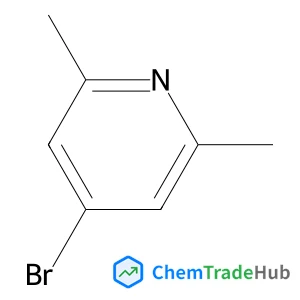
4-Bromo-2,6-dimethylpyridine(CAS: 5093-70-9)
CAS Number
Related Products
![(4S)-4-Methyl-1-{[(2-methyl-2-propanyl)oxy]carbonyl}-L-proline](https://static.chemtradehub.com/structs/364/364750-81-2-fe9b.webp)
![(1S,5R)-1-(3-Fluorophenyl)-3-oxabicyclo[3.1.0]hexan-2-one](https://static.chemtradehub.com/structs/528/528587-70-4-94a1.webp)
![3-{[(2-Carbamimidamido-1,3-thiazol-4-yl)methyl]sulfanyl}-N-sulfamoylpropanamide hydrochloride (1:1)](https://static.chemtradehub.com/structs/768/76824-17-4-adca.webp)
![(1R,2S,5S)-6,6-Dimethyl-3-(3-methyl-N-{[(2-methyl-2-propanyl)oxy]carbonyl}-L-valyl)-3-azabicyclo[3.1.0]hexane-2-carboxylic acid](https://static.chemtradehub.com/structs/394/394735-37-6-3286.webp)

3,6-Difluoropyrazine-2-carbonitrile
CAS Number: 356783-28-3

(1R,2R)-1,2-Diphenyl-1,2-ethanediamine
CAS Number: 35132-20-8

Peramivir trihydrate
CAS Number: 1041434-82-5
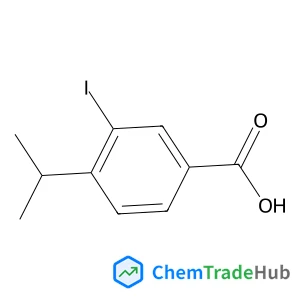
3-Iodo-4-isopropylbenzoic acid
CAS Number: 99059-64-0
Other Suppliers for 4-Bromo-2,6-dimethylpyridine




Basic Information
Molecular Formula
C7H8BrN
Molecular Weight
186.05 g/mol
Physical Properties
Melting Point
28-32 °C
Chemical Identifiers
SMILES
Cc1cc(Br)cc(C)n1
InChIKey
VTRFAYHJKSKHGY-UHFFFAOYSA-N
Database References
MDL Number
MFCD00671475
FAQ
4-Bromo-2,6-dimethylpyridine (CAS: 5093-70-9) falls under the classification of a hazardous chemical according to the Globally Harmonized System of Classification and Labelling of Chemicals (GHS). It is important to comply with the REACH regulations in the European Union, as well as FDA and EPA guidelines for its use, handling, and disposal in the United States and other countries. Proper labelling, storage, and disposal methods are required to ensure safety and environmental protection.
There are alternative reagents that can be used in the synthesis of organic compounds, such as 4-Bromo-2,6-dimethylpyridine (CAS: 5093-70-9). Common alternatives include 4-chloro-2,6-dimethylpyridine and 4-iodo-2,6-dimethylpyridine. These can be chosen based on the specific reaction conditions and availability. It's crucial to evaluate the reactivity, solubility, and cost of these alternatives to find the best fit for the synthesis.
The market for 4-Bromo-2,6-dimethylpyridine (CAS: 5093-70-9) is primarily driven by its applications in the pharmaceutical and chemical industries. Research trends are focused on developing more efficient synthesis methods and exploring its use in drug discovery and organic synthesis. With increasing demand for specialty chemicals, the market is expected to grow, and emerging research is likely to uncover new applications for this compound.
Waste containing 4-Bromo-2,6-dimethylpyridine (CAS: 5093-70-9) should be handled according to the local regulations and guidelines for hazardous waste management. It is recommended to collect the waste in appropriate containers, seal them properly, and dispose of them through professional waste disposal services. Incineration is a common method for disposal, but ensure it is done in a controlled environment to minimize environmental impact. Always follow all safety precautions and ensure the waste is transported in compliance with regulatory requirements.
Safety Notice
Please verify product specifications and safety data before use. Contact the supplier for detailed safety information.
Always follow proper handling procedures
Contact Information
Contact Person
Butane
info@becaspharma.com