AD
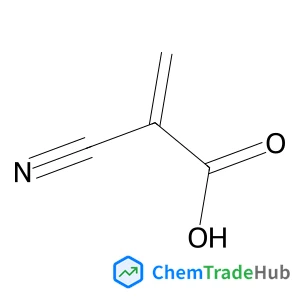
2-Cyanoacrylic acid(CAS: 15802-18-3)
CAS Number
Related Products
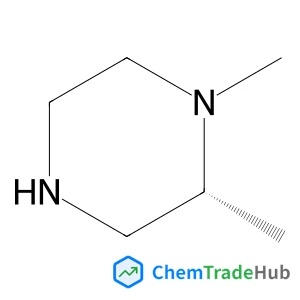
(2R)-1,2-Dimethylpiperazine
CAS Number: 623586-02-7
![(2S)-4-Hydroxy-7-(hydroxymethyl)-2-(2-hydroxy-2-propanyl)-2,3-dihydro-5H-furo[3,2-g]chromen-5-one](https://static.chemtradehub.com/structs/496/49624-66-0-7116.webp)
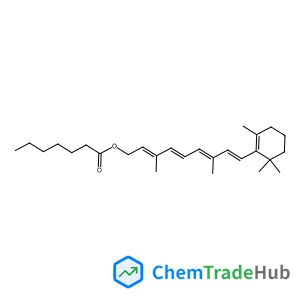
O~15~-Heptanoylretinol
CAS Number: 88641-44-5
![1-Methoxy-2-[1-(4-methoxyphenyl)propyl]benzene](https://static.chemtradehub.com/structs/334/33451-22-8-2ef2.webp)
CAS Number: 1350524-27-4
Other Suppliers for 2-Cyanoacrylic acid



Basic Information
Molecular Formula
C4H3NO2
Molecular Weight
97.07 g/mol
Chemical Identifiers
SMILES
C=C(C#N)C(=O)O
InChIKey
IJVRPNIWWODHHA-UHFFFAOYSA-N
Database References
MDL Number
MFCD01673911
FAQ
2-Cyanoacrylic acid (CAS: 15802-18-3) is subject to various regulatory guidelines including the Globally Harmonized System of Classification and Labeling of Chemicals (GHS), REACH regulations, and FDA/EPA requirements for its handling and use. It is classified as a toxic substance and may require specific labeling and safety data sheets (SDS) under GHS. Under REACH, manufacturers and importers must register the substance if the annual tonnage threshold is exceeded. FDA regulations may apply to the use of 2-Cyanoacrylic acid in pharmaceuticals or cosmetics, ensuring it meets purity and safety standards.
While 2-Cyanoacrylic acid (CAS: 15802-18-3) is a versatile starting material, there are alternatives depending on the specific application. For example, cyanoacrylate esters can be used as more reactive alternatives in some synthesis routes. Isopropyl cyanoacrylate and ethyl cyanoacrylate are common isomers that can serve as substitutes in certain cases. Additionally, alternative reagents such as cyanoacrylamides may offer specific advantages in particular reactions.
The market for 2-Cyanoacrylic acid (CAS: 15802-18-3) shows steady growth due to its applications in medical adhesives, sealants, and as a monomer for polymers. Research trends are increasingly focused on its use in pharmaceuticals for wound closure and tissue bonding. The development of new formulations and improved processing techniques continues to drive demand. However, regulatory challenges and environmental concerns are also influencing market dynamics, prompting the exploration of greener and more sustainable alternatives.
Waste containing 2-Cyanoacrylic acid (CAS: 15802-18-3) should be collected and handled in accordance with local and national hazardous waste regulations. It is classified as a toxic substance and should be disposed of through an approved waste disposal service. Incineration is a common method for waste disposal, provided it is conducted at facilities equipped to handle hazardous wastes. Environmental protection precautions include ensuring no spillage or runoff occurs during collection and transportation. Additionally, the waste should be stored in leak-proof containers and labeled with appropriate hazardous waste symbols to prevent accidental exposure or contamination.
Safety Notice
Please verify product specifications and safety data before use. Contact the supplier for detailed safety information.
Always follow proper handling procedures