



AD
Trifluoroborane - acetic acid (1:2)(CAS: 373-61-5)
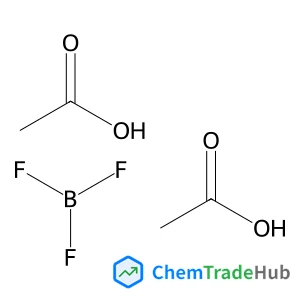
CAS Number
Related Products
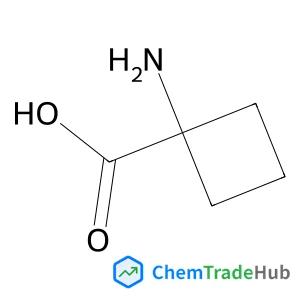
1-Aminocyclobutanecarboxylic acid
CAS Number: 22264-50-2
![Potassium 4-[(4-fluorobenzyl)carbamoyl]-1-methyl-2-(2-{[(5-methyl-1,3,4-oxadiazol-2-yl)carbonyl]amino}-2-propanyl)-5,6-dioxo-1,2,5,6-tetrahydropyrimidin-2-ide](https://static.chemtradehub.com/structs/871/871038-72-1-53e3.webp)
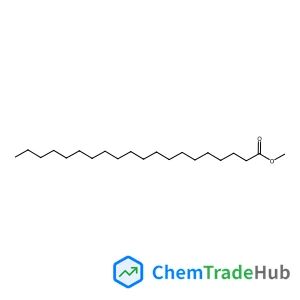
Methyl icosanoate
CAS Number: 1120-28-1
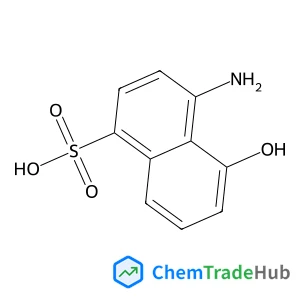
![Imidazo[1,5-a]pyridine](https://static.chemtradehub.com/structs/274/274-47-5-b458.webp)
Imidazo[1,5-a]pyridine
CAS Number: 274-47-5
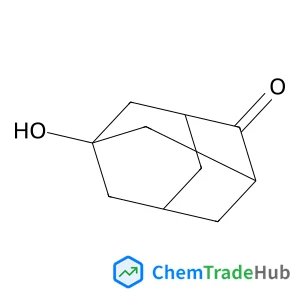
(1R,3S,5s,7s)-5-Hydroxy-2-adamantanone
CAS Number: 20098-14-0
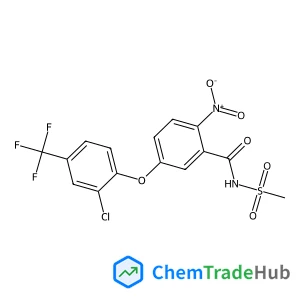
Fomesafen
CAS Number: 72178-02-0
Other Suppliers for Trifluoroborane - acetic acid (1:2)




Basic Information
Molecular Formula
C4H8BF3O4
Molecular Weight
187.91 g/mol
Physical Properties
Melting Point
-47 ºC
Boiling Point
140-148 ºC
Chemical Identifiers
SMILES
B(F)(F)F.CC(=O)O.CC(=O)O
InChIKey
COTMJGCQSLZICX-UHFFFAOYSA-N
Database References
MDL Number
MFCD00036359
Beilstein Registry Number
3686177
FAQ
Trifluoroborane - acetic acid (1:2) (CAS: 373-61-5) is classified as a hazardous chemical under the Globally Harmonized System of Classification and Labelling of Chemicals (GHS). It falls under the category of Flammable Liquids and is regulated by REACH in the EU, which requires manufacturers and importers to register the substance if it is produced or imported in quantities of 1 ton or more per year. In the USA, the Environmental Protection Agency (EPA) and the Food and Drug Administration (FDA) have specific regulations regarding the handling and disposal of this compound to ensure safety and environmental protection.
Yes, there are several alternatives to Trifluoroborane - acetic acid (1:2) (CAS: 373-61-5) in synthesis. Common alternatives include trifluoroboric acid and other acetic acid derivatives. These alternatives can offer similar functionalities but with different safety profiles and reactivity patterns. For example, trifluoroboric acid is often used as a catalyst in the synthesis of various organic compounds, providing a safer and more stable option compared to the 1:2 complex.
The market for Trifluoroborane - acetic acid (1:2) (CAS: 373-61-5) is closely tied to its applications in organic synthesis and chemical reagents. Recent research trends focus on its use in the preparation of fluorinated compounds and its role in catalytic reactions. Market trends indicate growing interest in sustainable and environmentally friendly chemicals, which has led to increased demand for safer alternatives. Additionally, the compound's unique properties make it relevant in emerging fields such as materials science and pharmaceuticals.
Waste containing Trifluoroborane - acetic acid (1:2) (CAS: 373-61-5) should be managed in accordance with local and national regulations. Proper waste collection methods include segregating the waste from other materials and storing it in a sealed container to prevent spillage. For disposal, it is recommended to use professional waste disposal services that handle hazardous waste. Incineration is a common method, but it must be done in a compliant facility to avoid environmental contamination. Always ensure that all safety precautions are taken to protect both human health and the environment during handling and disposal.
Safety Notice
Please verify product specifications and safety data before use. Contact the supplier for detailed safety information.
Always follow proper handling procedures
Contact Information
new_great@163.com