



AD
(E)-N-[(6-Chloro-3-pyridinyl)methyl]-N-ethyl-N'-methyl-2-nitro-1,1-ethenediamine(CAS: 120738-89-8)
![(E)-N-[(6-Chloro-3-pyridinyl)methyl]-N-ethyl-N'-methyl-2-nitro-1,1-ethenediamine](https://static.chemtradehub.com/structs/120/120738-89-8-638e.webp "(E)-N-[(6-Chloro-3-pyridinyl)methyl]-N-ethyl-N'-methyl-2-nitro-1,1-ethenediamine")
CAS Number
Related Products
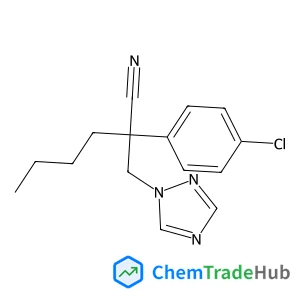
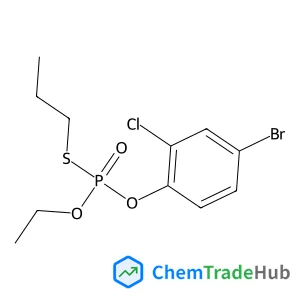
![4-Chloro-2-(2-methyl-2-propanyl)-5-{[4-(2-methyl-2-propanyl)benzyl]sulfanyl}-3(2H)-pyridazinone](https://static.chemtradehub.com/structs/964/96489-71-3-09a9.webp)

![N,N-Dimethyl-3-[(propoxycarbonyl)amino]-1-propanaminium chloride](https://static.chemtradehub.com/structs/256/25606-41-1-f71e.webp)
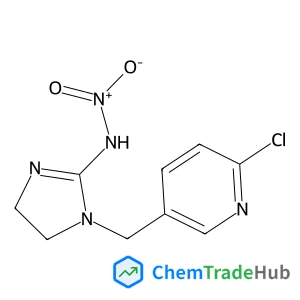
![S,S'-[2-(Dimethylamino)-1,3-propanediyl] dibenzenesulfonothioate](https://static.chemtradehub.com/structs/176/17606-31-4-edc5.webp)
![1,2,4-Trichloro-5-[(4-chlorophenyl)sulfonyl]benzene](https://static.chemtradehub.com/structs/116/116-29-0-d574.webp)
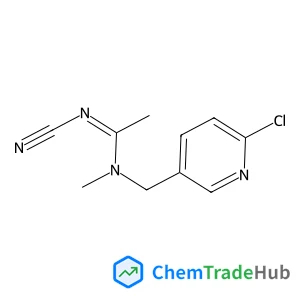
Other Suppliers for (E)-N-[(6-Chloro-3-pyridinyl)methyl]-N-ethyl-N'-methyl-2-nitro-1,1-ethenediamine
![(E)-N-[(6-Chloro-3-pyridinyl)methyl]-N-ethyl-N'-methyl-2-nitro-1,1-ethenediamine — Hubei Chenghai Chemical Co., Ltd.](https://static.chemtradehub.com/suppliers/67ce17ff57537e5c8069b2e9/67ce17ff57537e5c8069b2e9-logo.webp)
![(E)-N-[(6-Chloro-3-pyridinyl)methyl]-N-ethyl-N'-methyl-2-nitro-1,1-ethenediamine — HuBeiShiShun Biotechnology Co Ltd](https://static.chemtradehub.com/suppliers/67cecc092b2de6e8e95a5bbc/67cecc092b2de6e8e95a5bbc-logo.webp)
Basic Information
Molecular Formula
C11H15ClN4O2
Molecular Weight
270.71 g/mol
Physical Properties
Melting Point
72ºC
Boiling Point
417.2ºC at 760mmHg
Density
1.254g/cm3
Flash Point
206.1ºC
Chemical Identifiers
SMILES
CCN(CC1=CN=C(C=C1)Cl)C(=C[N+](=O)[O-])NC
InChIKey
CFRPSFYHXJZSBI-UHFFFAOYSA-N
Database References
MDL Number
MFCD01631161
FAQ
This compound is a crystalline solid with a molecular weight of approximately 343.13 g/mol. It has limited solubility in common organic solvents but is more soluble in water. It is moderately reactive, showing some electrophilic aromatic substitution reactivity. The compound is stable under normal storage conditions but should be kept away from strong oxidizing agents and reducing agents.
This compound can be synthesized through a multi-step process involving the coupling of an ethylene diamine derivative with a substituted pyridine derivative followed by nitration. Common solvents include toluene, and the reaction is typically carried out at elevated temperatures under reflux conditions. The yield is moderate, around 60-70%, and the reaction is selective for the nitration step.
This compound is primarily used in the pharmaceutical industry as an intermediate in the synthesis of medicinals. It also finds applications in the production of certain dyes and pigments. Its chemical properties make it suitable for use in the synthesis of materials with specific electronic and optical properties, though its direct industrial use is limited compared to its use as an intermediate.
When handling this compound, it is essential to wear appropriate personal protective equipment (PPE), including gloves, goggles, and a lab coat, to protect against skin and eye contact. The material should be handled in a well-ventilated area or under a fume hood to avoid inhalation. In case of a spill, it should be cleaned up immediately using appropriate absorbent materials, and the area should be thoroughly ventilated. Always refer to the Safety Data Sheet (SDS) for detailed safety information and emergency procedures.
Safety Notice
Please verify product specifications and safety data before use. Contact the supplier for detailed safety information.
Always follow proper handling procedures
Contact Information
Contact Person
Yang Lianlai