



AD
1,3,5-Tris(2-methyl-2-propanyl)benzene(CAS: 1460-02-2)
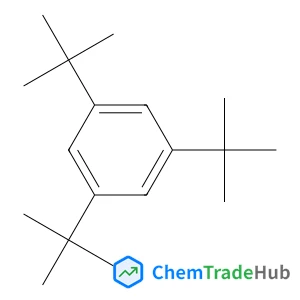
CAS Number
Related Products
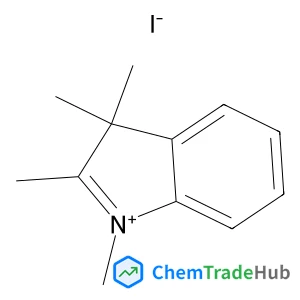
1,2,3,3-Tetramethyl-3H-indolium iodide
CAS Number: 5418-63-3
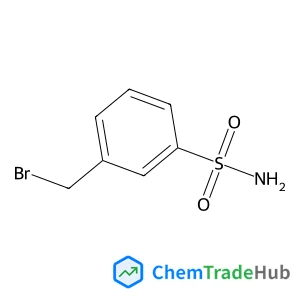
3-(Bromomethyl)benzenesulfonamide
CAS Number: 220798-52-7
![3,3'-(1,1,1,3,3,3-Hexafluoro-2,2-propanediyl)bis[6-(allyloxy)aniline]](https://static.chemtradehub.com/structs/257/2573217-07-7-f3dd.webp)
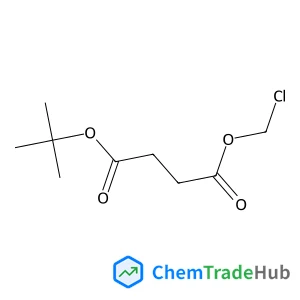

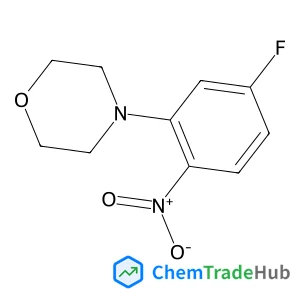
4-(5-Fluoro-2-nitrophenyl)morpholine
CAS Number: 536977-34-1

Other Suppliers for 1,3,5-Tris(2-methyl-2-propanyl)benzene




Basic Information
Molecular Formula
C18H30
Molecular Weight
246.44 g/mol
Physical Properties
Melting Point
71.0 to 75.0 deg-C
Boiling Point
248°C(lit.)
Flash Point
121-122°C/12mm
Water Solubility
Insoluble in water.
Chemical Identifiers
SMILES
CC(C)(C)C1=CC(=CC(=C1)C(C)(C)C)C(C)(C)C
InChIKey
GUFMBISUSZUUCB-UHFFFAOYSA-N
Database References
MDL Number
MFCD00008831
Beilstein Registry Number
1909579
FAQ
1,3,5-Tris(2-methyl-2-propanyl)benzene (CAS: 1460-02-2) is regulated under the Globally Harmonized System of Classification and Labeling of Chemicals (GHS), REACH regulations in the EU, and the EPA in the USA. It is classified as flammable and requires appropriate handling, storage, and disposal procedures to ensure safety and compliance with local and international regulations.
There are alternative compounds, such as 1,3,5-tris(2-methylpropyl)benzene, which can be used as substitutes in certain synthesis processes. These alternatives may offer similar chemical properties but with different reactivity, which can be considered based on the specific application requirements.
The market trend for 1,3,5-Tris(2-methyl-2-propanyl)benzene (CAS: 1460-02-2) indicates a steady demand in industrial applications, particularly in the production of resins and coatings. Research is focusing on its properties and potential in new materials and functional applications, exploring its use in advanced coatings and adhesives.
Waste containing 1,3,5-Tris(2-methyl-2-propanyl)benzene (CAS: 1460-02-2) should be collected in appropriate containers, labeled with the correct hazard symbols, and stored away from ignition sources. The waste should be disposed of using professional waste disposal services to ensure compliance with environmental regulations and safety standards. Incineration is a common method for waste disposal, but all disposal methods must be conducted in accordance with local regulations and safety protocols.
Safety Notice
Please verify product specifications and safety data before use. Contact the supplier for detailed safety information.
Always follow proper handling procedures
Contact Information
Contact Person
Zhang Manager
angela@labgogo.com