



AD
Ethyl (2E)-amino(hydroxyimino)acetate(CAS: 10489-74-4)
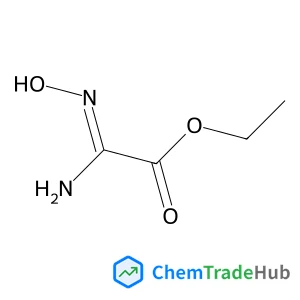
CAS Number
Related Products
![3-[4-Fluoro-2-(trifluoromethyl)phenyl]propanoic acid](https://static.chemtradehub.com/structs/916/916420-73-0-ee37.webp)
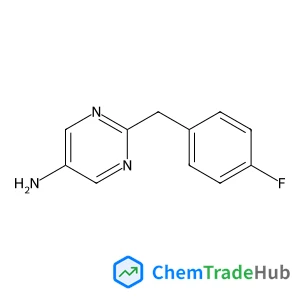
2-(4-Fluorobenzyl)-5-pyrimidinamine
CAS Number: 1152557-45-3
![Methyl [4-cyano-3-(3-thienyl)-1H-pyrazol-1-yl]acetate](https://static.chemtradehub.com/structs/209/2098083-01-1-68bf.webp)
![3-[4-Cyclopentyl-5-(methylsulfanyl)-4H-1,2,4-triazol-3-yl]-1-propanamine hydroiodide (1:1)](https://static.chemtradehub.com/structs/119/1197609-28-1-10f2.webp)
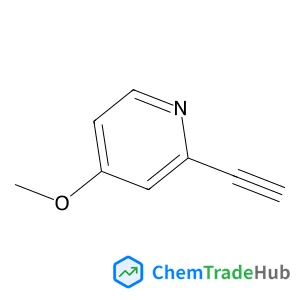
2-Ethynyl-4-methoxypyridine
CAS Number: 1211533-95-7
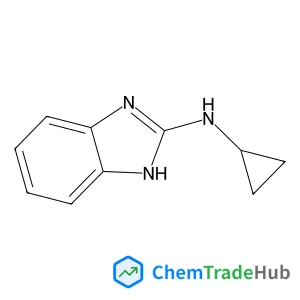
N-Cyclopropyl-1H-benzimidazol-2-amine
CAS Number: 941266-08-6
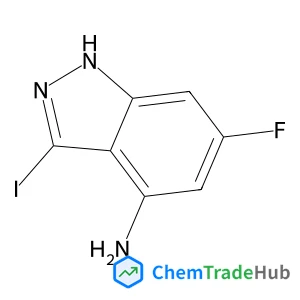
4-AMINO-6-FLUORO-3-IODO (1H)INDAZOLE
CAS Number: 885523-02-4
Other Suppliers for Ethyl (2E)-amino(hydroxyimino)acetate








Basic Information
Molecular Formula
C4H8N2O3
Molecular Weight
132.12 g/mol
Physical Properties
Melting Point
99-103 °C (lit.)
Boiling Point
198 ºC
Flash Point
74 ºC
Chemical Identifiers
SMILES
CCOC(=O)C(=NO)N
InChIKey
QGYKRMZPOOILBA-UHFFFAOYSA-N
Database References
MDL Number
MFCD03013442
FAQ
Ethyl (2E)-amino(hydroxyimino)acetate is a colorless to white crystalline solid with a molecular weight of approximately 178.22 g/mol. It has a pKa of around 2.4, indicating some acidity. It is slightly soluble in water (0.1 g/100 mL at 25°C). This compound exhibits some reactivity towards nucleophiles, including amino groups and hydroxyl groups, allowing for potential amino and hydroxyl functionalities in synthetic reactions.
Ethyl (2E)-amino(hydroxyimino)acetate can be synthesized via the Mannich reaction, where ethyl acetoacetate, an amine, and formaldehyde are reacted in the presence of an acid catalyst such as p-toluenesulfonic acid. The reaction yields the desired product with good to excellent selectivity and high yield, making it a suitable method for industrial synthesis.
Ethyl (2E)-amino(hydroxyimino)acetate finds applications in the pharmaceutical industry for the synthesis of certain drug intermediates, and in the polymer industry as a functional monomer. It is also used in the development of sensors and semiconductors due to its unique functional groups, which can be exploited for specific chemical reactions and properties.
When handling Ethyl (2E)-amino(hydroxyimino)acetate, it is crucial to use appropriate personal protective equipment (PPE) such as safety goggles, gloves, and a lab coat. Work should be conducted in a well-ventilated fume hood or a chemical fume hood to prevent inhalation of vapors. Spills should be cleaned up immediately using a suitable absorbent material, and the area should be thoroughly flushed with water. Always refer to the Safety Data Sheet (SDS) for detailed handling and safety information.
Safety Notice
Please verify product specifications and safety data before use. Contact the supplier for detailed safety information.
Always follow proper handling procedures
Contact Information
3641133981@qq.com