



AD
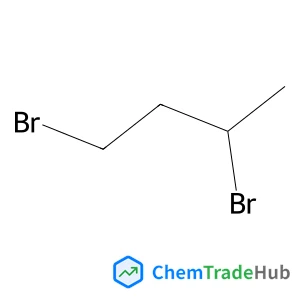
1,3-Dibromobutane(CAS: 107-80-2)
CAS Number
Related Products
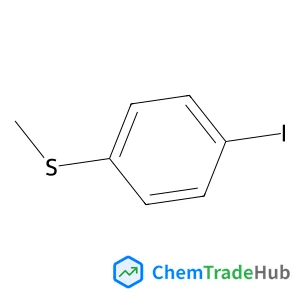
1-Iodo-4-(methylsulfanyl)benzene
CAS Number: 35371-03-0
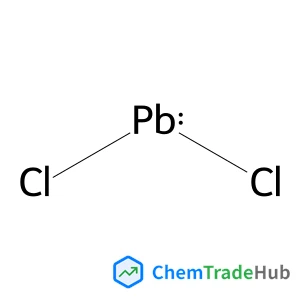
Dichloro-lambda~2~-plumbane
CAS Number: 7758-95-4
PUMICE STONE
CAS Number: 1332-09-8
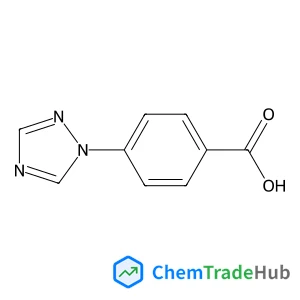
4-(1H-1,2,4-Triazol-1-yl)benzoic acid
CAS Number: 162848-16-0
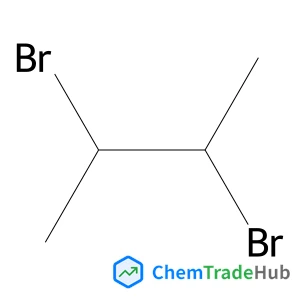
2,3-Dibromobutane
CAS Number: 5408-86-6
SOYBEAN MEAL
CAS Number: 68308-36-1
![2-Chloro-N-[2-(2,6-dioxo-3-piperidinyl)-1,3-dioxo-2,3-dihydro-1H-isoindol-4-yl]acetamide](https://static.chemtradehub.com/structs/444/444287-84-7-fa4b.webp)
Other Suppliers for 1,3-Dibromobutane




Basic Information
Molecular Formula
C4H8Br2
Molecular Weight
215.92 g/mol
Physical Properties
Melting Point
-25.98°C (estimate)
Boiling Point
175 °C(lit.)
Flash Point
173-176°C
Chemical Identifiers
SMILES
CC(CCBr)Br
InChIKey
XZNGUVQDFJHPLU-UHFFFAOYSA-N
Database References
MDL Number
MFCD00000152
Beilstein Registry Number
1731231
FAQ
1,3-Dibromobutane (CAS: 107-80-2) is a colorless liquid with a strong bromine odor. Its molecular weight is approximately 182.05 g/mol. It has a high boiling point at 132-134°C and a low melting point around -22°C. It is slightly soluble in water but miscible with common organic solvents. Chemically, it is moderately reactive, especially towards nucleophiles and reducing agents.
1,3-Dibromobutane (CAS: 107-80-2) is usually synthesized via a substitution reaction of butene with bromine. The reaction proceeds in a solvent like carbon tetrachloride or dichloromethane, often using a phase transfer catalyst to improve yield and selectivity. The overall reaction is highly exothermic and should be conducted under controlled conditions to avoid hazards.
1,3-Dibromobutane (CAS: 107-80-2) is primarily used in the production of agricultural chemicals, pharmaceuticals, and organic solvents. It also finds applications in the manufacture of plasticizers, rubber, and as a reagent in the synthesis of other brominated compounds. Its use in semiconductors is less common but it can be utilized in certain specialty applications.
When handling 1,3-Dibromobutane (CAS: 107-80-2), safety measures include the use of personal protective equipment (PPE) such as gloves, goggles, and a lab coat. Work must be conducted in a well-ventilated area or inside a fume hood. Spills should be immediately cleaned up using appropriate absorbents and the area should be flushed with water. Always consult the Safety Data Sheet (SDS) for detailed safety information and emergency procedures.
Safety Notice
Please verify product specifications and safety data before use. Contact the supplier for detailed safety information.
Always follow proper handling procedures
Contact Information
Contact Person
Ludu
order@canspecsci.com