



AD
1-Methyl-4-(methylsulfanyl)benzene(CAS: 623-13-2)
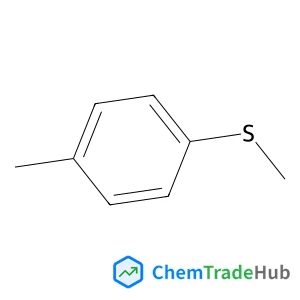
CAS Number
Related Products
![2-Methyl-2-propanyl [(2R)-1-hydroxy-2-propanyl]carbamate](https://static.chemtradehub.com/structs/106/106391-86-0-8397.webp)
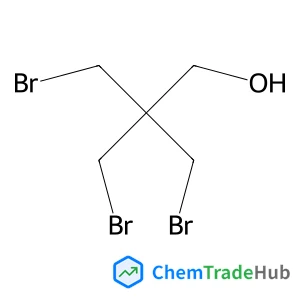
3-Bromo-2,2-bis(bromomethyl)-1-propanol
CAS Number: 1522-92-5
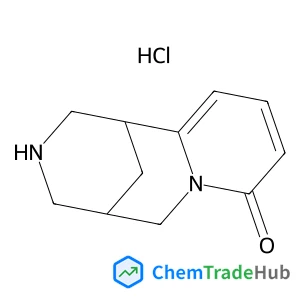
Cytisine hydrochloride
CAS Number: 6047-01-4
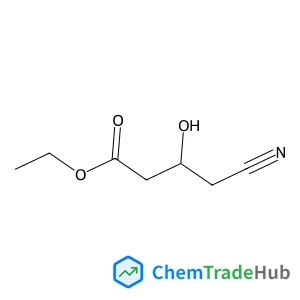
Atorvastatin Impurity 55
CAS Number: 141942-85-0
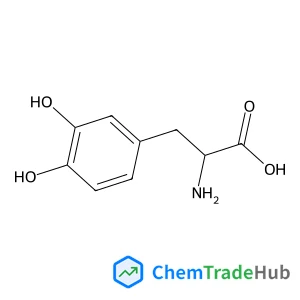
3-Hydroxy-D-tyrosine
CAS Number: 5796-17-8
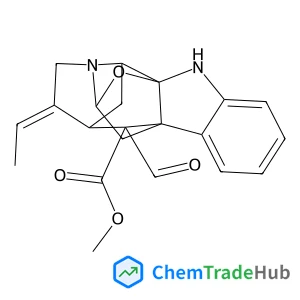
Picralinal
CAS Number: 20045-06-1
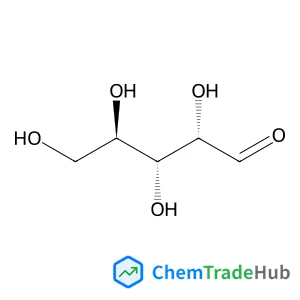
D-Arabinose
CAS Number: 9032-75-1
![(3aS,9R,9aS,9bS)-9-Hydroxy-6,9-dimethyl-3-methylene-3a,4,5,7,8,9,9a,9b-octahydroazuleno[4,5-b]furan-2(3H)-one](https://static.chemtradehub.com/structs/683/68370-47-8-daf4.webp)
Other Suppliers for 1-Methyl-4-(methylsulfanyl)benzene







Basic Information
Molecular Formula
C8H10S
Molecular Weight
138.23 g/mol
Physical Properties
Boiling Point
94°C/30.8mmHg
Density
1.027 g/mL at 25 °C(lit.)
Chemical Identifiers
SMILES
CC1=CC=C(C=C1)SC
InChIKey
VHILIAIEEYLJNA-UHFFFAOYSA-N
Database References
MDL Number
MFCD00008560
Beilstein Registry Number
1905733
FAQ
1-Methyl-4-(methylsulfanyl)benzene (CAS: 623-13-2) is classified under the Globally Harmonized System (GHS) as a hazardous substance, primarily due to its flammability and potential for skin and eye irritation. Manufacturers and importers must comply with REACH regulations in the European Union, ensuring no harmful substances are present above certain concentrations, and must provide Safety Data Sheets (SDS) to downstream users. In the USA, the Environmental Protection Agency (EPA) and the Food and Drug Administration (FDA) require proper labeling and handling to prevent harm to human health and the environment.
There are several alternatives to 1-Methyl-4-(methylsulfanyl)benzene (CAS: 623-13-2) in synthesis, such as 1-Ethyl-4-(methylthio)benzene and 1-(Isopropyl)-4-(methylthio)benzene. These compounds can be used as substitutes depending on the specific reaction conditions. Additionally, using isothiocyanates or thiols as starting materials can lead to similar products with slight modifications in the structure.
The market for 1-Methyl-4-(methylsulfanyl)benzene (CAS: 623-13-2) is driven by its applications in the pharmaceutical and agrochemical industries, particularly as intermediates for synthesizing various drugs and herbicides. Research trends are focusing on developing more sustainable and environmentally friendly synthetic routes to reduce the environmental footprint. There is also increasing interest in exploring its use in materials science, especially in the development of conductive polymers and electronics.
Waste containing 1-Methyl-4-(methylsulfanyl)benzene (CAS: 623-13-2) should be collected in appropriate containers lined with impermeable materials to prevent leaks. Proper waste disposal should be conducted through incineration or professional hazardous waste management facilities. Environmental protection precautions include ensuring that disposal does not contaminate soil or water sources. Disposal must comply with local, national, and international regulations to prevent environmental harm and ensure worker safety.
Safety Notice
Please verify product specifications and safety data before use. Contact the supplier for detailed safety information.
Always follow proper handling procedures
Contact Information
2423903095@qq.com