



AD
1-(Diphenylmethyl)-3-azetidinone(CAS: 40320-60-3)
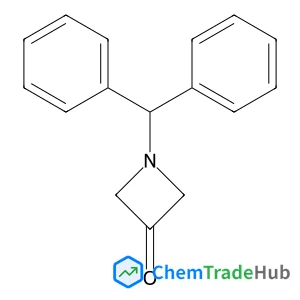
CAS Number
Related Products
![2-Methyl-2-propanyl [(2R)-1-hydroxy-2-propanyl]carbamate](https://static.chemtradehub.com/structs/106/106391-86-0-8397.webp)

3-Bromo-2,2-bis(bromomethyl)-1-propanol
CAS Number: 1522-92-5
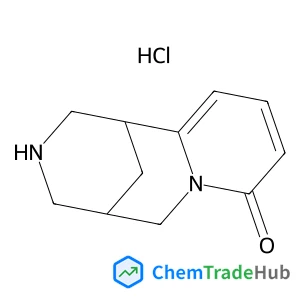
Cytisine hydrochloride
CAS Number: 6047-01-4
Atorvastatin Impurity 55
CAS Number: 141942-85-0
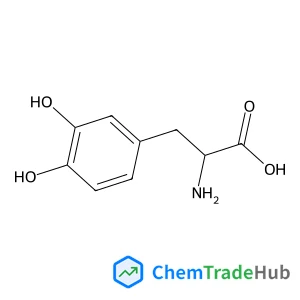
3-Hydroxy-D-tyrosine
CAS Number: 5796-17-8
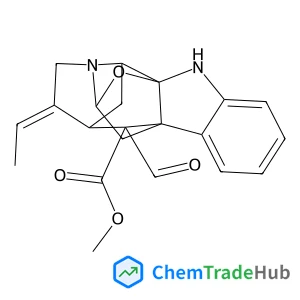
Picralinal
CAS Number: 20045-06-1
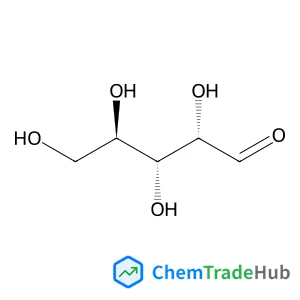
D-Arabinose
CAS Number: 9032-75-1
![(3aS,9R,9aS,9bS)-9-Hydroxy-6,9-dimethyl-3-methylene-3a,4,5,7,8,9,9a,9b-octahydroazuleno[4,5-b]furan-2(3H)-one](https://static.chemtradehub.com/structs/683/68370-47-8-daf4.webp)
Other Suppliers for 1-(Diphenylmethyl)-3-azetidinone






Basic Information
Molecular Formula
C16H15NO
Molecular Weight
237.3 g/mol
Physical State
White to Yellow Solid
Physical Properties
Melting Point
76.0 to 81.0 deg-C
Boiling Point
351.9°C at 760 mmHg
Flash Point
156.1℃
Chemical Identifiers
SMILES
C1C(=O)CN1C(C2=CC=CC=C2)C3=CC=CC=C3
InChIKey
AVUDXLOVIBJFQA-UHFFFAOYSA-N
Database References
MDL Number
MFCD00964539
FAQ
1-(Diphenylmethyl)-3-azetidinone (CAS: 40320-60-3) is subject to various regulatory guidelines. In the EU, it falls under the REACH regulations, which require manufacturers and importers to register substances above one tonne per year. Additionally, it is classified according to the Globally Harmonized System of Classification and Labelling of Chemicals (GHS), which includes health, environmental, and physical hazard information. In the US, the Environmental Protection Agency (EPA) and the Food and Drug Administration (FDA) may have specific requirements for its handling and use.
There are several alternatives to 1-(Diphenylmethyl)-3-azetidinone (CAS: 40320-60-3) in synthesis, depending on the desired properties and reaction conditions. For example, other azetidinones such as 2-(diphenylmethyl)-3-azetidinone or other heterocyclic compounds like pyrrolidines can be used as substitutes. The choice of alternative will depend on the specific reaction pathway and the desired product profile.
The market for 1-(Diphenylmethyl)-3-azetidinone (CAS: 40320-60-3) is primarily driven by its use in pharmaceuticals, fine chemicals, and as a precursor in organic synthesis. Recent research trends indicate increased interest in its application in the development of new drugs and as an intermediate in complex molecule synthesis. Additionally, there is ongoing exploration of its use in materials science and as a ligand in catalysis.
Waste containing 1-(Diphenylmethyl)-3-azetidinone (CAS: 40320-60-3) should be collected in appropriate containers and stored in a secure location until disposal. The waste should be neutralized or rendered safe before disposal, typically through incineration or professional waste disposal services. Environmental protection precautions should be followed to prevent contamination of soil and water. Compliance with local and national regulations is essential during handling and disposal of this waste.
Safety Notice
Please verify product specifications and safety data before use. Contact the supplier for detailed safety information.
Always follow proper handling procedures
Contact Information
2423903095@qq.com