



AD
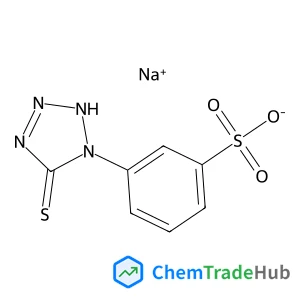
3-(2,5-Dihydro-5-thioxo-1H-tetrazol-1-yl)-benzenesulfonic Acid Sodium Salt(CAS: 99131-26-7)
CAS Number
Related Products
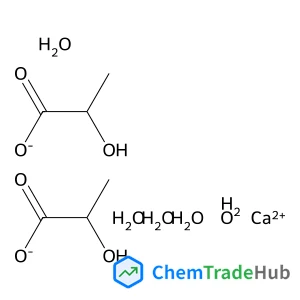
Calcium Lactate Pentahydrate
CAS Number: 5743-47-5
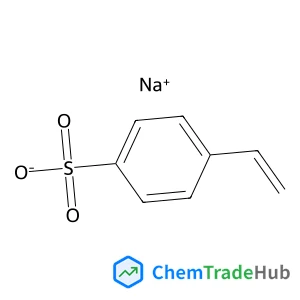
Sodium 4-vinylbenzenesulfonate
CAS Number: 2695-37-6
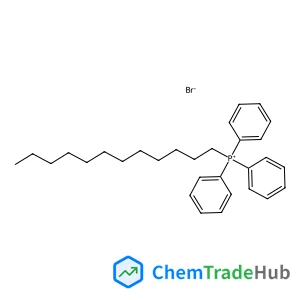
Dodecyl(triphenyl)phosphonium bromide
CAS Number: 15510-55-1


Poly(Propylene Glycol)
CAS Number: 25791-96-2
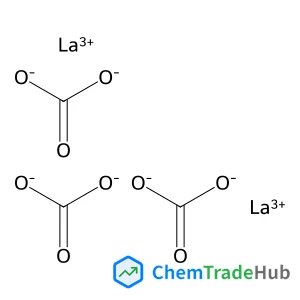
LANTHANUM CARBONATE
CAS Number: 587-26-8

Copper(1+) chloride
CAS Number: 1344-67-8
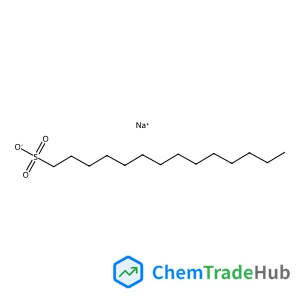
Sodium 1-tetradecanesulfonate
CAS Number: 6994-45-2
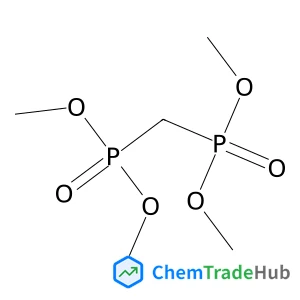
Tetramethyl methylenebis(phosphonate)
CAS Number: 16001-93-7
Other Suppliers for 3-(2,5-Dihydro-5-thioxo-1H-tetrazol-1-yl)-benzenesulfonic Acid Sodium Salt




Basic Information
Molecular Formula
C7H5N4NaO3S2
Molecular Weight
280.3 g/mol
Chemical Identifiers
SMILES
C1=CC(=CC(=C1)S(=O)(=O)[O-])N2C(=S)N=NN2.[Na+]
InChIKey
GGRBDFIKUKYKLY-UHFFFAOYSA-M
Database References
FAQ
3-(2,5-Dihydro-5-thioxo-1H-tetrazol-1-yl)-benzenesulfonic Acid Sodium Salt (CAS: 99131-26-7) is a white to off-white crystalline solid. It has a molecular weight of approximately 302.32 g/mol and a density of about 1.6 g/cm³. The compound is slightly soluble in water and ethanol. It is highly reactive and can form stable complexes with various metal ions. It is a potent antioxidant and has been used in biological assays.
3-(2,5-Dihydro-5-thioxo-1H-tetrazol-1-yl)-benzenesulfonic Acid Sodium Salt (CAS: 99131-26-7) is typically synthesized by reacting 2,5-dihydro-5-thio-1H-tetrazole with benzenesulfonyl chloride in the presence of a base such as sodium hydroxide. The reaction yields a high yield of the desired product with good selectivity. The compound can also be prepared by other routes, such as the condensation of 2,5-dihydro-5-thio-1H-tetrazole with benzene sulfonyl chloride followed by a sodium salt formation step.
3-(2,5-Dihydro-5-thioxo-1H-tetrazol-1-yl)-benzenesulfonic Acid Sodium Salt (CAS: 99131-26-7) is used in pharmaceuticals for its antioxidant properties, in polymers as a curing agent, in sensors for detecting metal ions, and in semiconductors for its electronic properties. It is also employed as a reagent in analytical chemistry for complexation studies and as a component in various diagnostic kits and assays.
When handling 3-(2,5-Dihydro-5-thioxo-1H-tetrazol-1-yl)-benzenesulfonic Acid Sodium Salt (CAS: 99131-26-7), it is essential to wear appropriate personal protective equipment (PPE) including chemical-resistant gloves, safety goggles, and a lab coat. The compound should be handled in a well-ventilated area or a fume hood to avoid inhalation of dust or vapors. Spills should be handled with caution, using absorbent material and disposing of it according to local regulations. Always refer to the Safety Data Sheet (SDS) for detailed handling and disposal instructions.
Safety Notice
Please verify product specifications and safety data before use. Contact the supplier for detailed safety information.
Always follow proper handling procedures
Contact Information
Contact Person
Manager Shi
1373640151@qq.com