



AD
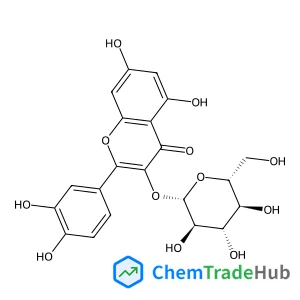
2-(3,4-Dihydroxyphenyl)-5,7-dihydroxy-4-oxo-4H-chromen-3-yl beta-D-glucopyranoside(CAS: 482-35-9)
CAS Number
Related Products
Other Suppliers for 2-(3,4-Dihydroxyphenyl)-5,7-dihydroxy-4-oxo-4H-chromen-3-yl beta-D-glucopyranoside









Basic Information
Molecular Formula
C21H20O12
Molecular Weight
464.38 g/mol
Physical State
Yellow powder
Physical Properties
Boiling Point
872.6°C at 760 mmHg
Density
1.87
Flash Point
307.4°C
Chemical Identifiers
SMILES
OC[C@H]1O[C@@H](OC2=C(OC3=C(C(O)=CC(O)=C3)C2=O)C2=CC(O)=C(O)C=C2)[C@H](O)[C@@H](O)[C@@H]1O
InChIKey
OVSQVDMCBVZWGM-QSOFNFLRSA-N
Database References
MDL Number
MFCD00017746
Beilstein Registry Number
0100989
FAQ
2-(3,4-Dihydroxyphenyl)-5,7-dihydroxy-4-oxo-4H-chromen-3-yl beta-D-glucopyranoside (CAS: 482-35-9) is a naturally occurring compound with a complex structure containing a chromane ring and a glucose moiety. It is known for its antioxidant and anti-inflammatory properties, making it relevant in pharmaceutical and research contexts. The compound is also referred to as quercetin-3-O-beta-D-glucopyranoside, a glycoside derivative of quercetin.
This compound is primarily used in pharmaceutical research for its potential therapeutic applications, including anti-cancer, anti-diabetic, and neuroprotective effects. It also serves as a dietary supplement and is studied for its role in enhancing immune function and reducing oxidative stress. Additionally, it is used in the development of natural products and as a precursor in various chemical syntheses.
2-(3,4-Dihydroxyphenyl)-5,7-dihydroxy-4-oxo-4H-chromen-3-yl beta-D-glucopyranoside (CAS: 482-35-9) is generally considered safe when used in appropriate amounts. However, proper handling and storage are essential to maintain its stability. As with any chemical, it is advisable to follow safety guidelines, wear protective equipment, and ensure proper ventilation during use.
This compound should be stored in a cool, dry, and dark place, ideally at 2-8°C. It is sensitive to moisture and light, so it should be kept in airtight containers and protected from exposure. Proper storage helps maintain its chemical stability and potency, ensuring safe and effective use in research or pharmaceutical applications.
Safety Notice
Please verify product specifications and safety data before use. Contact the supplier for detailed safety information.
Always follow proper handling procedures