



AD
Aspartame Impurity 1 (Glycine Anhydride)(CAS: 106-57-0)
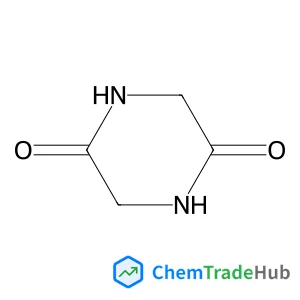
CAS Number
Related Products
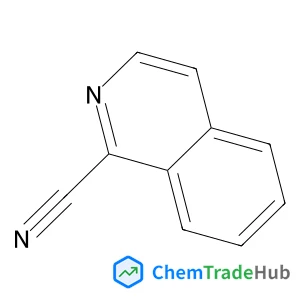
1-Isoquinolinecarbonitrile
CAS Number: 1198-30-7
![1-{[(2-Methyl-2-propanyl)oxy]carbonyl}-4-oxo-3-piperidinecarboxylic acid](https://static.chemtradehub.com/structs/885/885274-97-5-6c10.webp)
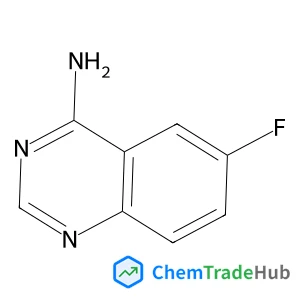
6-Fluoroquinazolin-4-amine
CAS Number: 1190320-08-1
![1-{1-[2-(3-Fluorophenyl)ethyl]-3-piperidinyl}methanamine](https://static.chemtradehub.com/structs/883/883542-80-1-579f.webp)
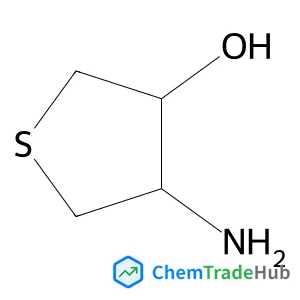
4-Aminotetrahydro-3-thiopheneol
CAS Number: 78050-41-6
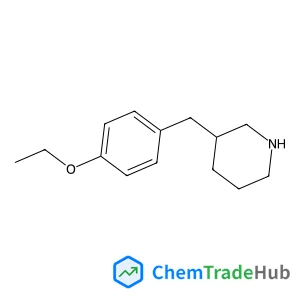
3-(4-Ethoxybenzyl)piperidine
CAS Number: 955315-04-5
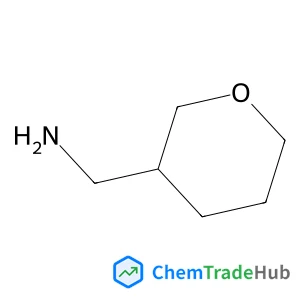
1-(Tetrahydro-2H-pyran-3-yl)methanamine
CAS Number: 7179-99-9
Other Suppliers for Aspartame Impurity 1 (Glycine Anhydride)





Basic Information
Molecular Formula
C4H6N2O2
Molecular Weight
114.1 g/mol
Physical Properties
Melting Point
>300 °C (lit.)
Boiling Point
213.59°C (rough estimate)
Flash Point
301.9±28.3 °C
Water Solubility
Soluble in water (142mg/L).
Chemical Identifiers
SMILES
C1C(=O)NCC(=O)N1
InChIKey
BXRNXXXXHLBUKK-UHFFFAOYSA-N
Database References
MDL Number
MFCD00006009
Beilstein Registry Number
0112112
FAQ
Aspartame Impurity 1, also known as Glycine Anhydride, is a chemical compound with the CAS number 106-57-0. It is an anhydride derivative of glycine and is commonly found as a byproduct during the synthesis of aspartame, an artificial sweetener. This compound is a white crystalline solid with a molecular formula of C2H3NO2 and is used primarily in analytical testing to identify and quantify impurities in aspartame products.
Aspartame Impurity 1 (CAS: 106-57-0) is mainly used in the pharmaceutical and food industries for quality control and purity testing of aspartame. It serves as a reference standard in analytical chemistry to detect and measure impurities, ensuring the safety and consistency of the final product. Additionally, it is used in research to study the degradation pathways and stability of aspartame under various conditions.
Aspartame Impurity 1 (CAS: 106-57-0) is generally considered safe when used in controlled laboratory settings. However, as with any chemical, it should be handled with appropriate precautions, such as wearing protective gloves and goggles. While it is not classified as toxic in typical exposure scenarios, safety standards recommend avoiding prolonged contact with skin or inhalation of its dust. It is important to follow standard safety protocols for chemical handling.
Aspartame Impurity 1 (CAS: 106-57-0) should be stored in a cool, dry, and well-ventilated place, away from moisture and direct light. It is best kept in a sealed container at a temperature below 25°C to maintain stability. Proper storage conditions are essential to prevent decomposition and ensure the compound remains suitable for analytical purposes.
Safety Notice
Please verify product specifications and safety data before use. Contact the supplier for detailed safety information.
Always follow proper handling procedures
Contact Information
info@EDASAscientific.com
Telephone
+7 (903) 127-47-96
Visit Website
https://www.edasascientific.com