



AD
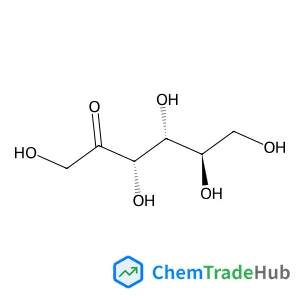
D-Fructose(CAS: 57-48-7)
CAS Number
Related Products
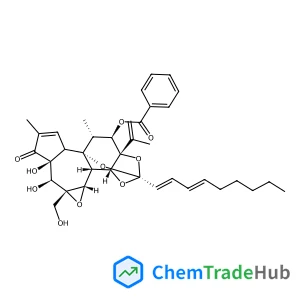
Yuanhuacine
CAS Number: 60195-70-2
![2-(3-Hydroxy-4-methoxyphenyl)ethyl 6-deoxy-alpha-L-mannopyranosyl-(1->3)-[beta-D-galactopyranosyl-(1->6)]-4-O-[(2E)-3-(4-hydroxy-3-methoxyphenyl)-2-propenoyl]-beta-D-glucopyranoside](https://static.chemtradehub.com/structs/120/120406-37-3-495b.webp)
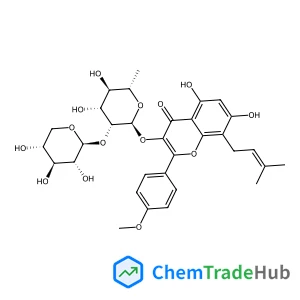
Sagittatoside B
CAS Number: 118525-36-3
![(3beta)-3-{[2-O-(6-Deoxy-alpha-L-mannopyranosyl)-alpha-L-arabinopyranosyl]oxy}-23-hydroxylup-20(29)-en-28-oic acid](https://static.chemtradehub.com/structs/129/129724-84-1-6685.webp)
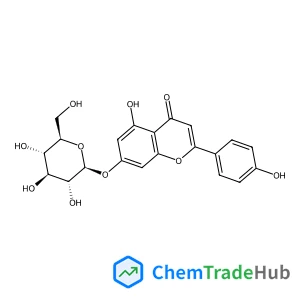
Apigenin-7-O-D-Glucoside
CAS Number: 578-74-5
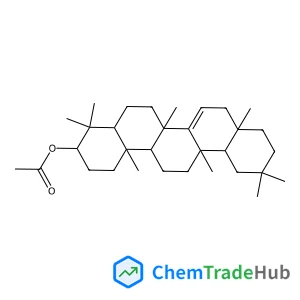
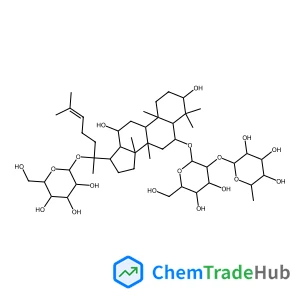
Ginsenoside B2
CAS Number: 52286-59-6
![[(1S,2R,4aS,7S,8aR)-7-Hydroxy-5-(hydroxymethyl)-1,2-dimethyl-1-[2-(5-oxo-2,5-dihydro-3-furanyl)ethyl]-1,3,4,7,8,8a-hexahydro-4a(2H)-naphthalenyl]methyl acetate](https://static.chemtradehub.com/structs/125/125675-09-4-affa.webp)
Other Suppliers for D-Fructose




Basic Information
Molecular Formula
C6H12O6
Molecular Weight
180.16 g/mol
Physical State
White cryst.
Physical Properties
Melting Point
119-122 °C (dec.) (lit.)
Boiling Point
440.1°C at 760 mmHg
Flash Point
220.0±28.7 °C
Water Solubility
3750 g/L (20 ºC)
Chemical Identifiers
SMILES
OC[C@@H](O)[C@@H](O)[C@H](O)C(=O)CO
InChIKey
BJHIKXHVCXFQLS-UYFOZJQFSA-N
Database References
MDL Number
MFCD00148910
Beilstein Registry Number
1239004
FAQ
D-Fructose, also known as levulose, is a simple sugar (monosaccharide) with the chemical formula C6H12O6. It is a naturally occurring carbohydrate found in fruits and honey. D-Fructose is a white, crystalline solid that is highly soluble in water and has a sweet taste. It is the sweetest of all naturally occurring sugars and is commonly used in food products as a sweetener and in industrial applications.
D-Fructose is widely used in the food industry as a sweetener, particularly in high-fructose corn syrup. It also finds applications in pharmaceuticals, where it is used as a stabilizer and excipient. In research, it serves as a key compound for biochemical studies. Additionally, it is used in the production of ethanol and as a raw material in various chemical manufacturing processes.
D-Fructose is generally recognized as safe (GRAS) by the FDA when consumed in normal food amounts. However, excessive intake may lead to health issues such as weight gain or metabolic disorders. Proper handling is recommended in industrial settings to avoid exposure and ensure safety. Always follow established safety guidelines and protective measures when working with D-Fructose.
D-Fructose should be stored in a cool, dry, and dark place to maintain its stability. It is best kept in a sealed container at temperatures below 25°C and away from moisture. Avoid exposure to light and high humidity to prevent degradation. Proper storage conditions help preserve its quality and prevent unwanted chemical reactions.
Safety Notice
Please verify product specifications and safety data before use. Contact the supplier for detailed safety information.
Always follow proper handling procedures
Contact Information
lebobiochem@163.com