



AD
Astilbin(CAS: 29838-67-3)
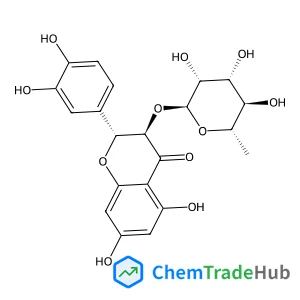
CAS Number
Related Products
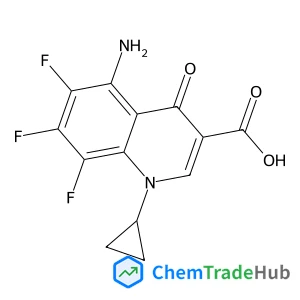
![5-Amino-2-[(4-aminophenyl)amino]benzenesulfonic acid](https://static.chemtradehub.com/structs/119/119-70-0-e7e5.webp)
![[(Difluoromethyl)sulfanyl]acetic acid](https://static.chemtradehub.com/structs/834/83494-32-0-7bcd.webp)
[(Difluoromethyl)sulfanyl]acetic acid
CAS Number: 83494-32-0
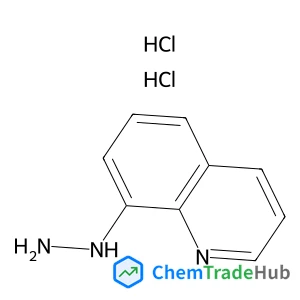
8-hydrazinylquinoline dihydrochloride
CAS Number: 91004-61-4
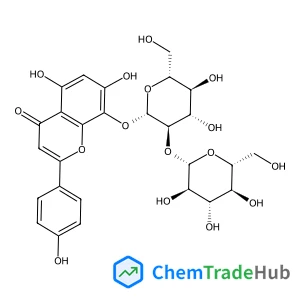
4”-O-Glucosylvitexin
CAS Number: 76135-82-5
![4-Chloro-1H-pyrazolo[3,4-b]pyridine](https://static.chemtradehub.com/structs/292/29274-28-0-79c7.webp)
4-Chloro-1H-pyrazolo[3,4-b]pyridine
CAS Number: 29274-28-0
![(4S,5R)-5-[3,5-Bis(trifluoromethyl)phenyl]-3-{[4'-fluoro-5'-isopropyl-2'-methoxy-4-(trifluoromethyl)-2-biphenylyl]methyl}-4-methyl-1,3-oxazolidin-2-one](https://static.chemtradehub.com/structs/875/875446-37-0-ad1d.webp)
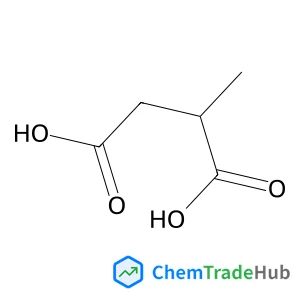
2-Methylsuccinic acid
CAS Number: 498-21-5
Other Suppliers for Astilbin

Basic Information
Molecular Formula
C21H22O11
Molecular Weight
450.4 g/mol
EINECS
694-695-3
Physical State
Powder
Physical Properties
Melting Point
180 °C (decomp)
Boiling Point
801.1±65.0 °C(Predicted)
Density
1.74
Flash Point
282.9 ºC
Chemical Identifiers
SMILES
O=C1[C@H](O[C@H]2[C@@H]([C@@H]([C@H]([C@H](C)O2)O)O)O)[C@@H](C3=CC=C(O)C(O)=C3)OC4=CC(O)=CC(O)=C14
InChIKey
ZROGCCBNZBKLEL-MPRHSVQHSA-N
Database References
MDL Number
MFCD01632717
FAQ
Astilbin, with the CAS number 29838-67-3, is a natural flavonoid compound found in certain plants. It has the chemical formula C16H12O6 and is known for its yellow crystalline appearance. Astilbin exhibits antioxidant and anti-inflammatory properties, making it a subject of interest in various scientific studies and potential therapeutic applications.
Astilbin is primarily used in pharmaceutical research for its potential health benefits, including antioxidant and anti-inflammatory effects. It is also explored in the food industry as a natural additive for its beneficial properties. In industrial applications, astilbin may be used as a compound of interest in chemical synthesis. Additionally, it is studied in research for its role in plant biology and possible medicinal uses.
Astilbin is generally considered safe when used in appropriate amounts, but as with any chemical, proper handling is recommended. It is not classified as toxic, but precautions should be taken during storage and use to avoid exposure. Safety standards for astilbin are typically aligned with those for natural compounds, and it is often used in research and pharmaceutical settings under controlled conditions.
Astilbin should be stored in a cool, dry, and dark place to maintain its stability and prevent degradation. It is best kept in a sealed container at a temperature below 25°C and away from moisture and light. Proper storage ensures the compound retains its chemical integrity and effectiveness for research or commercial use.
Safety Notice
Please verify product specifications and safety data before use. Contact the supplier for detailed safety information.
Always follow proper handling procedures
Contact Information
Contact Person
Essence Yaobang
116547642@qq.com