



AD
1,4-Dimethyl-1H-pyrazole-3-carboxylic acid(CAS: 89202-89-1)
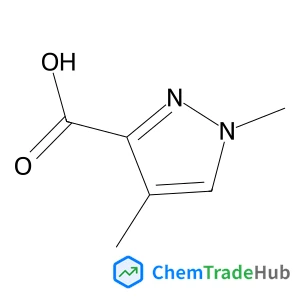
CAS Number
Related Products
![{(2S)-1-Acryloyl-4-[7-(8-methyl-1-naphthyl)-2-{[(2S)-1-methyl-2-pyrrolidinyl]methoxy}-5,6,7,8-tetrahydropyrido[3,4-d]pyrimidin-4-yl]-2-piperazinyl}acetonitrile](https://static.chemtradehub.com/structs/220/2206736-04-9-76c6.webp)
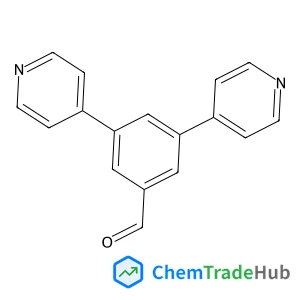
3,5-Di(4-pyridinyl)benzaldehyde
CAS Number: 955363-38-9
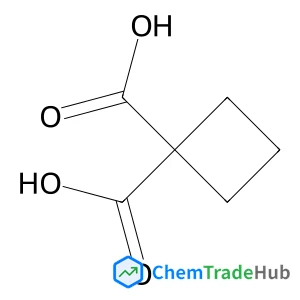
1,1-Cyclobutanedicarboxylic acid
CAS Number: 5445-51-2
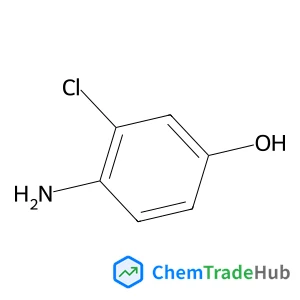
4-Amino-3-chlorophenol
CAS Number: 17609-80-2
![2-[(11-Bromoundecyl)oxy]tetrahydro-2H-pyran](https://static.chemtradehub.com/structs/520/52056-69-6-edb2.webp)
![5-Hydroxy-N-{[(2-methyl-2-propanyl)oxy]carbonyl}-L-tryptophan](https://static.chemtradehub.com/structs/119/119768-45-5-da27.webp)
![4,6-Dimethoxy-N-[3-(trifluoromethyl)-2-pyridinyl]-2-pyrimidinamine](https://static.chemtradehub.com/structs/178/178403-36-6-9ac8.webp)
Methyl 4-ethynyl-2-hydroxybenzoate
CAS Number: 216443-97-9
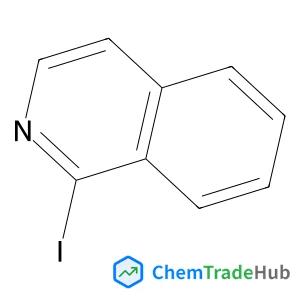
1-Iodoisoquinoline
CAS Number: 19658-77-6
Other Suppliers for 1,4-Dimethyl-1H-pyrazole-3-carboxylic acid








Basic Information
Molecular Formula
C6H8N2O2
Molecular Weight
140.14 g/mol
Physical Properties
Density
1.28±0.1 g/cm3 (20 ºC 760 Torr),
Chemical Identifiers
SMILES
CC1=CN(N=C1C(=O)O)C
InChIKey
WYCQFCGAORZRDX-UHFFFAOYSA-N
Database References
MDL Number
MFCD19228348
FAQ
1,4-Dimethyl-1H-pyrazole-3-carboxylic acid (CAS: 89202-89-1) is a white crystalline solid with a molecular weight of approximately 168.24 g/mol. It is poorly soluble in water but soluble in organic solvents like ethanol and acetone. Chemically, it is mildly reactive, particularly in esterification reactions. It shows good solubility in non-polar solvents and exhibits basic properties due to the carboxylic acid functionality.
1,4-Dimethyl-1H-pyrazole-3-carboxylic acid is synthesized through a multistep process involving the reaction of 1,4-dimethylpyrazole with carboxylic anhydride or a carboxylic acid under appropriate conditions. Commonly, this involves the condensation of 1,4-dimethylpyrazole with acetic anhydride in the presence of a catalyst like p-toluenesulfonic acid. The yield is typically around 85-90%, and the product is purified by recrystallization from ethanol.
1,4-Dimethyl-1H-pyrazole-3-carboxylic acid (CAS: 89202-89-1) finds applications in the pharmaceutical industry for the synthesis of various drug candidates. It is also used in the chemical industry for the production of polymers and in the electronics industry for semiconductor materials. Additionally, it is utilized in the development of sensors for gas detection and in organic synthesis as a versatile building block.
When handling 1,4-Dimethyl-1H-pyrazole-3-carboxylic acid (CAS: 89202-89-1), it is essential to use appropriate personal protective equipment (PPE), including gloves, goggles, and a lab coat. Work should be conducted in a well-ventilated fume hood to minimize inhalation risks. Spills should be neutralized with a basic solution and cleaned up carefully. Always refer to the Safety Data Sheet (SDS) for detailed handling and exposure guidelines.
Safety Notice
Please verify product specifications and safety data before use. Contact the supplier for detailed safety information.
Always follow proper handling procedures
Contact Information
Contact Person
Wu Hailing
669027880@qq.com