



AD
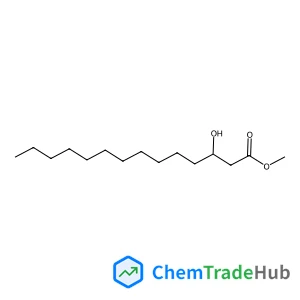
(R)-Methyl 3-hydroxytetradecanoate(CAS: 76062-97-0)
CAS Number
Related Products

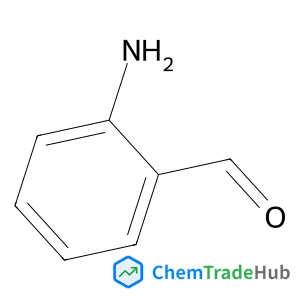
2-Aminobenzaldehyde
CAS Number: 529-23-7
![1,4,7,10-Tetraazacyclododecane-1,7-diacetic acid, 4,10-bis[(phenylmethoxy)carbonyl]-, 1,7-bis(1,1-dimethylethyl) ester](https://static.chemtradehub.com/structs/187/187240-78-4-0945.webp)
alpha-Nicotinamid-adenin-dinucleotid
CAS Number: 58001-39-1
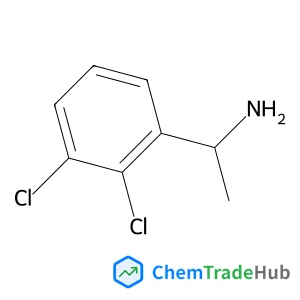
1-(2,3-Dichlorophenyl)ethanamine
CAS Number: 39226-94-3

![3-[(1S)-1-(Dimethylamino)ethyl]phenyl ethyl(methyl)carbamate](https://static.chemtradehub.com/structs/123/123441-03-2-6624.webp)

(4S)-4-Hydroxydihydro-2(3H)-furanone
CAS Number: 7331-52-4
Other Suppliers for (R)-Methyl 3-hydroxytetradecanoate







Basic Information
Molecular Formula
C15H30O3
Molecular Weight
258.4 g/mol
Physical Properties
Melting Point
40 ºC (hexane )
Density
0.931±0.06 g/cm3 (20 ºC 760 Torr),
Chemical Identifiers
SMILES
CCCCCCCCCCCC(CC(=O)OC)O
InChIKey
UOZZAMWODZQSOA-CQSZACIVSA-N
Database References
MDL Number
MFCD00211257
FAQ
(R)-Methyl 3-hydroxytetradecanoate is a white crystalline solid with a molecular weight of approximately 236.34 g/mol. It is slightly soluble in water and has a high solubility in organic solvents such as ethanol and acetone. Chemically, it is reactive towards nucleophiles and can undergo esterification and hydrolysis reactions. It is stable under normal storage conditions but should be protected from strong acids and bases.
(R)-Methyl 3-hydroxytetradecanoate can be synthesized via a Wittig reaction or by the hydrolysis of methyl 3-hydroxytetradecanoic acid. Commonly, a Wittig reagent is generated from tetradecanoyl chloride and phenyl phosphorane, which then reacts with methyl alcohol to form the desired ester. The reaction is typically carried out in an organic solvent under basic conditions to improve yield and selectivity.
(R)-Methyl 3-hydroxytetradecanoate is used in the pharmaceutical industry as a precursor for certain drug synthesis. It is also utilized in the polymer industry for the development of biodegradable polymers. Additionally, it can be employed in the production of biosensors and in the formulation of cosmetic products due to its hydroxy functionality.
What precautions should be taken when handling (R)-Methyl 3-hydroxytetradecanoate (CAS: 76062-97-0)?
When handling (R)-Methyl 3-hydroxytetradecanoate, appropriate personal protective equipment (PPE) should be worn, including gloves, goggles, and a lab coat. Work should be conducted in a well-ventilated area or fume hood to minimize inhalation risk. Spills should be immediately cleaned up with appropriate absorbents, and the area should be flushed with water. Safety data sheets (SDS) should be consulted for detailed handling and disposal information.
Safety Notice
Please verify product specifications and safety data before use. Contact the supplier for detailed safety information.
Always follow proper handling procedures
Contact Information
Contact Person
Wang Gong
2813290504@qq.com