



AD
1-(2,5-Dichloro-3-thienyl)ethanone(CAS: 36157-40-1)
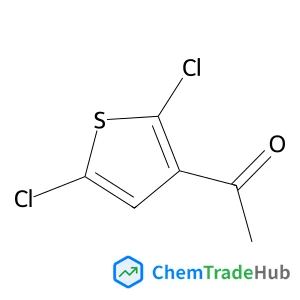
CAS Number
Related Products
![(11beta)-11-[4-(Dimethylamino)phenyl]-3,20-dioxo-19-norpregna-4,9-dien-17-yl acetate](https://static.chemtradehub.com/structs/126/126784-99-4-da69.webp)
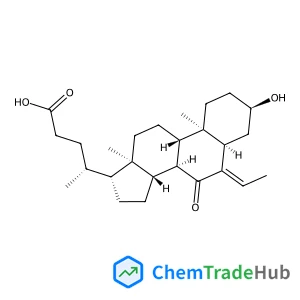
![4-[(1R)-1-(2,3-Dimethylphenyl)ethyl]-1H-imidazole hydrochloride (1:1)](https://static.chemtradehub.com/structs/190/190000-46-5-64eb.webp)
![8-(2-Phenylethyl)-1-oxa-3,8-diazaspiro[4.5]decan-2-one](https://static.chemtradehub.com/structs/505/5053-06-5-b2e3.webp)
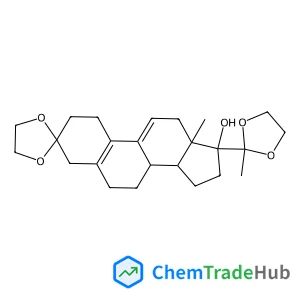
![(3R,4S)-1-(4-Fluorophenyl)-3-[(3S)-3-(4-fluorophenyl)-3-hydroxypropyl]-4-(4-hydroxyphenyl)-2-azetidinone](https://static.chemtradehub.com/structs/163/163222-33-1-54c2.webp)
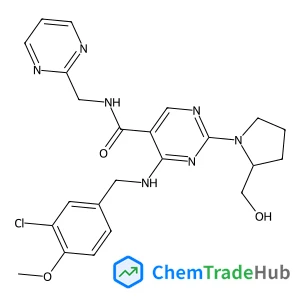
![8-(2-Phenylethyl)-1-oxa-3,8-diazaspiro[4.5]decan-2-one hydrochloride (1:1)](https://static.chemtradehub.com/structs/505/5053-08-7-7f40.webp)
Other Suppliers for 1-(2,5-Dichloro-3-thienyl)ethanone





Basic Information
Molecular Formula
C6H4Cl2OS
Molecular Weight
195.07 g/mol
Physical State
Powder
Physical Properties
Melting Point
38.0 to 41.0 deg-C
Boiling Point
122°C/6mmHg(lit.)
Chemical Identifiers
SMILES
CC(=O)C1=C(SC(=C1)Cl)Cl
InChIKey
GYFDNIRENHZKGR-UHFFFAOYSA-N
Database References
MDL Number
MFCD00014522
Beilstein Registry Number
121288
FAQ
1-(2,5-Dichloro-3-thienyl)ethanone (CAS: 36157-40-1) fall under the classification of hazardous chemicals. It is subject to the Globally Harmonized System of Classification and Labeling of Chemicals (GHS), which requires appropriate handling, storage, and disposal. Additionally, it is regulated under the Registration, Evaluation, Authorization and Restriction of Chemicals (REACH) in the EU, and the Food and Drug Administration (FDA) and Environmental Protection Agency (EPA) in the United States. Compliance with these regulations is essential for safe use and management.
While 1-(2,5-Dichloro-3-thienyl)ethanone (CAS: 36157-40-1) is a specific reagent used in certain synthetic pathways, there are alternative compounds that can serve similar functions. For instance, 2-chloro-4-thiophenecarboxaldehyde can be used as a substitute in some cases. The choice of alternative depends on the specific application and the desired properties of the final product.
The synthetic compound 1-(2,5-Dichloro-3-thienyl)ethanone (CAS: 36157-40-1) is currently being explored in various research fields, particularly in the development of pharmaceuticals and agrochemicals. Market trends indicate increasing demand for this compound due to its unique properties. Recent research focuses on its potential in medicinal chemistry, where it serves as a valuable intermediate in the synthesis of complex molecules.
Waste containing 1-(2,5-Dichloro-3-thienyl)ethanone (CAS: 36157-40-1) should be collected in appropriate containers and disposed of by a licensed hazardous waste management company. Proper incineration methods should be employed to ensure complete destruction. Environmental protection measures, such as neutralizing any acidic or basic components, should be taken before disposal to prevent contamination of soil and water. Compliance with local waste disposal regulations is crucial for safe handling and disposal.
Safety Notice
Please verify product specifications and safety data before use. Contact the supplier for detailed safety information.
Always follow proper handling procedures
Contact Information
Contact Person
Liu Xiaomin
ccyyapls@126.com