



AD
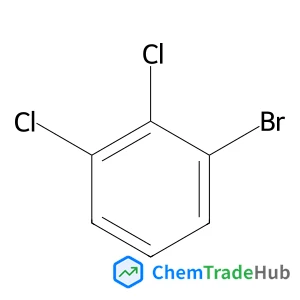
1-Bromo-2,3-dichlorobenzene(CAS: 56961-77-4)
CAS Number
Related Products
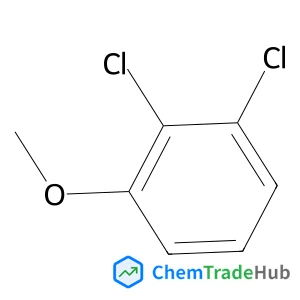
1,2-Dichloro-3-methoxybenzene
CAS Number: 1984-59-4
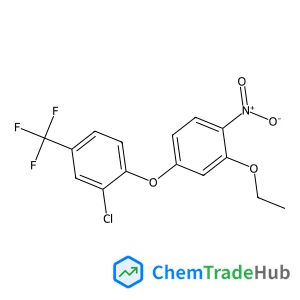
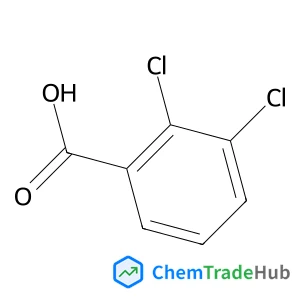
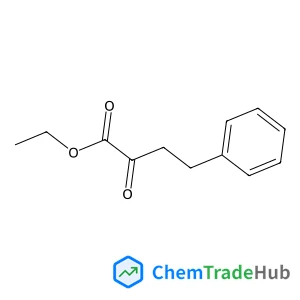
Ethyl 2-oxo-4-phenylbutyrate (>90%)
CAS Number: 64920-29-2
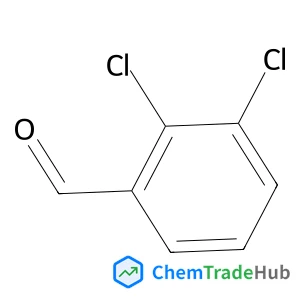
2,3-Dichlorobenzaldehyde
CAS Number: 6334-18-5

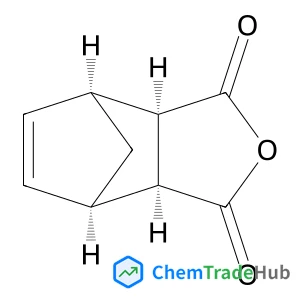
Carbic Anhydride
CAS Number: 129-64-6
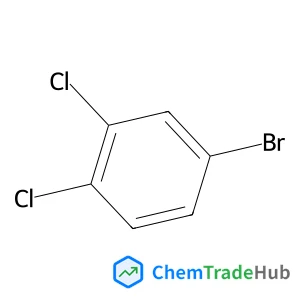
4-Bromo-1,2-dichlorobenzene
CAS Number: 18282-59-2
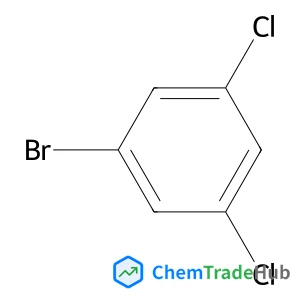
1-Bromo-3,5-dichlorobenzene
CAS Number: 19752-55-7
Other Suppliers for 1-Bromo-2,3-dichlorobenzene





Basic Information
Molecular Formula
C6H3BrCl2
Molecular Weight
225.9 g/mol
Physical Properties
Melting Point
59.0 to 61.0 deg-C
Boiling Point
243°C(lit.)
Density
1.6351 (rough estimate)
Flash Point
243°C
Chemical Identifiers
SMILES
C1=CC(=C(C(=C1)Br)Cl)Cl
InChIKey
HVKCZUVMQPUWSX-UHFFFAOYSA-N
Database References
MDL Number
MFCD00000536
Beilstein Registry Number
2246806
FAQ
1-Bromo-2,3-dichlorobenzene is a white crystalline solid with a molecular weight of approximately 241.54 g/mol. It is poorly soluble in water but soluble in organic solvents like ether and chloroform. The compound is moderately reactive towards nucleophiles and electrophiles. It has a melting point of around 58-59°C and a boiling point of about 225-227°C under atmospheric pressure.
1-Bromo-2,3-dichlorobenzene can be synthesized by bromination of 2,3-dichlorobenzene using a brominating agent like N-bromosuccinimide (NBS) in the presence of a peroxide initiator. This reaction is typically carried out in an inert atmosphere to prevent side reactions. The yield is generally around 80-90%, and the reaction is highly selective for the bromination at the meta position.
1-Bromo-2,3-dichlorobenzene is used in the pharmaceutical industry for the synthesis of certain drugs and intermediates. It is also utilized in the production of dyes, pesticides, and as a precursor in the manufacturing of polymers and sensors. The compound’s unique chemical structure makes it valuable in various applications requiring specific functional groups.
When handling 1-Bromo-2,3-dichlorobenzene, it is essential to wear appropriate personal protective equipment (PPE), including gloves, goggles, and a lab coat. The compound should be stored in a cool, dry place away from direct sunlight and heat sources. In case of a spill, avoid direct contact and use appropriate containment materials to prevent dispersion. Always consult the Safety Data Sheet (SDS) for detailed handling and emergency procedures.
Safety Notice
Please verify product specifications and safety data before use. Contact the supplier for detailed safety information.
Always follow proper handling procedures