



AD
5-Carboxy Rhodamine-6G(CAS: 180144-69-8)
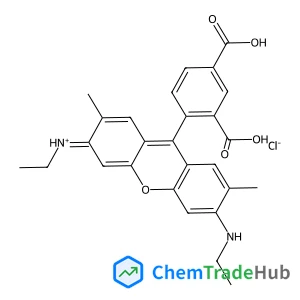
CAS Number
Related Products
![3-[4-Fluoro-2-(trifluoromethyl)phenyl]propanoic acid](https://static.chemtradehub.com/structs/916/916420-73-0-ee37.webp)
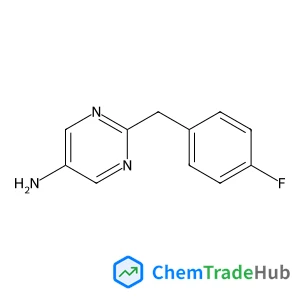
2-(4-Fluorobenzyl)-5-pyrimidinamine
CAS Number: 1152557-45-3
![Methyl [4-cyano-3-(3-thienyl)-1H-pyrazol-1-yl]acetate](https://static.chemtradehub.com/structs/209/2098083-01-1-68bf.webp)
![3-[4-Cyclopentyl-5-(methylsulfanyl)-4H-1,2,4-triazol-3-yl]-1-propanamine hydroiodide (1:1)](https://static.chemtradehub.com/structs/119/1197609-28-1-10f2.webp)
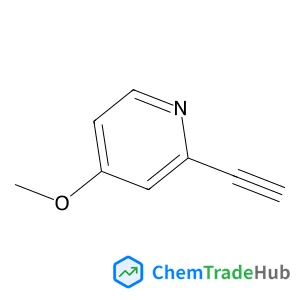
2-Ethynyl-4-methoxypyridine
CAS Number: 1211533-95-7
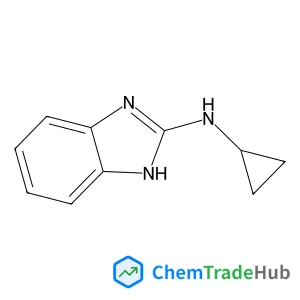
N-Cyclopropyl-1H-benzimidazol-2-amine
CAS Number: 941266-08-6
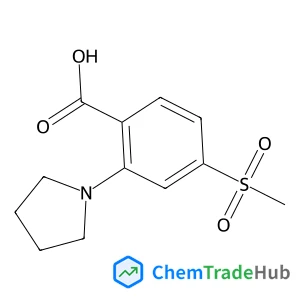
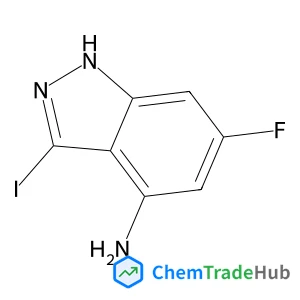
4-AMINO-6-FLUORO-3-IODO (1H)INDAZOLE
CAS Number: 885523-02-4
Other Suppliers for 5-Carboxy Rhodamine-6G




Basic Information
Molecular Formula
C27H27ClN2O5
Molecular Weight
494.97 g/mol
Chemical Identifiers
SMILES
CCNC1=CC2=C(C=C1C)C(=C3C=C(C(=[NH+]CC)C=C3O2)C)C4=C(C=C(C=C4)C(=O)O)C(=O)O.[Cl-]
InChIKey
VSYBZFNXXNHSAG-UHFFFAOYSA-N
Database References
MDL Number
MFCD31563095
FAQ
5-Carboxy Rhodamine-6G (CAS: 180144-69-8) is classified under the Globally Harmonized System (GHS) as a category 4 carcinogen. It falls under the scope of REACH regulations in the European Union, requiring manufacturers and importers to register the substance if the tonnage threshold is exceeded. In the United States, it is subject to regulations by the U.S. Environmental Protection Agency (EPA) under the Toxic Substances Control Act (TSCA). Additionally, the FDA regulates its use in medical applications.
5-Carboxy Rhodamine-6G (CAS: 180144-69-8) can be synthesized as an alternative to other fluorescent dyes such as Rhodamine B or Texas Red. Common alternative reagents include succinic anhydride for carboxylation. Other substituted derivatives like 5-(4-Carboxyphenyl)Rhodamine-6G can also serve as effective alternatives, depending on the specific application.
The market for 5-Carboxy Rhodamine-6G (CAS: 180144-69-8) has seen steady growth, driven by its increasing use in life sciences research, particularly in fluorescence microscopy and flow cytometry. Research trends are shifting towards more sensitive and specific labeling techniques, which may lead to the development of new functional derivatives. The compound's stability and fluorescence make it a preferred choice for long-term cell imaging applications.
Waste containing 5-Carboxy Rhodamine-6G (CAS: 180144-69-8) should be collected in appropriate containers and stored in a secure location away from ignition sources. The waste should be treated as a hazardous substance and disposed of via incineration or through professional chemical waste disposal services. Environmental protection measures include ensuring proper ventilation and using personal protective equipment during handling. Under the U.S. EPA's hazardous waste rules, it may also need to be classified and managed according to specific guidelines.
Safety Notice
Please verify product specifications and safety data before use. Contact the supplier for detailed safety information.
Always follow proper handling procedures
Contact Information
3641133981@qq.com