



AD
2-Bromo-4,5-dimethoxybenzaldehyde(CAS: 5392-10-9)
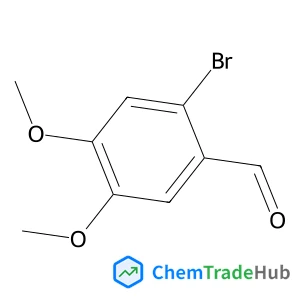
CAS Number
Related Products
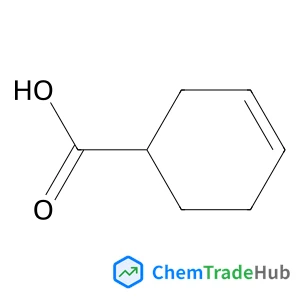
(1S)-3-Cyclohexene-1-carboxylic acid
CAS Number: 5708-19-0
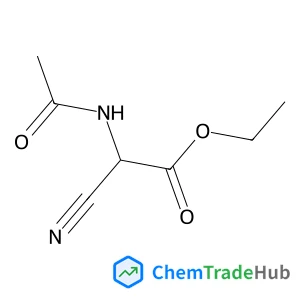
Ethyl Acetamidocyanoacetate
CAS Number: 4977-62-2
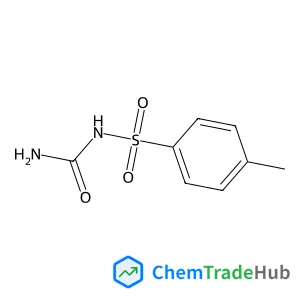
N-Carbamoyl-4-methylbenzenesulfonamide
CAS Number: 1694-06-0
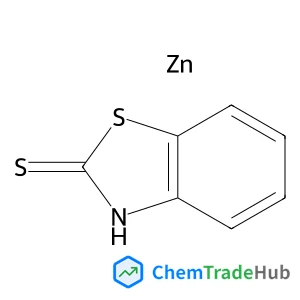
Zinc bis(1,3-benzothiazole-2-thiolate)
CAS Number: 155-04-4
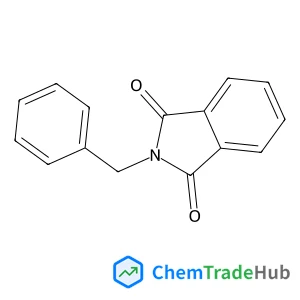
2-Benzyl-1H-isoindole-1,3(2H)-dione
CAS Number: 2142-01-0
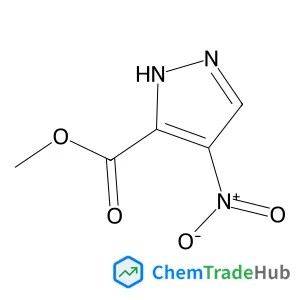
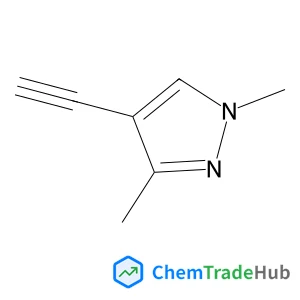
4-Ethynyl-1,3-dimethyl-1H-pyrazole
CAS Number: 61514-53-2
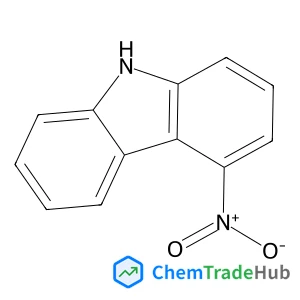
1-Nitro-9H-carbazole
CAS Number: 57905-76-7
Other Suppliers for 2-Bromo-4,5-dimethoxybenzaldehyde




Basic Information
Molecular Formula
C9H9BrO3
Molecular Weight
245.07 g/mol
Physical Properties
Melting Point
146.0 to 152.0 deg-C
Boiling Point
316.1℃ at 760 mmHg
Flash Point
145 °C
Water Solubility
Insoluble in water.
Chemical Identifiers
SMILES
COC1=C(C=C(C(=C1)C=O)Br)OC
InChIKey
UQQROBHFUDBOOK-UHFFFAOYSA-N
Database References
MDL Number
MFCD00003301
Beilstein Registry Number
2052355
FAQ
What are the physical and chemical properties of 2-Bromo-4,5-dimethoxybenzaldehyde (CAS: 5392-10-9)?
2-Bromo-4,5-dimethoxybenzaldehyde is a white to light yellow crystalline solid with a molecular weight of 282.01 g/mol. It is slightly soluble in water but soluble in organic solvents like ethanol and acetone. Chemically, it is reactive towards bases and reducing agents. It has a low boiling point and is sensitive to heat and light.
2-Bromo-4,5-dimethoxybenzaldehyde is typically synthesized through the bromination of 4,5-dimethoxybenzaldehyde using a bromination agent like N-bromosuccinimide (NBS) in the presence of a radical initiator. The reaction is performed under mild conditions to achieve high selectivity and yield.
2-Bromo-4,5-dimethoxybenzaldehyde is used in the pharmaceutical industry for the synthesis of certain drugs, particularly those requiring bromine-containing functional groups. It is also used in the polymer industry for the modification of polymers and in the production of sensors and semiconductors.
When handling 2-Bromo-4,5-dimethoxybenzaldehyde, it is important to wear appropriate personal protective equipment (PPE) such as gloves, goggles, and a lab coat. Work should be conducted in a well-ventilated area or within a fume hood. Spills should be cleaned up using appropriate absorbent materials and the area should be thoroughly washed down. Refer to the Safety Data Sheet (SDS) for specific handling instructions and emergency procedures.
Safety Notice
Please verify product specifications and safety data before use. Contact the supplier for detailed safety information.
Always follow proper handling procedures
Contact Information
jacschem@163.com