



AD
4-Bromo-3-pyridinamine(CAS: 239137-39-4)
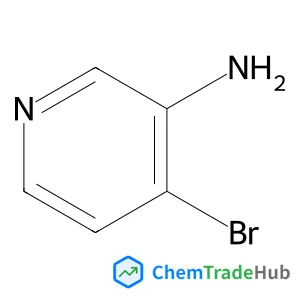
CAS Number
Related Products
![2-Oxo-2-[(2S,4S)-2,5,12-trihydroxy-7-methoxy-6,11-dioxo-4-({2,3,6-trideoxy-3-[(trifluoroacetyl)amino]-alpha-L-lyxo-hexopyranosyl}oxy)-1,2,3,4,6,11-hexahydro-2-tetracenyl]ethyl valerate](https://static.chemtradehub.com/structs/561/56124-62-0-a233.webp)
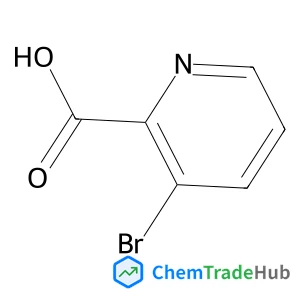
3-Bromo-2-pyridinecarboxylic acid
CAS Number: 30683-23-9
![2-[(2-Propyn-1-yloxy)methyl]oxirane](https://static.chemtradehub.com/structs/181/18180-30-8-c371.webp)
2-[(2-Propyn-1-yloxy)methyl]oxirane
CAS Number: 18180-30-8

![3-[2-(Trifluoromethyl)phenyl]acrylic acid](https://static.chemtradehub.com/structs/206/2062-25-1-7e63.webp)
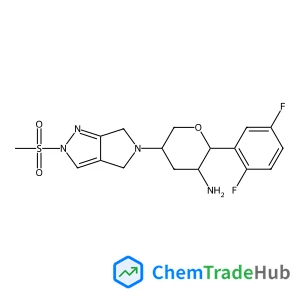
Omarigliptin
CAS Number: 1226781-44-7


![(1S,2R,4S)-1,7,7-Trimethylbicyclo[2.2.1]hept-2-yl acetate](https://static.chemtradehub.com/structs/565/5655-61-8-c14b.webp)
Other Suppliers for 4-Bromo-3-pyridinamine




Basic Information
Molecular Formula
C5H5BrN2
Molecular Weight
173.01 g/mol
Physical Properties
Melting Point
25-32°C
Boiling Point
287.6℃ at 760 mmHg
Density
1.71
Flash Point
127.7 oC
Chemical Identifiers
SMILES
C1=CN=CC(=C1Br)N
InChIKey
LKQGBXRGSPSTES-UHFFFAOYSA-N
Database References
MDL Number
MFCD04112575
FAQ
4-Bromo-3-pyridinamine (CAS: 239137-39-4) falls under the classification of chemicals that require attention to regulatory guidelines. Under the Globally Harmonized System of Classification and Labelling of Chemicals (GHS), it may be categorized as a hazardous substance based on its physical and chemical properties. In the European Union, it is subject to the Registration, Evaluation, Authorization and Restriction of Chemicals (REACH) regulation, which may require specific information and documentation. Additionally, the US Food and Drug Administration (FDA) and the Environmental Protection Agency (EPA) have their own guidelines and requirements for the handling and use of this compound.
When considering alternatives to 4-Bromo-3-pyridinamine (CAS: 239137-39-4) in synthesis, chemists might explore related analogs such as 4-Chloro-3-pyridinamine or 4-Iodo-3-pyridinamine. Other common reagents that can be used as substitutes include 3-pyridinemethanamine or its brominated analogues. These alternatives can be chosen based on specific reaction conditions and desired product properties.
The market and research trends for 4-Bromo-3-pyridinamine (CAS: 239137-39-4) are increasingly focused on its applications in medicinal chemistry and drug discovery. There is a growing interest in exploring its use as a precursor for developing new bioactive compounds and pharmaceuticals. Additionally, the compound is being studied for its potential in catalysis and as a reagent in organic synthesis. Market trends indicate an increasing demand for this compound, driven by its versatile properties and applicability in various research fields.
Waste containing 4-Bromo-3-pyridinamine (CAS: 239137-39-4) should be managed carefully to ensure environmental safety. Proper waste liquid collection and neutralization should be performed before disposal. For solid waste, it is advisable to incinerate the waste under controlled conditions or use professional waste disposal services. Environmental protection precautions include ensuring that waste does not contaminate soil or water sources. Compliance with local and international regulations is essential, and waste should be disposed of in accordance with the guidelines set by the Globally Harmonized System (GHS) and relevant regulatory bodies such as REACH in the EU and the EPA in the US.
Safety Notice
Please verify product specifications and safety data before use. Contact the supplier for detailed safety information.
Always follow proper handling procedures

Contact Information
1248580055@qq.com
Mobile
18064098002
Telephone
027-59223108
Fax
QQ:1248580055、1248089922
Visit Website
http://www.yongkuotech.com