



AD
Propyl cinnamate(CAS: 7778-83-8)
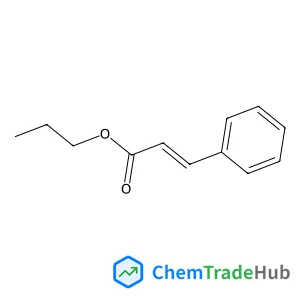
CAS Number
Related Products
![1-[4-Amino-3-chloro-5-(trifluoromethyl)phenyl]-2-[(2-methyl-2-propanyl)amino]ethanol hydrochloride (1:1)](https://static.chemtradehub.com/structs/542/54240-36-7-06e4.webp)
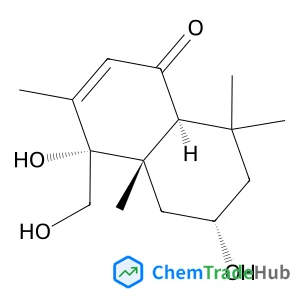
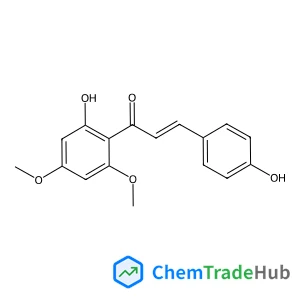
2',4-Dihydroxy-4',6'-dimethoxychalcone
CAS Number: 37308-75-1
![8-({(3R,4R,5S)-3-[(4,4-Difluorocyclohexyl)methoxy]-5-methoxy-4-piperidinyl}amino)-3-methyl-5-(5-methyl-3-pyridinyl)-1,7-naphthyridin-2(1H)-one](https://static.chemtradehub.com/structs/199/1997369-78-4-ea15.webp)
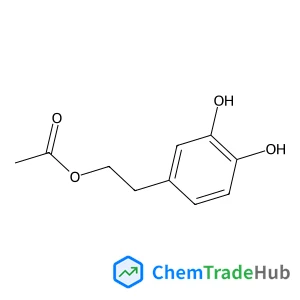
2-(3,4-Dihydroxyphenyl)ethyl acetate
CAS Number: 69039-02-7
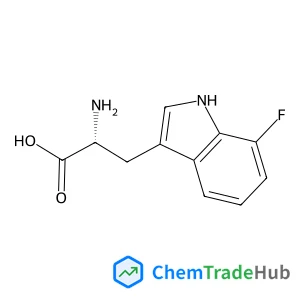
7-Fluorotryptophan
CAS Number: 138514-98-4
![5-[(1S)-1-{(1R,2R)-2-[(1R,3R)-2,2-Dimethyl-3-(3-oxobutyl)cyclopropyl]-1-methyl-3-oxocyclopentyl}-3-methylbutyl]-2,4,6-trihydroxyisophthalaldehyde](https://static.chemtradehub.com/structs/221/221899-21-4-fc5c.webp)
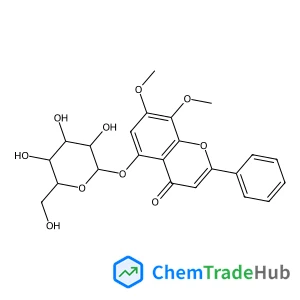
Andrographidine C
CAS Number: 113963-39-6
![(2E)-3-(6-Bromo-2-pyridinyl)-2-cyano-N-[(1S)-1-phenylethyl]acrylamide](https://static.chemtradehub.com/structs/857/857064-38-1-2c6b.webp)
Other Suppliers for Propyl cinnamate





Basic Information
Molecular Formula
C12H14O2
Molecular Weight
190.24 g/mol
Physical Properties
Melting Point
13°C
Boiling Point
282-284°C
Density
1,025 g/cm3
Flash Point
>99°C
Chemical Identifiers
SMILES
CCCOC(=O)/C=C/c1ccccc1
InChIKey
OLLPXZHNCXACMM-CMDGGOBGSA-N
Database References
MDL Number
MFCD00051556
Beilstein Registry Number
2044816
FAQ
Propyl cinnamate (CAS: 7778-83-8) is a colorless to light yellow liquid with a distinctive aroma. The molecular weight is approximately 170.23 g/mol. It has a solubility of up to 1.5% in water and is soluble in common organic solvents such as ethanol and acetone. Propyl cinnamate is relatively stable under normal conditions but can react with strong acids or bases to form acetoacetic esters and other derivatives.
Propyl cinnamate (CAS: 7778-83-8) is typically synthesized by the reaction of cinnamic acid with propyl alcohol in the presence of a strong acid catalyst, such as sulfuric acid. The reaction is carried out at room temperature and yields a mixture of isomers, with the major isomer being the E-configuration. The yield is generally over 90%, and the product can be purified by recrystallization or distillation.
Propyl cinnamate (CAS: 7778-83-8) is widely used in the fragrance industry as a flavor and fragrance component. It is also utilized in the pharmaceutical industry as a solvent and in the formulation of topical medications. In the polymer industry, it serves as a plasticizer and antioxidant. Additionally, it is used in the food industry as a flavor enhancer and in the cosmetic industry as a fragrance ingredient and skin care additive.
When handling Propyl cinnamate (CAS: 7778-83-8), it is essential to wear appropriate personal protective equipment (PPE) such as gloves, goggles, and a lab coat. Work should be carried out in a well-ventilated fume hood to minimize exposure. Spills should be handled with care, using appropriate absorbent materials, and the area should be cleaned thoroughly. Always refer to the Safety Data Sheet (SDS) for detailed information on safe handling and disposal procedures.
Safety Notice
Please verify product specifications and safety data before use. Contact the supplier for detailed safety information.
Always follow proper handling procedures
Contact Information
2851167780@qq.com
Mobile
13348961525
Fax
028-81705658
Visit Website
https://www.weikeqi-biotech.com