



AD
Sodium oxostibinolate oxide(CAS: 15432-85-6)
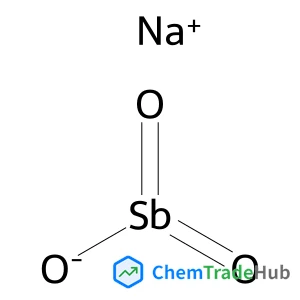
CAS Number
Related Products
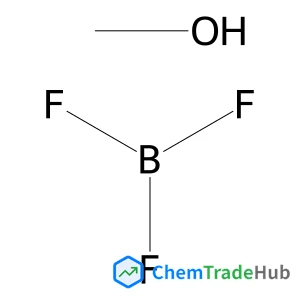
methanol; trifluoro-methoxy-boron
CAS Number: 2802-68-8
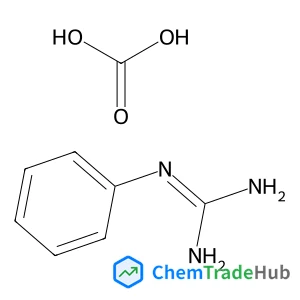
Carbonic acid - 1-phenylguanidine (1:1)
CAS Number: 6685-76-3
![1,7,7-Trimethylbicyclo[2.2.1]heptane-2,3-dione](https://static.chemtradehub.com/structs/103/10373-78-1-714c.webp)
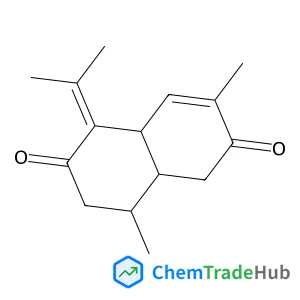
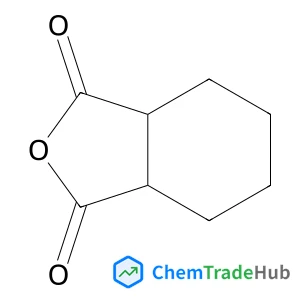
octahydro-2-benzofuran-1,3-dione
CAS Number: 85-42-7
![1-[(4xi)-beta-D-(~13~C_5_)-erythro-Pentofuranosyl]-1H-1,2,4-triazole-3-carboxamide](https://static.chemtradehub.com/structs/164/1646818-35-0-ea01.webp)
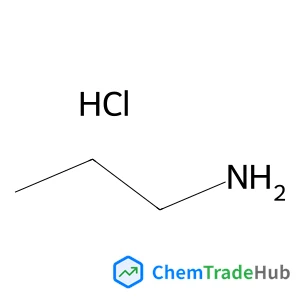
1-Propanamine hydrochloride (1:1)
CAS Number: 556-53-6
![1,1,2,2-Tetrafluoro-1-[2-(1,1,2,2-tetrafluoroethoxy)ethoxy]ethane](https://static.chemtradehub.com/structs/358/358-39-4-0089.webp)
Other Suppliers for Sodium oxostibinolate oxide






Basic Information
Molecular Formula
NaO3Sb
Molecular Weight
254.73 g/mol
EINECS
239-444-7
Physical Properties
Melting Point
>375 °C(lit.)
Density
3.7 g/mL at 25 °C(lit.)
Water Solubility
slightly soluble
Chemical Identifiers
SMILES
[O-][Sb](=O)=O.[Na+]
InChIKey
BMENBXQCFCSBAQ-UHFFFAOYSA-N
Database References
MDL Number
MFCD01941053
FAQ
Sodium oxostibinolate oxide (CAS: 15432-85-6) falls under the scope of the GHS (Globally Harmonized System of Classification and Labeling of Chemicals) for classification and labeling. It is also subject to the REACH regulations in the European Union, which require manufacturers and importers to register substances above a certain tonnage. In the United States, it is regulated by the EPA for environmental protection and by the FDA for any potential uses in pharmaceuticals or food additives.
While Sodium oxostibinolate oxide (CAS: 15432-85-6) is a specific compound, its alternatives may include other oxides or related organostibine compounds that serve similar functional roles in synthesis. Common substitutes can vary depending on the specific application, but they might include stibine compounds, oxides of other metals, or analogous organometallic reagents.
The market for Sodium oxostibinolate oxide (CAS: 15432-85-6) is currently small but growing due to its unique properties in certain research fields. Recent trends show increased interest in organostibine compounds for their potential in catalysis and materials science. Research is focusing on understanding its reactivity and exploring its applications in organic synthesis, environmental remediation, and functional materials.
Waste containing Sodium oxostibinolate oxide (CAS: 15432-85-6) should be collected and disposed of in accordance with local regulations. Typically, this involves neutralizing any reactive components, ensuring the waste is stable, and then disposing of it through professional waste disposal services. Environmental protection measures should include proper containment to prevent accidental release, and adherence to the guidelines set by the EPA or similar regulatory bodies.
Safety Notice
Please verify product specifications and safety data before use. Contact the supplier for detailed safety information.
Always follow proper handling procedures