



AD
(2S)-5-Hydroxy-2-(4-hydroxyphenyl)-4-oxo-3,4-dihydro-2H-chromen-7-yl 2-O-(6-deoxy-alpha-L-mannopyranosyl)-beta-D-glucopyranoside(CAS: 10236-47-2)
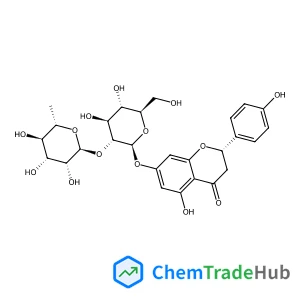
CAS Number
Related Products
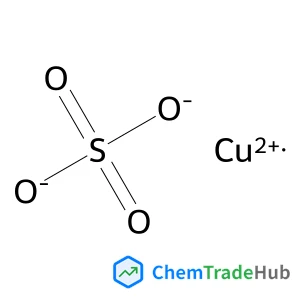
Copper(2+) sulfate
CAS Number: 7758-98-7
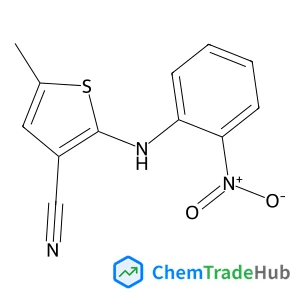
Olanzapine Impurity 1
CAS Number: 138564-58-6
Sodium carboxymethyl cellulose
CAS Number: 9004-32-4
Other Suppliers for (2S)-5-Hydroxy-2-(4-hydroxyphenyl)-4-oxo-3,4-dihydro-2H-chromen-7-yl 2-O-(6-deoxy-alpha-L-mannopyranosyl)-beta-D-glucopyranoside



Basic Information
Molecular Formula
C27H32O14
Molecular Weight
580.54 g/mol
Physical Properties
Melting Point
166 ºC
Boiling Point
928.1°C at 760 mmHg
Flash Point
308.5±27.8 °C
Water Solubility
Soluble in water, alcohol, acetone and warm acetic acid.
Chemical Identifiers
SMILES
OC[C@H]1O[C@@H](Oc2cc(O)c3c(c2)O[C@@H](CC3=O)c2ccc(cc2)O)[C@@H]([C@H]([C@@H]1O)O)O[C@@H]1O[C@@H](C)[C@@H]([C@H]([C@H]1O)O)O
InChIKey
DFPMSGMNTNDNHN-ZPHOTFPESA-N
Database References
MDL Number
MFCD00148888
Beilstein Registry Number
102012
FAQ
This compound is a flavonoid glycoside with a complex structure featuring a chromen-7-yl ring substituted with hydroxy and oxo groups, along with a beta-D-glucopyranoside and 6-deoxy-alpha-L-mannopyranosyl sugar moiety. It is a natural product derived from plant sources, known for its antioxidant properties and potential biological activity. The CAS number 10236-47-2 identifies this specific molecule, which is used in research for its pharmacological relevance and structural complexity.
This compound is primarily used in pharmaceutical research as a precursor for drug development, particularly in studies related to flavonoid metabolism and antioxidant therapies. It also serves as a model compound in biochemical studies due to its structural features. Industrial applications include use in organic synthesis, while food and nutraceutical sectors may explore its potential as a bioactive ingredient. Research into its pharmacological properties is ongoing.
Safety data for this compound is limited, but as a natural glycoside, it is generally considered non-toxic in moderate amounts. Handling should follow standard laboratory protocols, including use of gloves and ventilation. It is not classified as hazardous under common safety standards, but specific precautions may apply. Always consult safety data sheets (SDS) for detailed information on handling and exposure risks.
Store this compound in a cool (≤25°C), dry, and dark environment to maintain stability. Keep in airtight containers to prevent moisture absorption and degradation. Avoid exposure to light and air to preserve its chemical integrity. Maintain humidity levels below 60% and ensure proper labeling. Follow storage guidelines for sensitive organic compounds to ensure longevity and safety.
Safety Notice
Please verify product specifications and safety data before use. Contact the supplier for detailed safety information.
Always follow proper handling procedures
Contact Information
Contact Person
Hu Min