



AD
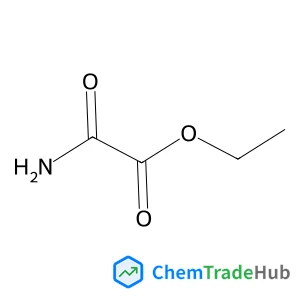
Ethyl amino(oxo)acetate(CAS: 617-36-7)
CAS Number
Related Products
![1-[4-Amino-3-chloro-5-(trifluoromethyl)phenyl]-2-[(2-methyl-2-propanyl)amino]ethanol hydrochloride (1:1)](https://static.chemtradehub.com/structs/542/54240-36-7-06e4.webp)
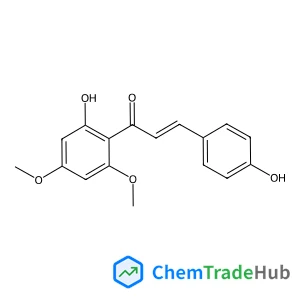
2',4-Dihydroxy-4',6'-dimethoxychalcone
CAS Number: 37308-75-1
![8-({(3R,4R,5S)-3-[(4,4-Difluorocyclohexyl)methoxy]-5-methoxy-4-piperidinyl}amino)-3-methyl-5-(5-methyl-3-pyridinyl)-1,7-naphthyridin-2(1H)-one](https://static.chemtradehub.com/structs/199/1997369-78-4-ea15.webp)
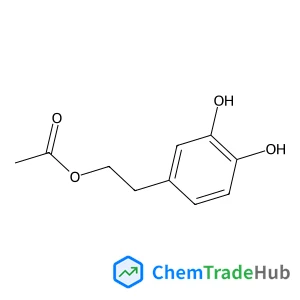
2-(3,4-Dihydroxyphenyl)ethyl acetate
CAS Number: 69039-02-7
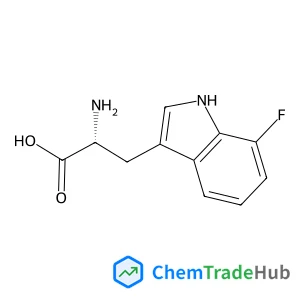
7-Fluorotryptophan
CAS Number: 138514-98-4
![5-[(1S)-1-{(1R,2R)-2-[(1R,3R)-2,2-Dimethyl-3-(3-oxobutyl)cyclopropyl]-1-methyl-3-oxocyclopentyl}-3-methylbutyl]-2,4,6-trihydroxyisophthalaldehyde](https://static.chemtradehub.com/structs/221/221899-21-4-fc5c.webp)
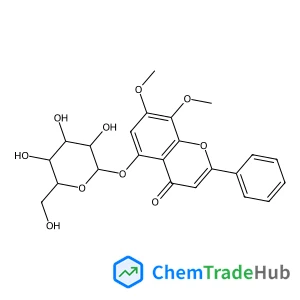
Andrographidine C
CAS Number: 113963-39-6
![(2E)-3-(6-Bromo-2-pyridinyl)-2-cyano-N-[(1S)-1-phenylethyl]acrylamide](https://static.chemtradehub.com/structs/857/857064-38-1-2c6b.webp)
Other Suppliers for Ethyl amino(oxo)acetate






Basic Information
Molecular Formula
C4H7NO3
Molecular Weight
117.1 g/mol
Physical Properties
Melting Point
113.0 to 117.0 deg-C
Boiling Point
218.88°C (rough estimate)
Density
1.3886 (rough estimate)
Chemical Identifiers
SMILES
CCOC(=O)C(=O)N
InChIKey
RZMZBHSKPLVQCP-UHFFFAOYSA-N
Database References
MDL Number
MFCD00008005
FAQ
Ethyl amino(oxo)acetate (CAS: 617-36-7) is a colorless or white crystalline solid with a molecular weight of approximately 127.14 g/mol. It is slightly soluble in water and has a pKa of around 3.4. The compound is reactive towards nucleophiles and can undergo esterification and amidation reactions. It is also known for its acid-labile nature, making it susceptible to hydrolysis under acidic conditions.
Ethyl amino(oxo)acetate (CAS: 617-36-7) can be synthesized via the condensation of ethyl acetoacetate and ethylenediamine. Commonly, this reaction is catalyzed by strong acids like sulfuric acid or p-toluenesulfonic acid. The yield is typically high, and the selectivity is good, with the formation of the desired ethyl amino(oxo)acetate product.
Ethyl amino(oxo)acetate (CAS: 617-36-7) is used in various industries. It is a key intermediate in the synthesis of pharmaceuticals, particularly in the production of amino acids and their derivatives. It also finds applications in the production of polymers, where it can be used as a monomer in copolymerization reactions. Additionally, it is used in the manufacturing of certain sensors and as a precursor in the production of semiconductors.
When handling Ethyl amino(oxo)acetate (CAS: 617-36-7), it is crucial to wear appropriate personal protective equipment (PPE) such as gloves, safety goggles, and a lab coat. The compound should be stored in a well-ventilated area and away from strong acids and bases. It should be handled with care as it is reactive towards nucleophiles and can undergo hydrolysis. In case of a spill, it should be immediately cleaned up using appropriate absorbents, and the area should be well-ventilated. Always refer to the Safety Data Sheet (SDS) for detailed handling and safety information.
Safety Notice
Please verify product specifications and safety data before use. Contact the supplier for detailed safety information.
Always follow proper handling procedures
Contact Information
2851167780@qq.com
Mobile
13348961525
Fax
028-81705658
Visit Website
https://www.weikeqi-biotech.com