



AD
(2R,4aS,6aS,12bR,14aS,14bR)-9-Formyl-10,11-dihydroxy-2,4a,6a,12b,14a-pentamethyl-8-oxo-1,2,3,4,4a,5,6,6a,8,12b,13,14,14a,14b-tetradecahydro-2-picenecarboxylic acid(CAS: 107316-88-1)
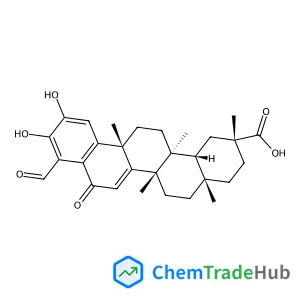
CAS Number
Related Products
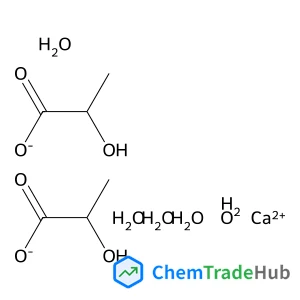
Calcium Lactate Pentahydrate
CAS Number: 5743-47-5
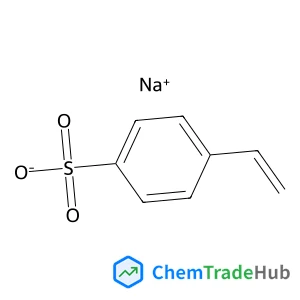
Sodium 4-vinylbenzenesulfonate
CAS Number: 2695-37-6
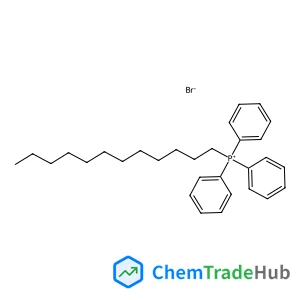
Dodecyl(triphenyl)phosphonium bromide
CAS Number: 15510-55-1
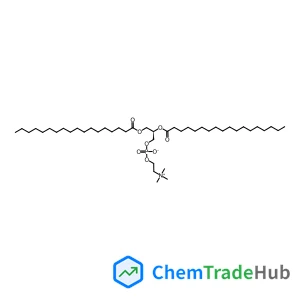
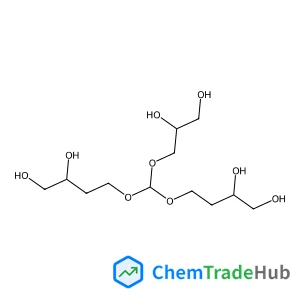
Poly(Propylene Glycol)
CAS Number: 25791-96-2
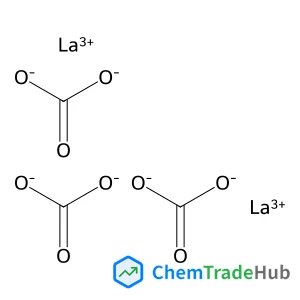
LANTHANUM CARBONATE
CAS Number: 587-26-8
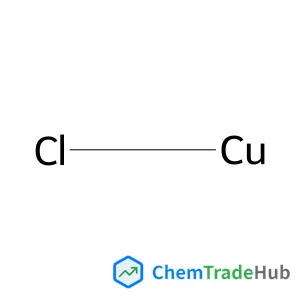
Copper(1+) chloride
CAS Number: 1344-67-8
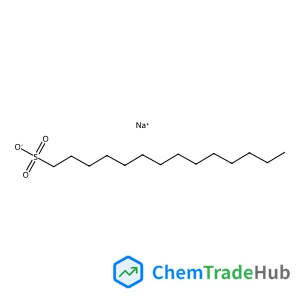
Sodium 1-tetradecanesulfonate
CAS Number: 6994-45-2
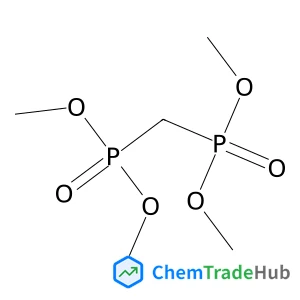
Tetramethyl methylenebis(phosphonate)
CAS Number: 16001-93-7
Other Suppliers for (2R,4aS,6aS,12bR,14aS,14bR)-9-Formyl-10,11-dihydroxy-2,4a,6a,12b,14a-pentamethyl-8-oxo-1,2,3,4,4a,5,6,6a,8,12b,13,14,14a,14b-tetradecahydro-2-picenecarboxylic acid







Basic Information
Molecular Formula
C29H36O6
Molecular Weight
480.6 g/mol
Physical State
Yellow powder
Chemical Identifiers
SMILES
O=Cc1c(O)c(O)cc3c1C(=O)\C=C4\[C@@]5(C)CC[C@]2(CC[C@@](C(=O)O)(C[C@H]2[C@@]5(CC[C@@]34C)C)C)C
InChIKey
ZDZSFWLPCFRASW-CPISFEQASA-N
Database References
MDL Number
MFCD16660658
FAQ
This compound is a complex organic molecule with a high molecular weight due to its long carbon chain. It crystallizes in the form of needles at a specific melting point. The compound is slightly soluble in common organic solvents like ethanol and acetone but is insoluble in water. Chemically, it is reactive towards nucleophiles and bases. It features a formyl group, hydroxyl groups, and methyl groups, which contribute to its reactivity and solubility characteristics.
This compound can be synthesized via a multi-step process involving condensation reactions, alkylation, and oxidation steps. Commonly, methylation followed by selective oxidation to form the formyl group, and subsequent hydroxylation are used. The reaction typically requires mild to moderate conditions and can be catalyzed by transition metals or organic reagents, ensuring high selectivity and yield.
This compound is used in various industries, including pharmaceuticals for developing specific drug candidates, polymers for creating advanced materials, and sensors for detecting specific analytes. It can also find applications in semiconductor technology for certain manufacturing processes.
Proper handling requires following standard laboratory safety protocols. Wear appropriate personal protective equipment (PPE) such as gloves, goggles, and a lab coat. Work in a well-ventilated area or fume hood to minimize inhalation risks. Follow the Material Safety Data Sheet (MSDS) for specific safety guidelines and emergency spill procedures. Ensure proper storage under controlled conditions to prevent degradation.
Safety Notice
Please verify product specifications and safety data before use. Contact the supplier for detailed safety information.
Always follow proper handling procedures
Contact Information
Contact Person
Manager Shi
1373640151@qq.com