



AD
(Pentafluorophenyl)hydrazine(CAS: 828-73-9)
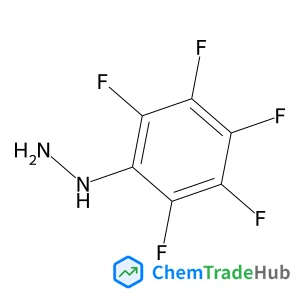
CAS Number
Related Products

methanol; trifluoro-methoxy-boron
CAS Number: 2802-68-8
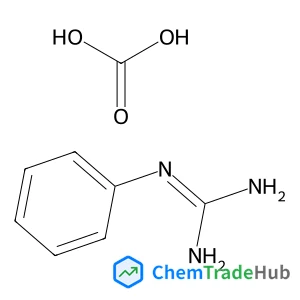
Carbonic acid - 1-phenylguanidine (1:1)
CAS Number: 6685-76-3
![1,7,7-Trimethylbicyclo[2.2.1]heptane-2,3-dione](https://static.chemtradehub.com/structs/103/10373-78-1-714c.webp)

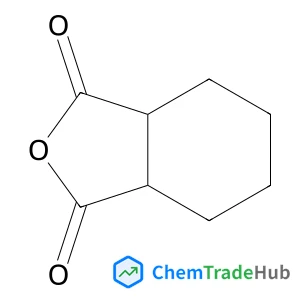
octahydro-2-benzofuran-1,3-dione
CAS Number: 85-42-7
![1-[(4xi)-beta-D-(~13~C_5_)-erythro-Pentofuranosyl]-1H-1,2,4-triazole-3-carboxamide](https://static.chemtradehub.com/structs/164/1646818-35-0-ea01.webp)
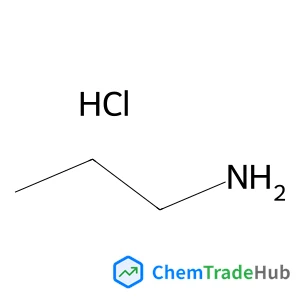
1-Propanamine hydrochloride (1:1)
CAS Number: 556-53-6
![1,1,2,2-Tetrafluoro-1-[2-(1,1,2,2-tetrafluoroethoxy)ethoxy]ethane](https://static.chemtradehub.com/structs/358/358-39-4-0089.webp)
Other Suppliers for (Pentafluorophenyl)hydrazine







Basic Information
Molecular Formula
C6H3F5N2
Molecular Weight
198.09 g/mol
Physical Properties
Melting Point
74-76 °C (lit.)
Boiling Point
117.6±40.0 ºC (760 Torr),
Density
1.691±0.06 g/cm3 (20 ºC 760 Torr),
Flash Point
24.9±27.3 ºC,
Chemical Identifiers
SMILES
C1(=C(C(=C(C(=C1F)F)F)F)F)NN
InChIKey
BYCUWCJUPSUFBX-UHFFFAOYSA-N
Database References
MDL Number
MFCD00007574
Beilstein Registry Number
0747800
FAQ
(Pentafluorophenyl)hydrazine (CAS: 828-73-9) is regulated under the Globally Harmonized System of Classification and Labelling of Chemicals (GHS) as a potentially toxic substance. It falls under the EU REACH regulations requiring registration if manufactured or imported in quantities exceeding 1 tonne per year. Additionally, the FDA and EPA may have specific handling and disposal guidelines for this compound, especially concerning its environmental impact due to its halogen content.
In synthesis, alternatives to (Pentafluorophenyl)hydrazine (CAS: 828-73-9) include other hydrazine derivatives such as diphenylhydrazine or hydrazine itself. For specific applications, trifluoromethylbenzylhydrazine or fluorinated hydrazine derivatives can also serve as effective substitutes, depending on the reaction requirements and desired product properties.
The market for (Pentafluorophenyl)hydrazine (CAS: 828-73-9) is primarily driven by its use in organic synthesis, particularly in the preparation of fluorinated compounds and pharmaceuticals. Recent research trends focus on developing more sustainable and environmentally friendly alternatives due to the compound's potential hazardousness. The trend also includes exploring the role of (Pentafluorophenyl)hydrazine in advanced materials and electronics applications.
Waste containing (Pentafluorophenyl)hydrazine (CAS: 828-73-9) should be collected in compatible containers and stored separately to prevent contamination. It should be disposed of through professional waste disposal services that comply with local and international regulations. Incineration under controlled conditions is one method, but it must be done in a way that does not release harmful emissions. Environmental protection measures include ensuring no water contamination and proper disposal of any contaminated materials to minimize ecological impact.
Safety Notice
Please verify product specifications and safety data before use. Contact the supplier for detailed safety information.
Always follow proper handling procedures