



AD
1,1'-(Oxydicarbonyl)di(2,3,4-perylenetricarboxylic acid)(CAS: 128-69-8)
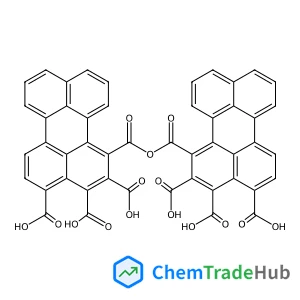
CAS Number
Related Products
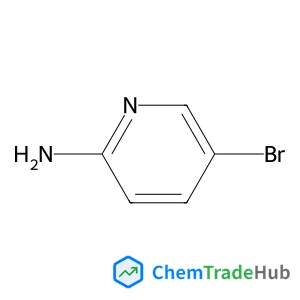
5-Bromo-2-pyridinamine
CAS Number: 1072-97-5
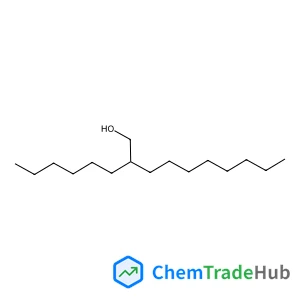
2-Hexyl-1-decanol
CAS Number: 2425-77-6
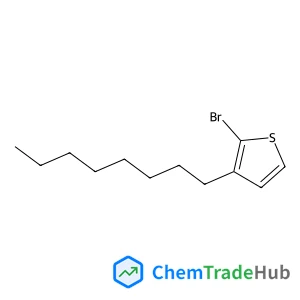
2-Bromo-3-octylthiophene
CAS Number: 145543-83-5
![2-Methyl-2-propanyl [(1R,2R)-2-amino-3,3-difluorocyclohexyl]carbamate](https://static.chemtradehub.com/structs/110/1109284-37-8-41b7.webp)
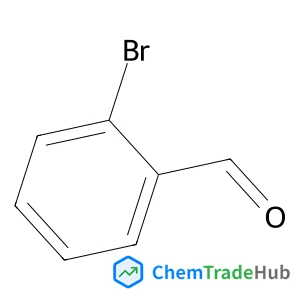
2-Bromobenzaldehyde
CAS Number: 6630-33-7
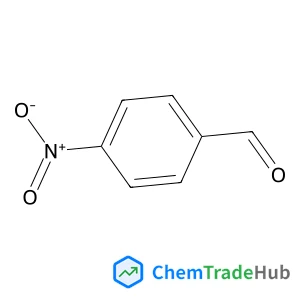
4-Nitrobenzaldehyde
CAS Number: 555-16-8
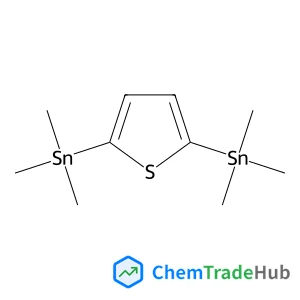
2,5-Thienediylbis(trimethylstannane)
CAS Number: 86134-26-1
![(3E)-6-Bromo-3-[6-bromo-1-(2-ethylhexyl)-2-oxo-1,2-dihydro-3H-indol-3-ylidene]-1-(2-ethylhexyl)-1,3-dihydro-2H-indol-2-one](https://static.chemtradehub.com/structs/114/1147124-23-9-d4f0.webp)
![3-(5-Bromothiophen-2-yl)-2,5-bis(2-ethylhexyl)-6-(thiophen-2-yl)pyrrolo[3,4-c]pyrrole-1,4(2H,5H)-dione](https://static.chemtradehub.com/structs/130/1308671-90-0-a205.webp)
Other Suppliers for 1,1'-(Oxydicarbonyl)di(2,3,4-perylenetricarboxylic acid)



Basic Information
Molecular Formula
C48H22O15
Molecular Weight
838.69 g/mol
Physical Properties
Melting Point
>300 °C (lit.)
Boiling Point
755.8±33.0°C at 760 mmHg
Flash Point
329.9 °C
Chemical Identifiers
SMILES
c1cc2cccc3c2c(c1)c4ccc(c5c4c3c(c(c5C(=O)O)C(=O)O)C(=O)OC(=O)c6c7c8cccc9c8c(ccc9)c1c7c(c(cc1)C(=O)O)c(c6C(=O)O)C(=O)O)C(=O)O
InChIKey
BVTFXNVEBOOFNJ-UHFFFAOYSA-N
Database References
MDL Number
MFCD00006916
Beilstein Registry Number
57831
FAQ
1,1'-(Oxydicarbonyl)di(2,3,4-perylenetricarboxylic acid), with the CAS number 128-69-8, is a synthetic organic compound that belongs to the class of perylene derivatives. It is characterized by its complex molecular structure, containing two perylenetricarboxylic acid units linked by an oxydicarbonyl bridge. This compound is known for its high molecular weight and potential applications in advanced materials and chemical research due to its unique optical and electronic properties.
1,1'-(Oxydicarbonyl)di(2,3,4-perylenetricarboxylic acid) is primarily used in the development of organic semiconductors and as a precursor in the synthesis of various functional materials. It also finds applications in pharmaceutical research, particularly in the design of compounds with photophysical properties. Due to its chemical versatility, it is used in industrial processes and as a research reagent in the study of molecular interactions and material science.
1,1'-(Oxydicarbonyl)di(2,3,4-perylenetricarboxylic acid) is generally considered safe when handled properly, but it requires caution due to its potential to cause skin and eye irritation. It is recommended to use appropriate personal protective equipment (PPE) such as gloves and safety goggles during handling. Safety standards for this compound are typically outlined in chemical safety data sheets (SDS) and should be followed to ensure safe usage in laboratories and industrial settings.
This compound should be stored in a cool, dry, and well-ventilated area, away from direct light. It is best kept in a sealed container made of inert material such as glass or high-density polyethylene (HDPE) to prevent moisture absorption and contamination. Storage conditions should maintain a temperature below 25°C and humidity levels below 60% to ensure stability and prevent degradation of the compound.
Safety Notice
Please verify product specifications and safety data before use. Contact the supplier for detailed safety information.
Always follow proper handling procedures
Contact Information
sales8@alfachem.cn