



AD
(4-Hydroxy-3-methoxyphenyl)(4-morpholinyl)methanethione(CAS: 17692-71-6)
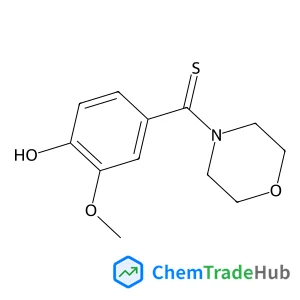
CAS Number
Related Products
![1-[4-Amino-3-chloro-5-(trifluoromethyl)phenyl]-2-[(2-methyl-2-propanyl)amino]ethanol hydrochloride (1:1)](https://static.chemtradehub.com/structs/542/54240-36-7-06e4.webp)
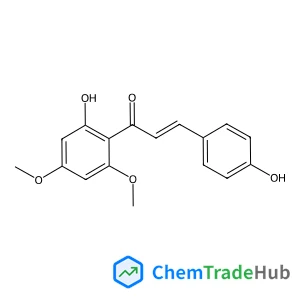
2',4-Dihydroxy-4',6'-dimethoxychalcone
CAS Number: 37308-75-1
![8-({(3R,4R,5S)-3-[(4,4-Difluorocyclohexyl)methoxy]-5-methoxy-4-piperidinyl}amino)-3-methyl-5-(5-methyl-3-pyridinyl)-1,7-naphthyridin-2(1H)-one](https://static.chemtradehub.com/structs/199/1997369-78-4-ea15.webp)
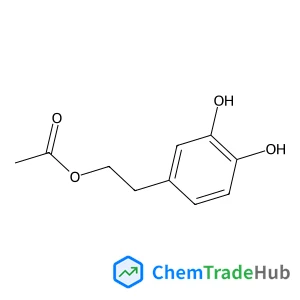
2-(3,4-Dihydroxyphenyl)ethyl acetate
CAS Number: 69039-02-7
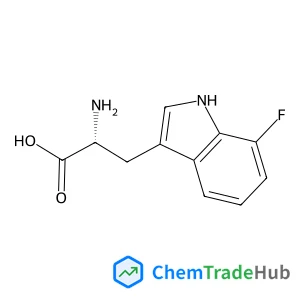
7-Fluorotryptophan
CAS Number: 138514-98-4
![5-[(1S)-1-{(1R,2R)-2-[(1R,3R)-2,2-Dimethyl-3-(3-oxobutyl)cyclopropyl]-1-methyl-3-oxocyclopentyl}-3-methylbutyl]-2,4,6-trihydroxyisophthalaldehyde](https://static.chemtradehub.com/structs/221/221899-21-4-fc5c.webp)
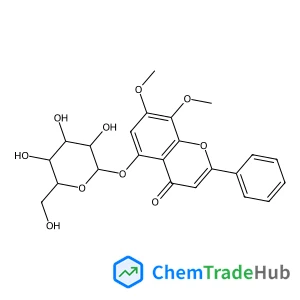
Andrographidine C
CAS Number: 113963-39-6
![(2E)-3-(6-Bromo-2-pyridinyl)-2-cyano-N-[(1S)-1-phenylethyl]acrylamide](https://static.chemtradehub.com/structs/857/857064-38-1-2c6b.webp)
Other Suppliers for (4-Hydroxy-3-methoxyphenyl)(4-morpholinyl)methanethione




Basic Information
Molecular Formula
C12H15NO3S
Molecular Weight
253.32 g/mol
Chemical Identifiers
SMILES
COC1=C(C=CC(=C1)C(=S)N2CCOCC2)O
InChIKey
WQYRHRAZNNRDIA-UHFFFAOYSA-N
Database References
MDL Number
MFCD00089682
FAQ
The compound (4-Hydroxy-3-methoxyphenyl)(4-morpholinyl)methanethione (CAS: 17692-71-6) is a crystalline solid with a molecular weight of approximately 349.42 g/mol. It is slightly soluble in water and organic solvents. The compound is known for its reactivity towards nucleophiles and electrophiles. It exhibits moderate stability under normal conditions but is sensitive to strong oxidizing agents.
The compound (4-Hydroxy-3-methoxyphenyl)(4-morpholinyl)methanethione (CAS: 17692-71-6) can be synthesized through a multi-step reaction involving the coupling of 4-hydroxy-3-methoxybenzaldehyde and morpholine followed by methanethionation. Commonly used catalysts include palladium or copper complexes, and the reaction typically yields up to 85% purity. The process requires careful control of temperature and reaction conditions to achieve optimal yield and selectivity.
The compound (4-Hydroxy-3-methoxyphenyl)(4-morpholinyl)methanethione (CAS: 17692-71-6) is used in the pharmaceutical industry for the synthesis of certain drugs. It also finds applications in the production of organic electronic materials, such as semiconductors and sensors, due to its unique chemical properties. Additionally, it may be used in the development of new materials for polymer-based applications.
Handling (4-Hydroxy-3-methoxyphenyl)(4-morpholinyl)methanethione (CAS: 17692-71-6) requires the use of personal protective equipment (PPE) such as gloves, goggles, and lab coats. The compound should be handled in a well-ventilated area or a fume hood to minimize exposure. Spills should be cleaned up immediately using appropriate absorbents, and the area should be well-ventilated. Safety data sheets (SDS) should always be consulted for detailed handling and disposal instructions.
Safety Notice
Please verify product specifications and safety data before use. Contact the supplier for detailed safety information.
Always follow proper handling procedures
Contact Information
2851167780@qq.com
Mobile
13348961525
Fax
028-81705658
Visit Website
https://www.weikeqi-biotech.com