



AD
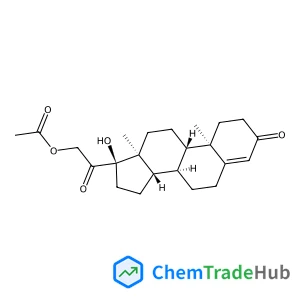
17-Hydroxy-3,20-dioxopregn-4-en-21-yl acetate(CAS: 640-87-9)
CAS Number
Related Products
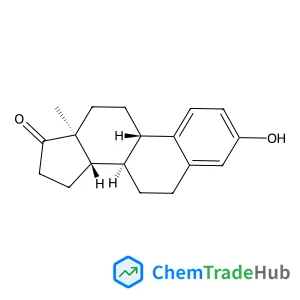
3-Hydroxyestra-1(10),2,4-trien-17-one
CAS Number: 53-16-7
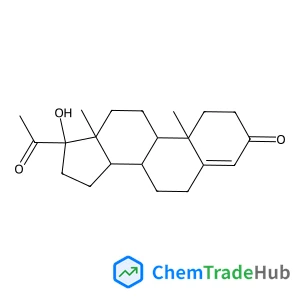
17-Hydroxypregn-4-ene-3,20-dione
CAS Number: 68-96-2
Other Suppliers for 17-Hydroxy-3,20-dioxopregn-4-en-21-yl acetate



Basic Information
Molecular Formula
C23H32O5
Molecular Weight
388.5 g/mol
Physical Properties
Melting Point
233.0 to 237.0 deg-C
Density
1.20±0.1 g/cm3 (20 ºC 760 Torr),
Chemical Identifiers
SMILES
CC(=O)OCC(=O)[C@@]1(O)CC[C@H]2[C@@H]3CCC4=CC(=O)CC[C@]4(C)[C@H]3CC[C@]12C
InChIKey
HPAKILCZTKWIFK-JZTHCNPZSA-N
Database References
MDL Number
MFCD00051137
FAQ
17-Hydroxy-3,20-dioxopregn-4-en-21-yl acetate (CAS: 640-87-9) is a colorless crystalline compound with a molecular weight of approximately 391.42 g/mol. It is highly soluble in organic solvents like methanol and ethyl acetate. The compound shows moderate reactivity towards nucleophiles and can undergo ester hydrolysis. It is stable under normal conditions but should be stored away from strong acids and bases to avoid degradation.
17-Hydroxy-3,20-dioxopregn-4-en-21-yl acetate (CAS: 640-87-9) is synthesized via multiple steps involving steroid chemistry. Commonly, it is prepared from progesterone by a series of reactions including oxidation, acetylation, and esterification. The synthesis typically involves palladium-catalyzed reactions and uses solvents like dichloromethane and acetonitrile. Yields are generally around 70-80%.
17-Hydroxy-3,20-dioxopregn-4-en-21-yl acetate (CAS: 640-87-9) finds applications in the pharmaceutical industry, particularly in the development of steroid-based drugs. It is also used in the production of certain types of polymers and as a reagent in analytical chemistry for developing sensor technologies. Its use in semiconductor manufacturing is less common but possible, depending on specific applications.
When handling 17-Hydroxy-3,20-dioxopregn-4-en-21-yl acetate (CAS: 640-87-9), it is essential to wear appropriate personal protective equipment (PPE) including gloves, goggles, and a lab coat. Work should be conducted in a well-ventilated area or fume hood to minimize inhalation risks. Spills should be cleaned up promptly using appropriate absorbent materials and disposing of them according to local waste regulations. Always refer to the Safety Data Sheet (SDS) for detailed handling instructions and emergency procedures.
Safety Notice
Please verify product specifications and safety data before use. Contact the supplier for detailed safety information.
Always follow proper handling procedures