



AD
3,4,5-Trihydroxybenzaldehyde(CAS: 13677-79-7)

CAS Number
Related Products
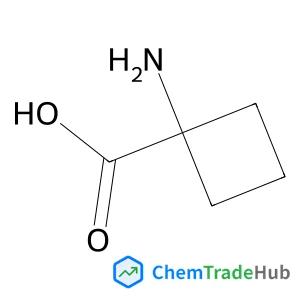
1-Aminocyclobutanecarboxylic acid
CAS Number: 22264-50-2
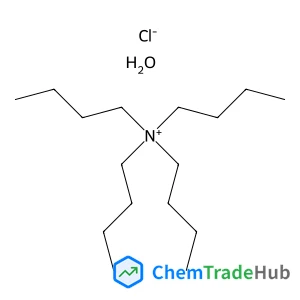
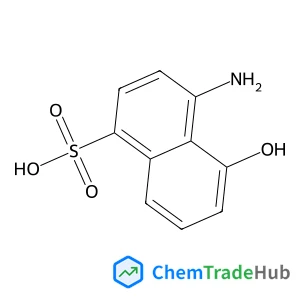
![Potassium 4-[(4-fluorobenzyl)carbamoyl]-1-methyl-2-(2-{[(5-methyl-1,3,4-oxadiazol-2-yl)carbonyl]amino}-2-propanyl)-5,6-dioxo-1,2,5,6-tetrahydropyrimidin-2-ide](https://static.chemtradehub.com/structs/871/871038-72-1-53e3.webp)


Methyl icosanoate
CAS Number: 1120-28-1
![Imidazo[1,5-a]pyridine](https://static.chemtradehub.com/structs/274/274-47-5-b458.webp)
Imidazo[1,5-a]pyridine
CAS Number: 274-47-5
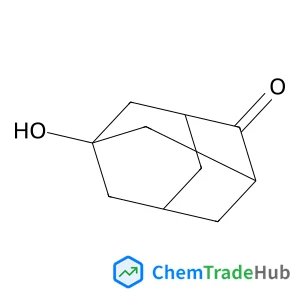
(1R,3S,5s,7s)-5-Hydroxy-2-adamantanone
CAS Number: 20098-14-0

Fomesafen
CAS Number: 72178-02-0
Other Suppliers for 3,4,5-Trihydroxybenzaldehyde







Basic Information
Molecular Formula
C7H6O4
Molecular Weight
154.12 g/mol
Physical State
Powder
Physical Properties
Melting Point
211-213°C
Boiling Point
355.3℃ at 760 mmHg
Flash Point
182.9 °C
Chemical Identifiers
SMILES
C1=C(C=C(C(=C1O)O)O)C=O
InChIKey
RGZHEOWNTDJLAQ-UHFFFAOYSA-N
Database References
MDL Number
MFCD00003371
Beilstein Registry Number
2091654
FAQ
3,4,5-Trihydroxybenzaldehyde (CAS: 13677-79-7) is a white crystalline solid with a molecular weight of approximately 198.16 g/mol. It is slightly soluble in water and more soluble in organic solvents like ethanol and acetone. Chemically, it is highly reactive, especially towards nucleophiles and reducing agents due to the presence of multiple hydroxyl groups.
3,4,5-Trihydroxybenzaldehyde (CAS: 13677-79-7) can be synthesized from 1,3,5-trihydroxybenzene through a series of reactions including reduction of the carbonyl group. Common methods involve catalytic hydrogenation using palladium-based catalysts or other reducing agents such as sodium borohydride at room temperature. The reaction yields are typically high, and the product is isolated by recrystallization.
3,4,5-Trihydroxybenzaldehyde (CAS: 13677-79-7) finds applications in various industries, including pharmaceuticals, where it is used as an intermediate in the synthesis of certain drugs. It is also used in the production of fragrances and flavorings, and in the synthesis of dyes and pigments. Additionally, it has potential uses in the development of sensors and semiconductors.
When handling 3,4,5-Trihydroxybenzaldehyde (CAS: 13677-79-7), proper personal protective equipment (PPE) is essential, including gloves, safety goggles, and a lab coat. Work should be conducted in a well-ventilated area or a fume hood to minimize exposure. Spills should be handled carefully using appropriate absorbents, and the material safety data sheet (MSDS) should be consulted for specific spill procedures. Exposure to high concentrations can cause skin irritation, so regular hand washing and decontamination are recommended.
Safety Notice
Please verify product specifications and safety data before use. Contact the supplier for detailed safety information.
Always follow proper handling procedures
Contact Information
new_great@163.com