



AD
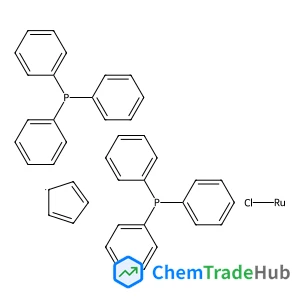
Chloro(1,3-cyclopentadien-1-yl)ruthenium-triphenylphosphine(12)(CAS: 32993-05-8)
CAS Number
Related Products
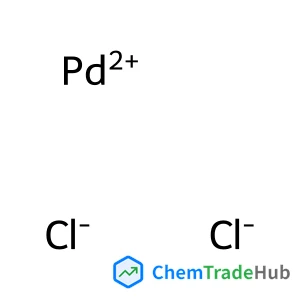
Palladium(2+) dichloride
CAS Number: 7647-10-1
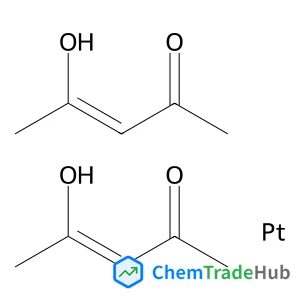
Bis(acetylacetonato)platinum(II)
CAS Number: 15170-57-7
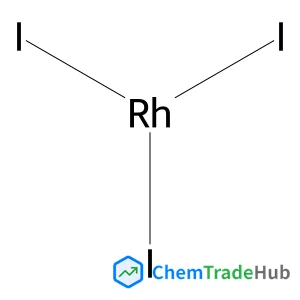
rhodium(+2) cation triiodide
CAS Number: 15492-38-3
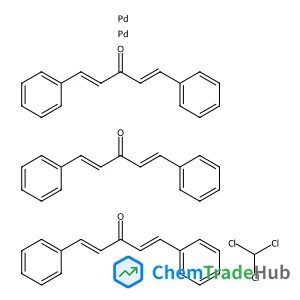
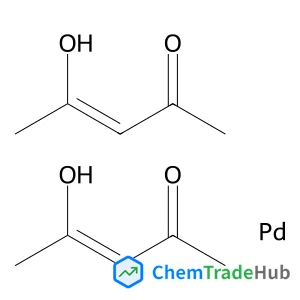
Bis(acetylacetonato)palladium(Ⅱ)
CAS Number: 14024-61-4
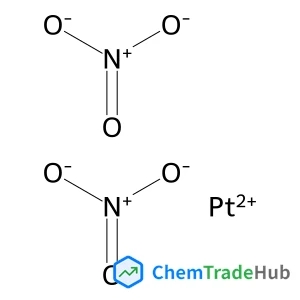
Nitric acid, platinum(2+) salt
CAS Number: 18496-40-7
Other Suppliers for Chloro(1,3-cyclopentadien-1-yl)ruthenium-triphenylphosphine(12)







Basic Information
Molecular Formula
C41H35ClP2Ru
Molecular Weight
726.2 g/mol
Physical Properties
Melting Point
135 °C (dec.) (lit.)
Chemical Identifiers
SMILES
C1=C[CH]C=C1.C1=CC=C(C=C1)P(C2=CC=CC=C2)C3=CC=CC=C3.C1=CC=C(C=C1)P(C2=CC=CC=C2)C3=CC=CC=C3.Cl[Ru]
InChIKey
ITWYMVPMADIWDM-UHFFFAOYSA-M
Database References
MDL Number
MFCD14155709
FAQ
Chloro(1,3-cyclopentadien-1-yl)ruthenium-triphenylphosphine(12) (CAS: 32993-05-8) is a complex compound with a molecular weight of approximately 622.2 g/mol. It is poorly soluble in water but soluble in organic solvents like chloroform and ethanol. The compound exhibits moderate reactivity with typical transition metal complexes and can undergo substitution reactions. It crystallizes in an octahedral form.
Chloro(1,3-cyclopentadien-1-yl)ruthenium-triphenylphosphine(12) (CAS: 32993-05-8) is synthesized via a reaction between ruthenium(II) chloride and 1,3-cyclopentadiene in the presence of triphenylphosphine. The yield is typically around 70% with good selectivity. The reaction is performed under an inert atmosphere to prevent oxidation.
Chloro(1,3-cyclopentadien-1-yl)ruthenium-triphenylphosphine(12) (CAS: 32993-05-8) is used in the pharmaceutical industry for the synthesis of complex organic molecules, in polymer chemistry for doping and functionalization, in sensor technology for catalytic applications, and in semiconductor manufacturing for electronic materials.
When handling Chloro(1,3-cyclopentadien-1-yl)ruthenium-triphenylphosphine(12) (CAS: 32993-05-8), ensure the use of personal protective equipment (PPE) including gloves, goggles, and a lab coat. Work in a well-ventilated area or a fume hood to minimize inhalation risk. Store the compound in a dry, cool place away from oxidizing agents. In case of spill, immediately clean up with appropriate safety measures and consult an SDS for detailed instructions.
Safety Notice
Please verify product specifications and safety data before use. Contact the supplier for detailed safety information.
Always follow proper handling procedures
Contact Information
Contact Person
Xin Yu Chang
1338495249@139.com