



AD
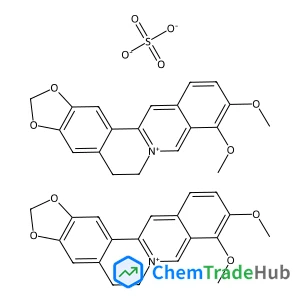
Berberine Sulfate(CAS: 316-41-6)
CAS Number
Related Products
![1-[4-Amino-3-chloro-5-(trifluoromethyl)phenyl]-2-[(2-methyl-2-propanyl)amino]ethanol hydrochloride (1:1)](https://static.chemtradehub.com/structs/542/54240-36-7-06e4.webp)
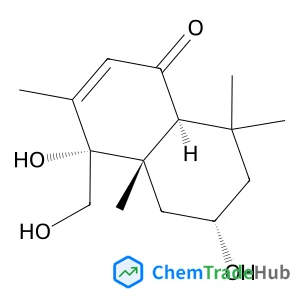
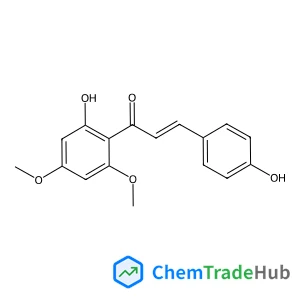
2',4-Dihydroxy-4',6'-dimethoxychalcone
CAS Number: 37308-75-1
![8-({(3R,4R,5S)-3-[(4,4-Difluorocyclohexyl)methoxy]-5-methoxy-4-piperidinyl}amino)-3-methyl-5-(5-methyl-3-pyridinyl)-1,7-naphthyridin-2(1H)-one](https://static.chemtradehub.com/structs/199/1997369-78-4-ea15.webp)
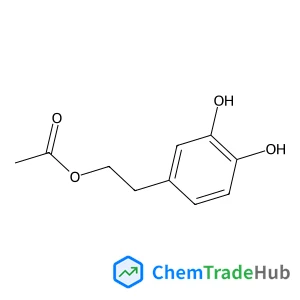
2-(3,4-Dihydroxyphenyl)ethyl acetate
CAS Number: 69039-02-7
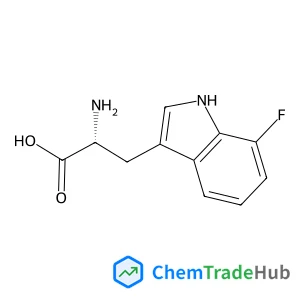
7-Fluorotryptophan
CAS Number: 138514-98-4
![5-[(1S)-1-{(1R,2R)-2-[(1R,3R)-2,2-Dimethyl-3-(3-oxobutyl)cyclopropyl]-1-methyl-3-oxocyclopentyl}-3-methylbutyl]-2,4,6-trihydroxyisophthalaldehyde](https://static.chemtradehub.com/structs/221/221899-21-4-fc5c.webp)
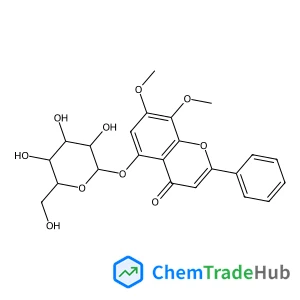
Andrographidine C
CAS Number: 113963-39-6
![(2E)-3-(6-Bromo-2-pyridinyl)-2-cyano-N-[(1S)-1-phenylethyl]acrylamide](https://static.chemtradehub.com/structs/857/857064-38-1-2c6b.webp)
Other Suppliers for Berberine Sulfate



Basic Information
Molecular Formula
C40H36N2O12S
Molecular Weight
768.8 g/mol
Physical State
Powder
Physical Properties
Density
unknow
Water Solubility
almost transparency
Chemical Identifiers
SMILES
COC1=C(C2=C[N+]3=C(C=C2C=C1)C4=CC5=C(C=C4CC3)OCO5)OC.COC1=C(C2=C[N+]3=C(C=C2C=C1)C4=CC5=C(C=C4CC3)OCO5)OC.[O-]S(=O)(=O)[O-]
InChIKey
OJVABJMSSDUECT-UHFFFAOYSA-L
Database References
MDL Number
MFCD08056073
FAQ
Berberine Sulfate (CAS: 316-41-6) is subject to various regulatory guidelines such as the Globally Harmonized System of Classification and Labeling of Chemicals (GHS), Registration, Evaluation, Authorization and Restriction of Chemicals (REACH) in the EU, and the Toxic Substances Control Act (TSCA) in the USA. The compound may also be regulated under the Federal Insecticide, Fungicide, and Rodenticide Act (FIFRA) for agricultural uses in the US, and the Clean Air Act (CAA) for environmental protection. Compliance with local and national regulations is essential for handling and manufacturing Berberine Sulfate.
Berberine Sulfate (CAS: 316-41-6) can be synthesized using various reagents and conditions. Common alternatives include using Berberine Chloride or Berberine Hydrochloride as starting materials. Other analogs like Jatrorrhizine Sulfate or Coptisine Sulfate can also be considered depending on the desired application. The choice of alternative reagents depends on the specific requirements of the synthesis process.
The market for Berberine Sulfate (CAS: 316-41-6) is growing due to its potential applications in healthcare and pharmaceuticals. Research trends indicate increasing interest in its use as an antibacterial, antifungal, and anti-inflammatory agent. Market demand is also influenced by its role in traditional medicine and recent studies highlighting its potential in treating various diseases. Price trends are driven by supply and demand dynamics, with research and development activities driving the upward trend in the compound's market value.
Waste containing Berberine Sulfate (CAS: 316-41-6) should be collected in appropriate containers lined with acid-resistant materials to prevent chemical reactions. Incineration or professional waste disposal methods should be used, following local regulations. Environmental protection precautions include ensuring that waste does not leach into soil or water bodies. It is essential to comply with all relevant regulations and guidelines for the safe disposal of Berberine Sulfate waste.
Safety Notice
Please verify product specifications and safety data before use. Contact the supplier for detailed safety information.
Always follow proper handling procedures
Contact Information
2851167780@qq.com
Mobile
13348961525
Fax
028-81705658
Visit Website
https://www.weikeqi-biotech.com