



AD
EGTA (Ethylene glycol-bis(2-Aminoethyl Ether)-N,N,N',N'-tetra-Acetic Acid)(CAS: 67-42-5)
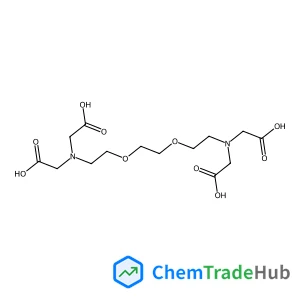
CAS Number
Related Products
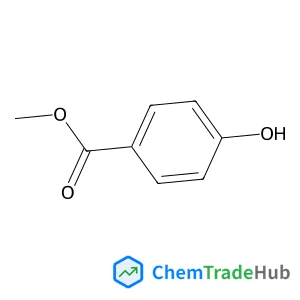
Methyl 4-hydroxybenzoate
CAS Number: 99-76-3
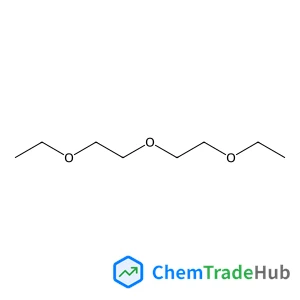
1-Ethoxy-2-(2-ethoxyethoxy)ethane
CAS Number: 112-36-7
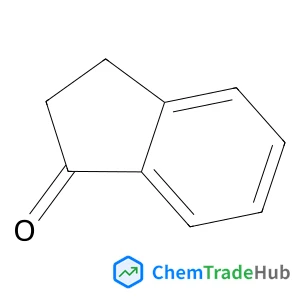
1-Indanone
CAS Number: 83-33-0

Iron(2+) di(2,4-cyclopentadienide)
CAS Number: 102-54-5
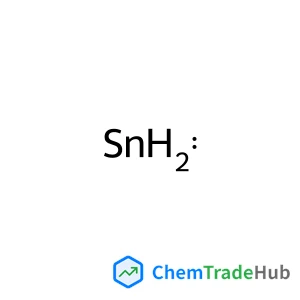
lambda~2~-Stannane
CAS Number: 7440-31-5
![3-[(4-Amino-2-methyl-5-pyrimidinyl)methyl]-5-(2-hydroxyethyl)-4-methyl-1,3-thiazol-3-ium chloride hydrochloride (1:1:1)](https://static.chemtradehub.com/structs/67-/67-03-8-5020.webp)
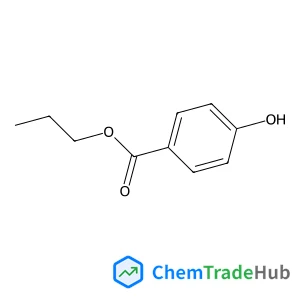
Propylparaben
CAS Number: 94-13-3
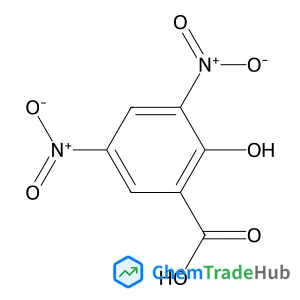
2-Hydroxy-3,5-dinitrobenzoic acid
CAS Number: 609-99-4
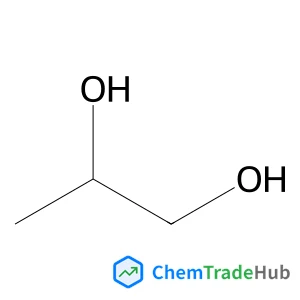
Propylene glycol
CAS Number: 57-55-6
Other Suppliers for EGTA (Ethylene glycol-bis(2-Aminoethyl Ether)-N,N,N',N'-tetra-Acetic Acid)


Basic Information
Molecular Formula
C14H24N2O10
Molecular Weight
380.35 g/mol
Physical Properties
Melting Point
241 °C (dec.) (lit.)
Boiling Point
678℃/760mmHg
Density
1.2838 (rough estimate)
Flash Point
363.9℃
Chemical Identifiers
SMILES
C(COCCOCCN(CC(=O)O)CC(=O)O)N(CC(=O)O)CC(=O)O
InChIKey
DEFVIWRASFVYLL-UHFFFAOYSA-N
Database References
MDL Number
MFCD00004291
Beilstein Registry Number
1717370
FAQ
EGTA, or Ethylene glycol-bis(2-Aminoethyl Ether)-N,N,N',N'-tetra-Acetic Acid, is a chelating agent widely used in scientific research. It has the chemical formula C10H18N2O8 and is known for its high affinity for calcium ions. EGTA is a colorless solid that is soluble in water and is commonly used to sequester metal ions in biological systems and laboratory experiments.
EGTA is primarily used in pharmaceutical research, biochemistry, and molecular biology. It serves as a calcium chelator, helping to control calcium ion concentrations in cell cultures, enzyme assays, and drug development. Additionally, EGTA is employed in industrial applications for metal ion removal and in food science for stabilizing certain compounds. Its utility in research is further supported by its role in fluorescence spectroscopy and ion channel studies.
EGTA is generally considered safe when handled properly, but it can be toxic if ingested or inhaled in large quantities. It is important to follow safety protocols such as wearing gloves, goggles, and a lab coat. EGTA is not classified as a hazardous substance under common safety standards, but appropriate protective measures should still be taken to ensure safe handling and disposal.
EGTA should be stored in a cool, dry place away from direct light. It is typically kept in airtight containers to prevent moisture absorption and degradation. The recommended storage temperature is between 2-8°C, and it should be protected from humidity to maintain its stability and effectiveness over time.
Safety Notice
Please verify product specifications and safety data before use. Contact the supplier for detailed safety information.
Always follow proper handling procedures

Contact Information
stany@richjoint.com
Mobile
15000655320
Telephone
15000655320
Fax
021-52511118
Visit Website
https://www.richjoint.com