



AD
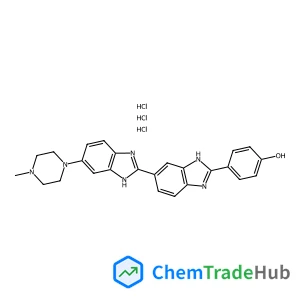
Hoechst 33258 trihydrochloride(CAS: 23491-45-4)
CAS Number
Related Products
![(3Z,6R,14aR,14bR)-3-Ethylidene-6-hydroxy-6-methyl-5-methylene-3,4,5,6,9,11,13,14,14a,14b-decahydro[1,6]dioxacyclododecino[2,3,4-gh]pyrrolizine-2,7-dione 12-oxide](https://static.chemtradehub.com/structs/387/38710-26-8-724c.webp)
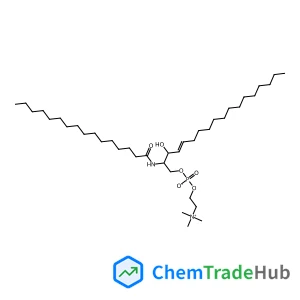
Sphingomyelin d18:1-C16:0
CAS Number: 383907-87-7
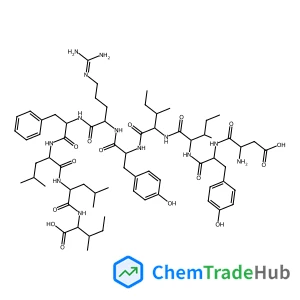
VP7 (31-40) peptide
CAS Number: 152687-39-3
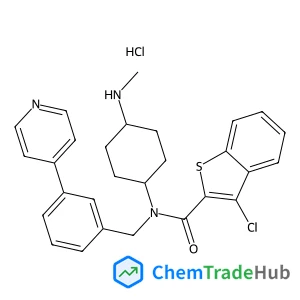
SAG hydrochloride
CAS Number: 2095432-58-7
![(3S)-2-[(2S)-2-[[(2S)-1-ethoxy-1-oxo-4-phenylbutan-2-yl]amino]propanoyl]-6,7-dimethoxy-3,4-dihydro-1H-isoquinoline-3-carboxylic acid;hydrochloride](https://static.chemtradehub.com/structs/825/82586-52-5-119f.webp)
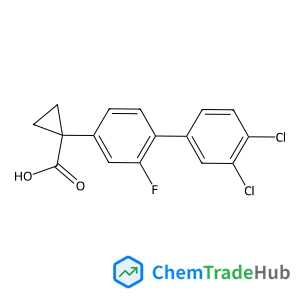
Temporins; Temporin G
CAS Number: 188713-78-2
![2-Hydroxy-5-[(E)-2-(4-nitrophenyl)diazen-1-yl]benzoic acid](https://static.chemtradehub.com/structs/224/2243-76-7-ec6a.webp)
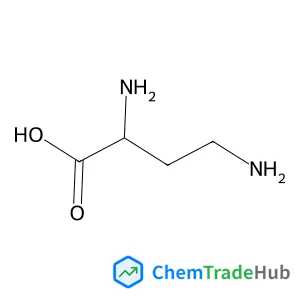
(2S)-2,4-diaminobutanoic acid
CAS Number: 1758-80-1
Other Suppliers for Hoechst 33258 trihydrochloride




Basic Information
Molecular Formula
C25H27Cl3N6O
Molecular Weight
460.97 g/mol
Physical Properties
Melting Point
280°C(lit.)
Boiling Point
643.1 °C at 760 mmHg
Flash Point
342.7 °C
Chemical Identifiers
SMILES
CN1CCN(CC1)C2=CC3=C(C=C2)N=C(N3)C4=CC5=C(C=C4)N=C(N5)C6=CC=C(C=C6)O.Cl.Cl.Cl
InChIKey
UDJDXLXTHZQAAC-UHFFFAOYSA-N
Database References
MDL Number
MFCD00012679
FAQ
Hoechst 33258 trihydrochloride (CAS: 23491-45-4) is subject to several regulatory guidelines. It falls under the scope of the REACH regulations in Europe, which require registration, evaluation, authorization, and restriction of chemicals. Additionally, it must comply with the Globally Harmonized System of Classification and Labelling of Chemicals (GHS) for hazardous product labeling. In the United States, the FDA and EPA may also have specific requirements for its handling and use, including safety data sheets and proper storage conditions.
While Hoechst 33258 trihydrochloride (CAS: 23491-45-4) is a well-established compound, alternatives such as other DNA stains like YOYO-1 and SYTOX Green are available. These alternatives may offer similar fluorescence properties but with different synthesis methods or less stringent regulatory requirements. It's important to evaluate the specific needs of your application to determine the most appropriate reagent.
Hoechst 33258 trihydrochloride (CAS: 23491-45-4) remains a popular choice in research due to its high affinity for DNA and its ability to stain nucleic acids. Market trends show a steady demand for its use in cell imaging and fluorescence microscopy. Recent research is focusing on its applications in live cell imaging and its potential use in drug discovery. However, ongoing developments in fluorescent probes are likely to introduce newer alternatives, potentially shifting market dynamics.
Waste containing Hoechst 33258 trihydrochloride (CAS: 23491-45-4) should be collected in appropriate containers and stored separately to prevent contamination. Upon collection, it should be neutralized to minimize environmental impact. For disposal, incineration is a common method, but professional waste disposal services should be utilized to ensure compliance with local regulations. Proper handling and disposal should also include precautions to protect the environment and human health.
Safety Notice
Please verify product specifications and safety data before use. Contact the supplier for detailed safety information.
Always follow proper handling procedures
Contact Information
Contact Person
Gong Siyu
3193328036@qq.com
Mobile
17801761073
Telephone
010-50973130
Visit Website
https://www.solarbio.comAddress
Beijing Solabio Technology Co., Ltd.