



AD
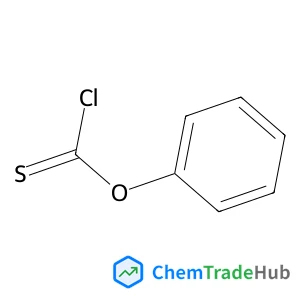
O-Phenyl carbonochloridothioate(CAS: 1005-56-7)
CAS Number
Related Products

methanol; trifluoro-methoxy-boron
CAS Number: 2802-68-8

Carbonic acid - 1-phenylguanidine (1:1)
CAS Number: 6685-76-3
![1,7,7-Trimethylbicyclo[2.2.1]heptane-2,3-dione](https://static.chemtradehub.com/structs/103/10373-78-1-714c.webp)
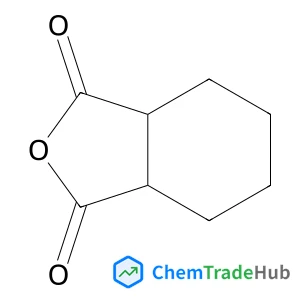
octahydro-2-benzofuran-1,3-dione
CAS Number: 85-42-7
![1-[(4xi)-beta-D-(~13~C_5_)-erythro-Pentofuranosyl]-1H-1,2,4-triazole-3-carboxamide](https://static.chemtradehub.com/structs/164/1646818-35-0-ea01.webp)

1-Propanamine hydrochloride (1:1)
CAS Number: 556-53-6
![1,1,2,2-Tetrafluoro-1-[2-(1,1,2,2-tetrafluoroethoxy)ethoxy]ethane](https://static.chemtradehub.com/structs/358/358-39-4-0089.webp)

Other Suppliers for O-Phenyl carbonochloridothioate






Basic Information
Molecular Formula
C7H5ClOS
Molecular Weight
172.64 g/mol
Physical Properties
Melting Point
0
Boiling Point
93°C/10mmHg(lit.)
Chemical Identifiers
SMILES
ClC(=S)Oc1ccccc1
InChIKey
KOSYAAIZOGNATQ-UHFFFAOYSA-N
Database References
MDL Number
MFCD00004920
Beilstein Registry Number
774830
FAQ
O-Phenyl carbonochloridothioate (CAS: 1005-56-7) is a crystalline compound with a molecular weight of approximately 214.84 g/mol. It has a low solubility in water but is more soluble in organic solvents. Chemically, it is reactive towards nucleophiles and can undergo substitution reactions. It is typically used in the synthesis of various pharmaceutical intermediates and as a reagent in organic chemistry.
O-Phenyl carbonochloridothioate (CAS: 1005-56-7) is synthesized by the reaction of phenyl disulfide with carbon tetrachloride in the presence of a base. The reaction is typically carried out in a solvent like dichloromethane or toluene, and the yield is generally around 85-90%. The process involves the formation of a carbon-chlorine bond followed by the introduction of a phenyl group and a thioether linkage.
O-Phenyl carbonochloridothioate (CAS: 1005-56-7) is primarily used in the pharmaceutical industry for the synthesis of certain drugs and intermediates. It also finds applications in the chemical industry for the production of polymers and as a reagent in organic synthesis. Additionally, it is used in the development of sensors and certain semiconductor materials.
When handling O-Phenyl carbonochloridothioate (CAS: 1005-56-7), it is important to wear appropriate personal protective equipment (PPE) such as gloves, goggles, and a lab coat. The substance should be handled in a fume hood to minimize exposure. Spills should be cleaned up using appropriate absorbents, and the area should be ventilated. Always refer to the Safety Data Sheet (SDS) for detailed guidelines and emergency procedures.
Safety Notice
Please verify product specifications and safety data before use. Contact the supplier for detailed safety information.
Always follow proper handling procedures