



AD
(4-Bromo-2-thienyl)methanol(CAS: 79757-77-0)
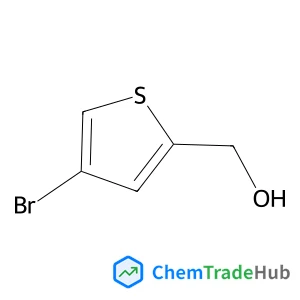
CAS Number
Related Products
![4-Sulfothiacalix[4]arene sodium salt](https://static.chemtradehub.com/structs/211/211561-04-5-c419.webp)
4-Sulfothiacalix[4]arene sodium salt
CAS Number: 211561-04-5
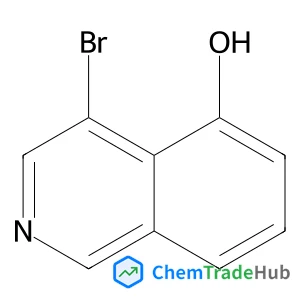
4-Bromoisoquinolin-5-ol
CAS Number: 651310-41-7
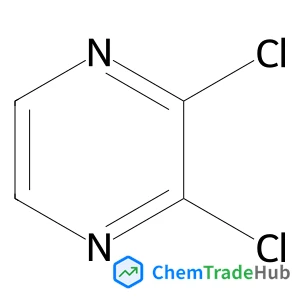
2,3-dichloropyrazine
CAS Number: 4858-85-9
![3-[4-(Aminomethyl)-1,3-thiazol-2-yl]aniline](https://static.chemtradehub.com/structs/885/885280-76-2-68fa.webp)
![Sodium 6-methyl-2-thioxo-5,6,7,8-tetrahydro-2H-pyrido[4,3-d]pyrimidin-4a-ide](https://static.chemtradehub.com/structs/125/1255717-42-0-d896.webp)
![{(2S,6R)-4-Benzyl-6-[(benzyloxy)methyl]-2-morpholinyl}methanol](https://static.chemtradehub.com/structs/158/1581750-87-9-8b86.webp)
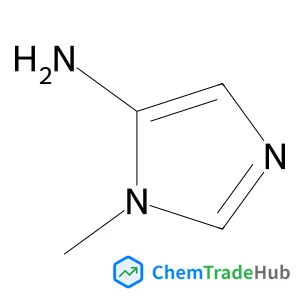
1-Methyl-1H-imidazol-5-amine
CAS Number: 66787-75-5
![(1R)-2-{[(2-Methyl-2-propanyl)oxy]carbonyl}-5-(methylsulfonyl)-1-isoindolinecarboxylic acid](https://static.chemtradehub.com/structs/210/2101238-70-2-41e6.webp)
Other Suppliers for (4-Bromo-2-thienyl)methanol







Basic Information
Molecular Formula
C5H5BrOS
Molecular Weight
193.07 g/mol
Physical State
No data available
Physical Properties
Melting Point
32-35°C
Boiling Point
271.5°C at 760 mmHg
Density
1.773
Flash Point
118.0±23.2 °C
Chemical Identifiers
SMILES
C1=C(SC=C1Br)CO
InChIKey
PXZNJHHUYJRFPZ-UHFFFAOYSA-N
Database References
MDL Number
MFCD04115392
FAQ
(4-Bromo-2-thienyl)methanol, also known as 2-(4-bromothiophen-2-yl)ethanol, is a crystalline solid with a molecular weight of approximately 228.04 g/mol. It has a low solubility in water (0.015 g/100 mL at 25°C) and is more soluble in organic solvents such as methanol and ethanol. It is reactive towards nucleophiles and can undergo substitution reactions. This compound exhibits good thermal stability and is stable in air under normal conditions.
(4-Bromo-2-thienyl)methanol is typically synthesized by reacting 2-bromothiophene with methanol in the presence of a base such as sodium hydroxide. The reaction is carried out in an aprotic solvent like dimethylformamide (DMF) at elevated temperatures. The yield is generally around 70-80%, with good selectivity towards the desired product. The reaction is monitored by thin-layer chromatography (TLC) or nuclear magnetic resonance (NMR) spectroscopy.
(4-Bromo-2-thienyl)methanol is utilized in various industries, including pharmaceuticals, where it serves as a precursor for the synthesis of active pharmaceutical ingredients (APIs). It is also used in the production of semiconductors and as a component in sensor technology. In the polymer industry, it can be incorporated into polymer formulations to enhance specific properties such as thermal stability or conductivity.
Handling (4-Bromo-2-thienyl)methanol requires caution due to its reactivity. It is recommended to wear personal protective equipment (PPE) such as gloves, goggles, and a lab coat to protect against skin contact and inhalation of fumes. Work should be conducted in a fume hood to minimize exposure. In case of a spill, neutralize the area with a suitable absorbent material and dispose of it according to local regulations. Always refer to the Safety Data Sheet (SDS) for detailed safety information and emergency procedures.
Safety Notice
Please verify product specifications and safety data before use. Contact the supplier for detailed safety information.
Always follow proper handling procedures

Contact Information
3004779232@qq.com
Mobile
18013972705
Telephone
025-66061636
Visit Website
http://www.aikonchem.com/