













Atomic Spectrometry Update—Environmental Analysis
Literature Information
Publication Date
DOI
10.1039/JA996110019R
Impact Factor
4.023
Authors
View Original
Abstract
This is the eleventh annual review published in JAAS of the application of atomic spectrometry to the chemical analysis of environmental samples. The format used is broadly similar to that of previous years, apart from one or two additional sub-headings. Over the past year, a further substantial increase has been seen in the number of publications concerned with the exploitation of the analytical power of ICP-MS and MS techniques generally, and this is reflected in the contents of both text and tables. Sampling and sample preparation techniques occupy a prominent position, as ever. Partly, this reflects the sustained realization of the need to use valid methodology, and partly it reflects the continued search for simpler, speedier, inexpensive and safe methods. Interest in speciation, either using operationally defined procedures or in a stricter chemical sense, continues to grow alongside the growing global awareness of pollution problems in the environment. As in other recent reviews in this series, there has been a substantial body of papers concerned with consolidation of existing methodology, rather than exciting and radically new developments. This reflects the increasing burden put upon environmental analysts to produce more data of high quality for both routine monitoring of the environment and for fundamental environmental chemical research.
Related Literature
Charge transport in a liquid crystalline triphenylene polymer monolayer at air–solid interface
H. N. Gayathri, Bharat Kumar, K. A. Suresh, H. K. Bisoyi, Sandeep Kumar
2016-03-24
Paper
DOI: 10.1039/C5CP07531A
Theoretical study of polyiodide formation and stability on monolayer and bilayer graphene
Pascal Puech, Iann C. Gerber
2015-10-19
Paper
DOI: 10.1039/C5CP04594K
Novel scroll peapod produced by spontaneous scrolling of graphene onto fullerene string
Shuqiong Xu, Hongjin Fu, Chengmao Zhang, Zonglei Gu, Danhui Zhang
2016-03-14
Paper
DOI: 10.1039/C6CP00385K
Isothermal microcalorimetry as a tool to study solid–electrolyte interphase formation in lithium-ion cells
David S. Hall, Stephen L. Glazier, J. R. Dahn
2016-03-31
Paper
DOI: 10.1039/C6CP01309K
Computational insights into the inhibition and destabilization of morin on the oligomer of full-length human islet amyloid polypeptide
Qianqian Wang, Shuangyan Zhou, Wei Wei, Zhide Hu
2015-09-28
Paper
DOI: 10.1039/C5CP03991F
Monte-Carlo modelling of nano-material photocatalysis: bridging photocatalytic activity and microscopic charge kinetics
2016-04-11
Paper
DOI: 10.1039/C6CP01065B
Quantum chemical protocols for modeling reactions and spectra in astrophysical ice analogs: the challenging case of the C+ + H2O reaction in icy grain mantles
2015-09-29
Paper
DOI: 10.1039/C5CP03393D
Thermoelectric transport properties of pristine and Na-doped SnSe1−xTex polycrystals
Tian-Ran Wei, Chao-Feng Wu, Xiaozhi Zhang, Qing Tan, Li Sun, Yu Pan, Jing-Feng Li
2015-10-15
Paper
DOI: 10.1039/C5CP05510E
DFT-based ab initio MD simulation of the ionic conduction in doped ZrO2 systems under epitaxial strain
M. Oka
2015-09-22
Paper
DOI: 10.1039/C5CP03238E
Sulfur antisite-induced intrinsic high-temperature ferromagnetism in Ag2S:Y nanocrystals
Pan Wang, Tianye Yang, Rui Zhao, Mingzhe Zhang
2016-03-10
Paper
DOI: 10.1039/C5CP07690K
You might also like
Compound Q&A
What are the main uses of (3.beta.)-3-Hydroxy-N,N-dimethyl-chol-5-en-24-amide (CAS: 79066-03-8)?
(3.beta.)-3-Hydroxy-N,N-dimethyl-chol-5-en-24-amide (CAS: 79066-03-8) is primari...
79066-03-8(3.beta.)-3-Hydroxy-...
Compound Q&A
What regulatory guidelines apply to 5-(aminomethyl)-2-methoxyphenol (CAS: 89702-89-6)?
5-(Aminomethyl)-2-methoxyphenol (CAS: 89702-89-6) is classified under GHS as a s...
89702-89-65-(aminomethyl)-2-me...
Compound Q&A
What is Thieno[2,3-c]pyridin-7(6H)-one (CAS: 28981-13-7)?
Thieno[2,3-c]pyridin-7(6H)-one (CAS: 28981-13-7) is a heterocyclic organic compo...
28981-13-7Thieno[2,3-c]pyridin...
Compound Q&A
Is 1-[(6-Methoxy-3-pyridinyl)methyl]-4-piperidinamine dihydrochloride (CAS: 1185311-28-7) safe?
1-[(6-Methoxy-3-pyridinyl)methyl]-4-piperidinamine dihydrochloride is generally ...
1185311-28-71-[(6-Methoxy-3-pyri...
Compound Q&A
What regulatory guidelines apply to [(2E)-3-Phenyl-2-propen-1-yl]phosphonic acid (CAS: 146404-58-2)?
[(2E)-3-Phenyl-2-propen-1-yl]phosphonic acid (CAS: 146404-58-2) is regulated und...
146404-58-2[(2E)-3-Phenyl-2-pro...
Compound Q&A
What regulatory guidelines apply to 6-Bromo-7-methoxyquinoline (CAS: 1620515-86-7)?
6-Bromo-7-methoxyquinoline (CAS: 1620515-86-7) falls under the scope of the Glob...
1620515-86-76-Bromo-7-methoxyqui...
Compound Q&A
What industries use (2R)-1-(1-Benzofuran-2-yl)-N-propyl-2-pentanamine (CAS: 260550-89-8)?
This compound is primarily used in the pharmaceutical industry for the developme...
260550-89-8(2R)-1-(1-Benzofuran...
Compound Q&A
What are the main uses of 1-Ethyl-7-[2-methyl-6-(4H-1,2,4-triazol-3-yl)-3-pyridinyl]-3,5-dihydropyrazino[2,3-b]pyrazin-2(1H)-one (CAS: 1228013-15-7)?
1-Ethyl-7-[2-methyl-6-(4H-1,2,4-triazol-3-yl)-3-pyridinyl]-3,5-dihydropyrazino[2...
1228013-15-71-Ethyl-7-[2-methyl-...
Compound Q&A
Are there alternatives to {5-(Acryloylamino)-2-[(dimethylamino)methyl]phenyl}boronic acid (CAS: 1217500-78-1) in synthesis?
Alternative reagents such as 2-[(dimethylamino)methyl]phenylboronic acid or rela...
1217500-78-1{5-(Acryloylamino)-2...
Compound Q&A
What is 3-(Piperidin-4-yloxy)pyridine (CAS: 310881-48-2)?
3-(Piperidin-4-yloxy)pyridine (CAS: 310881-48-2) is an organic compound with the...
310881-48-23-(Piperidin-4-yloxy...
Source Journal
Journal of Analytical Atomic Spectrometry

CiteScore:
6.2
Self-citation Rate:
25.8%
Articles per Year:
254
The Journal of Analytical Atomic Spectrometry (JAAS) is the central journal for publishing innovative research on fundamentals, instrumentation, and methods in the determination, speciation and isotopic analysis of (trace) elements within all fields of application. This includes, but is not restricted to, the most recent progress, developments and achievements in all forms of atomic and elemental detection, isotope ratio determination, molecular analysis, plasma-based analysis and X-ray techniques. The journal welcomes full papers, communications, technical notes, critical and tutorial review articles, editorials, and comments, in addition to the Atomic Spectrometry Updates (ASU) literature reviews that are prepared by an expert panel. Submissions are welcome in the following areas, but note this list reflects the current scope and authors are strongly encouraged to contact the Editorial team if they believe that their work offers potentially new and emerging research relevant to the journal remit: Fundamental studies in the following. New and existing sources for atomic emission, absorption, fluorescence and mass spectrometry and those that provide both atomic and molecular information Sample introduction techniques for solids, liquids, gases Improvements in sensitivity, selectivity, precision, accuracy and/or robustness Isotope ratio measurements, including techniques for improving precision and mass bias correction Single channel and multichannel simultaneous detection systems Chemometrics, statistics, calibration techniques and internal standardisation Theoretical and numerical modelling of fundamental processes related to all of the above methodologies Novel or improved methodologies in areas of application including, but not limited to the following. Biosciences, including elemental, speciation and isotopic analysis in biological systems, immunoassays based on metal-labeled antibodies, bio-imaging, and nanoparticle toxicology Geochemistry Environmental science Materials science, including engineered nanoparticles and quantum dots Metrology, including reference materials Forensic analysis Food and agricultural sciences Energy Archaeometry Molecular analysis. Molecular sources for elemental and isotopic analysis Atomic sources for molecular analysis Atomic and molecular techniques simultaneously used for complementary chemical information All contributions are judged on originality and quality of scientific content, and appropriateness of length to content of new science.
Recommended Compounds
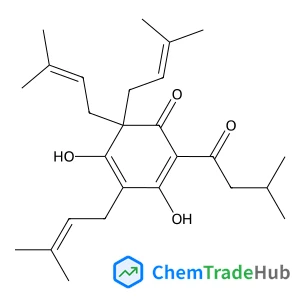
3,5-Dihydroxy-4-(3-methylbutanoyl)-2,6,6-tris(3-methyl-2-buten-1-yl)-2,4-cyclohexadien-1-one
CAS Number:
468-28-0
Molecular Formula:
C26H38O4
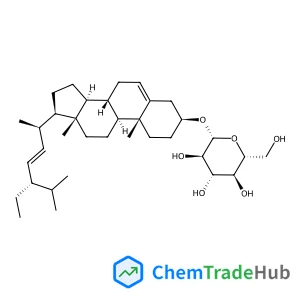
(3beta,22E)-Stigmasta-5,22-dien-3-yl beta-D-glucopyranoside
CAS Number:
19716-26-8
Molecular Formula:
C35H58O6

Recommended Suppliers






Disclaimer
This page provides academic journal information for reference and research purposes only. We are not affiliated with any journal publishers and do not handle publication submissions. For publication-related inquiries, please contact the respective journal publishers directly.
If you notice any inaccuracies in the information displayed, please contact us at support@chemtradehub.com. We will promptly review and address your concerns.