












Atomic Spectrometry Update—Atomic Mass Spectrometry and X-Ray Fluorescence Spectrometry
Literature Information
Publication Date
DOI
10.1039/JA993080261R
Impact Factor
4.023
Authors
View Original
Abstract
Strong development continues in most areas of atomic mass spectrometry. There is an ever increasing pressure to push back limits with the result that reported performances in terms of absolute detection limits, sample requirement and isotopic abundance sensitivities are reaching levels that could only have been dreamed of a few years ago. This can have the drawback of extremely complex and expensive instrumentation which is only available to a few laboratories. There is an increasing tendency to decouple sample atomization and ionization with the result that various combinations are possible and the traditional definitions become less applicable. This is particularly true for techniques employing one or more lasers. It is however pleasing to report that attempts are being made to make instrumentation simpler and more practical for routine analyses. The combination of chromatography with atomic MS has received increasing attention with particular potential for metal speciation studies. Amongst the vast range of applications of atomic MS, the detection of low levels of contaminants in environmental samples and high-purity materials continues to be of prime importance.The past year has seen a continuing high level of publication in the XRF field once more indicating the rude health of this long-established multi-element instrumental analytical technique. Of particular note is the great interest in total reflection XRF (TXRF) and its rapid acceptance in the semiconductor industry for its ability to determine extremely low levels of surface contamination on wafers and also to carry out depth profiling on the same devices. One particular benefit of the technique when used in the semiconductor industry is that it is non-destructive—a clear benefit in reducing costs yet maintaining high product quality. In addition to TXRF the topics of XRMF and SRXRF are given increased prominence in this Update in line with the level of interest evident from the literature during the review period.
Related Literature
Max Perutz: chemist, molecular biologist, human rights activist
2005-07-18
40th Anniversary Article
DOI: 10.1039/B507503N
Au nanoparticle-imprinted polymers
Stéphanie Koenig, Victor Chechik
2005-07-14
Communication
DOI: 10.1039/B503243A
Novel catalytic effects in esteraminolysis in chlorobenzene
Nuno Basilio, Luís García-Río, J. Ramón Leis, Juan C. Mejuto, Moisés Pérez-Lorenzo
2005-07-01
Communication
DOI: 10.1039/B504629G
Easy activation of two C–H bonds of an N-heterocyclic carbeneN-methyl group
Javier A. Cabeza, Ignacio del Río, Daniel Miguel, M. Gabriela Sánchez-Vega
2005-07-05
Communication
DOI: 10.1039/B506287J
Second generation N-heterocyclic carbene–Pt(0) complexes as efficient catalysts for the hydrosilylation of alkenes
Olivier Buisine, Guillaume Berthon-Gelloz, Jean-François Brière, Sébastien Stérin, Gérard Mignani, Paul Branlard, Bernard Tinant, Jean-Paul Declercq, István E. Markó
2005-06-21
Communication
DOI: 10.1039/B506369H
cis-Dihydrodiol, arene oxide and phenolmetabolites of dictamnine: key intermediates in the biodegradation and biosynthesis of furoquinolinealkaloids
Colin R. O'Dowd, Jonathan G. Carroll, Pui L. Loke, Christopher C. R. Allen
2005-07-11
Communication
DOI: 10.1039/B506944K
Surface-induced hydrogelation
Arno M. Bieser, Joerg C. Tiller
2005-06-22
Communication
DOI: 10.1039/B506160A
Shape and size control of Ag2Se nanocrystals from a single precursor [(Ph3P)3Ag2(SeC{O}Ph)2]
Meng Tack Ng, Chris Boothroyd, Jagadese J. Vittal
2005-06-27
Communication
DOI: 10.1039/B506203A
You might also like
Compound Q&A
How should waste containing N-Methoxy-N-methyl-1,3-thiazole-5-carboxamide (CAS: 898825-89-3) be handled?
Waste containing N-Methoxy-N-methyl-1,3-thiazole-5-carboxamide (CAS: 898825-89-3...
898825-89-3N-Methoxy-N-methyl-1...
Compound Q&A
How should N-(4-Biphenylyl)dibenzo[b,d]furan-4-amine (CAS: 1318338-47-4) be stored?
N-(4-Biphenylyl)dibenzo[b,d]furan-4-amine should be stored in a tightly sealed c...
1318338-47-4N-(4-Biphenylyl)dibe...
Compound Q&A
What is the market or research trend for 3-Acetamido-5-amino-2,4,6-triiodobenzoic acid (CAS: 1713-07-1)?
The market for 3-Acetamido-5-amino-2,4,6-triiodobenzoic acid (CAS: 1713-07-1) is...
1713-07-13-Acetamido-5-amino-...
Compound Q&A
How should Benzyl 2-O-acetyl-3,4,6-tri-O-benzyl-beta-D-galactopyranoside (CAS: 61820-03-9) be stored?
Benzyl 2-O-acetyl-3,4,6-tri-O-benzyl-beta-D-galactopyranoside (CAS: 61820-03-9) ...
61820-03-9Benzyl 2-O-acetyl-3,...
Compound Q&A
What regulatory guidelines apply to 2-Ethylpiperazine dihydrochloride (CAS: 438050-52-3)?
2-Ethylpiperazine dihydrochloride (CAS: 438050-52-3) is regulated under the Glob...
438050-52-32-Ethylpiperazine di...
Compound Q&A
What regulatory guidelines apply to 1,1'-[1,3-Phenylenebis(methylene)]bis(3-methyl-1H-pyrrole-2,5-dione) (CAS: 119462-56-5)?
1,1'-[1,3-Phenylenebis(methylene)]bis(3-methyl-1H-pyrrole-2,5-dione) (CAS: 11946...
119462-56-51,1'-[1,3-Phenyleneb...
Compound Q&A
Are there alternatives to 5-Fluoro-2-(1-pyrrolidinyl)pyridine (CAS: 1287217-79-1) in synthesis?
Several alternatives can be used in the synthesis of 5-Fluoro-2-(1-pyrrolidinyl)...
1287217-79-15-Fluoro-2-(1-pyrrol...
Compound Q&A
What precautions should be taken when handling 1-((2R,3R,4R,5R)-5-((bis(4-methoxyphenyl)(phenyl)methoxy)methyl)-4-hydroxy-3-methoxytetrahydrofuran-2-yl)-5-methylpyrimidine-2,4(1H,3H)-dione (CAS: 153631-19-7)?
Proper personal protective equipment (PPE) must be worn when handling this compo...
153631-19-71-((2R,3R,4R,5R)-5-(...
Compound Q&A
What precautions should be taken when handling 6-Bromoimidazo[1,2-a]pyridin-8-amine (CAS: 676371-00-9)?
When handling 6-Bromoimidazo[1,2-a]pyridin-8-amine, it is important to wear appr...
676371-00-96-Bromoimidazo[1,2-a...
Compound Q&A
Are there alternatives to (2S,4R)-4-(4-Nitrobenzyl)pyrrolidine-2-carboxylic acid hydrochloride (CAS: 1049740-22-8) in synthesis?
Alternatives to (2S,4R)-4-(4-Nitrobenzyl)pyrrolidine-2-carboxylic acid hydrochlo...
1049740-22-8(2S,4R)-4-(4-Nitrobe...
Source Journal
Journal of Analytical Atomic Spectrometry

CiteScore:
6.2
Self-citation Rate:
25.8%
Articles per Year:
254
The Journal of Analytical Atomic Spectrometry (JAAS) is the central journal for publishing innovative research on fundamentals, instrumentation, and methods in the determination, speciation and isotopic analysis of (trace) elements within all fields of application. This includes, but is not restricted to, the most recent progress, developments and achievements in all forms of atomic and elemental detection, isotope ratio determination, molecular analysis, plasma-based analysis and X-ray techniques. The journal welcomes full papers, communications, technical notes, critical and tutorial review articles, editorials, and comments, in addition to the Atomic Spectrometry Updates (ASU) literature reviews that are prepared by an expert panel. Submissions are welcome in the following areas, but note this list reflects the current scope and authors are strongly encouraged to contact the Editorial team if they believe that their work offers potentially new and emerging research relevant to the journal remit: Fundamental studies in the following. New and existing sources for atomic emission, absorption, fluorescence and mass spectrometry and those that provide both atomic and molecular information Sample introduction techniques for solids, liquids, gases Improvements in sensitivity, selectivity, precision, accuracy and/or robustness Isotope ratio measurements, including techniques for improving precision and mass bias correction Single channel and multichannel simultaneous detection systems Chemometrics, statistics, calibration techniques and internal standardisation Theoretical and numerical modelling of fundamental processes related to all of the above methodologies Novel or improved methodologies in areas of application including, but not limited to the following. Biosciences, including elemental, speciation and isotopic analysis in biological systems, immunoassays based on metal-labeled antibodies, bio-imaging, and nanoparticle toxicology Geochemistry Environmental science Materials science, including engineered nanoparticles and quantum dots Metrology, including reference materials Forensic analysis Food and agricultural sciences Energy Archaeometry Molecular analysis. Molecular sources for elemental and isotopic analysis Atomic sources for molecular analysis Atomic and molecular techniques simultaneously used for complementary chemical information All contributions are judged on originality and quality of scientific content, and appropriateness of length to content of new science.
Recommended Compounds
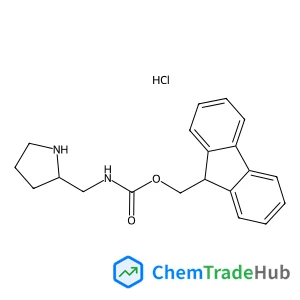
(S)-(9H-Fluoren-9-yl)methyl (pyrrolidin-2-ylmethyl)carbamate hydrochloride
CAS Number:
1217813-15-4
Molecular Formula:
C20H23ClN2O2
![2-(7,7-Difluorobicyclo[4.1.0]hept-1-yl)ethanamine structure](https://static.chemtradehub.com/structs/209/2098065-08-6-ff24.webp "2-(7,7-Difluorobicyclo[4.1.0]hept-1-yl)ethanamine structure")
2-(7,7-Difluorobicyclo[4.1.0]hept-1-yl)ethanamine
CAS Number:
2098065-08-6
Molecular Formula:
C9H15F2N

N-(4-Chlorobenzyl)-beta-alanine hydrochloride (1:1)
CAS Number:
1172479-10-5
Molecular Formula:
C10H13Cl2NO2
Recommended Suppliers






Disclaimer
This page provides academic journal information for reference and research purposes only. We are not affiliated with any journal publishers and do not handle publication submissions. For publication-related inquiries, please contact the respective journal publishers directly.
If you notice any inaccuracies in the information displayed, please contact us at support@chemtradehub.com. We will promptly review and address your concerns.