












Atomic Spectrometry Update—Environmental Analysis
Literature Information
Publication Date
DOI
10.1039/JA990050001R
Impact Factor
4.023
Authors
View Original
Abstract
This annual review of developments in the use of analytical atomic spectrometry for the analysis of environmental samples differs from the four predecessors in the series in that it includes full discussion of the analysis of geological materials. Hitherto such materials have been considered elsewhere in the Atomic Spectrometry Updates. The strong similarities between many of the procedures used for the total elemental analysis of soils and rocks are such that considering these materials together seems a logical step for this and future Environmental Updates. This has necessarily made the review longer than in previous years, with the addition of an extra table. It also means that, as might be expected, ICP-MS, other MS techniques and X-ray spectrometry figure rather more prominantly than previously. The authors hope that readers interested in either soil or rock analysis will find the change useful. The review is based upon abstracts listed in full in JAAS issues published in 1989.
Related Literature
Conformational diastereoisomerism in a chiral pretzelane
Yi Liu, Scott A. Vignon, Xiyun Zhang, K. N. Houk, J. Fraser Stoddart
2005-07-11
Communication
DOI: 10.1039/B507679J
Catalytic C–C bond cleavage and C–Si bond formation in the reaction of RCN with Et3SiH promoted by an iron complex
Hiroshi Nakazawa, Kouji Kamata, Masumi Itazaki
2005-07-12
Communication
DOI: 10.1039/B504131G
Low power upconversion using MLCT sensitizers
Radiy R. Islangulov, Denis V. Kozlov, Felix N. Castellano
2005-07-04
Communication
DOI: 10.1039/B506575E
Exploiting isolobal relationships to create new ionic liquids: novel room-temperature ionic liquids based upon (N-alkylimidazole)(amine)BH2+ “boronium” ions
Phillip A. Fox, Scott T. Griffin, W. Matthew Reichert, E. Alan Salter, Ashley B. Smith, Morgan D. Tickell, Benjamin F. Wicker, Eugene A. Cioffi, Robin D. Rogers, Andrzej Wierzbicki
2005-06-16
Communication
DOI: 10.1039/B504631A
Intermolecular rhodium-catalyzed [2 + 2 + 2] carbocyclization reactions of 1,6-enynes with symmetrical and unsymmetrical alkynes
P. Andrew Evans, James R. Sawyer, Kwong Wah Lai, John C. Huffman
2005-07-07
Communication
DOI: 10.1039/B505383H
Novel catalytic effects in esteraminolysis in chlorobenzene
Nuno Basilio, Luís García-Río, J. Ramón Leis, Juan C. Mejuto, Moisés Pérez-Lorenzo
2005-07-01
Communication
DOI: 10.1039/B504629G
Isolation of axial conformers of chloro- and bromocyclohexane in a pure state as inclusion complexes with 9,9′-bianthryl, and the discovery of a novel 1,3 diaxial Cl⋯H weak interaction
Shinya Hirano, Shinji Toyota, Masako Kato, Fumio Toda
2005-05-18
Communication
DOI: 10.1039/B501633A
A unique microwave effect on the microstructural modification of Cu/ZnO/Al2O3catalysts for steam reforming of methanol
Xin-Rong Zhang, Lu-Cun Wang, Yong Cao, Wei-Lin Dai, He-Yong He, Kang-Nian Fan
2005-07-14
Communication
DOI: 10.1039/B502997J
The Ru(ii)-supported heptatungstates [HXW7O28Ru(dmso)3]6− (X = P, As)
Li-Hua Bi, Michael H. Dickman, Ulrich Kortz, Ina Dix
2005-07-06
Communication
DOI: 10.1039/B504903M
You might also like
Compound Q&A
How should waste containing N-Methoxy-N-methyl-1,3-thiazole-5-carboxamide (CAS: 898825-89-3) be handled?
Waste containing N-Methoxy-N-methyl-1,3-thiazole-5-carboxamide (CAS: 898825-89-3...
898825-89-3N-Methoxy-N-methyl-1...
Compound Q&A
How should N-(4-Biphenylyl)dibenzo[b,d]furan-4-amine (CAS: 1318338-47-4) be stored?
N-(4-Biphenylyl)dibenzo[b,d]furan-4-amine should be stored in a tightly sealed c...
1318338-47-4N-(4-Biphenylyl)dibe...
Compound Q&A
What is the market or research trend for 3-Acetamido-5-amino-2,4,6-triiodobenzoic acid (CAS: 1713-07-1)?
The market for 3-Acetamido-5-amino-2,4,6-triiodobenzoic acid (CAS: 1713-07-1) is...
1713-07-13-Acetamido-5-amino-...
Compound Q&A
How should Benzyl 2-O-acetyl-3,4,6-tri-O-benzyl-beta-D-galactopyranoside (CAS: 61820-03-9) be stored?
Benzyl 2-O-acetyl-3,4,6-tri-O-benzyl-beta-D-galactopyranoside (CAS: 61820-03-9) ...
61820-03-9Benzyl 2-O-acetyl-3,...
Compound Q&A
What regulatory guidelines apply to 2-Ethylpiperazine dihydrochloride (CAS: 438050-52-3)?
2-Ethylpiperazine dihydrochloride (CAS: 438050-52-3) is regulated under the Glob...
438050-52-32-Ethylpiperazine di...
Compound Q&A
What regulatory guidelines apply to 1,1'-[1,3-Phenylenebis(methylene)]bis(3-methyl-1H-pyrrole-2,5-dione) (CAS: 119462-56-5)?
1,1'-[1,3-Phenylenebis(methylene)]bis(3-methyl-1H-pyrrole-2,5-dione) (CAS: 11946...
119462-56-51,1'-[1,3-Phenyleneb...
Compound Q&A
Are there alternatives to 5-Fluoro-2-(1-pyrrolidinyl)pyridine (CAS: 1287217-79-1) in synthesis?
Several alternatives can be used in the synthesis of 5-Fluoro-2-(1-pyrrolidinyl)...
1287217-79-15-Fluoro-2-(1-pyrrol...
Compound Q&A
What precautions should be taken when handling 1-((2R,3R,4R,5R)-5-((bis(4-methoxyphenyl)(phenyl)methoxy)methyl)-4-hydroxy-3-methoxytetrahydrofuran-2-yl)-5-methylpyrimidine-2,4(1H,3H)-dione (CAS: 153631-19-7)?
Proper personal protective equipment (PPE) must be worn when handling this compo...
153631-19-71-((2R,3R,4R,5R)-5-(...
Compound Q&A
What precautions should be taken when handling 6-Bromoimidazo[1,2-a]pyridin-8-amine (CAS: 676371-00-9)?
When handling 6-Bromoimidazo[1,2-a]pyridin-8-amine, it is important to wear appr...
676371-00-96-Bromoimidazo[1,2-a...
Compound Q&A
Are there alternatives to (2S,4R)-4-(4-Nitrobenzyl)pyrrolidine-2-carboxylic acid hydrochloride (CAS: 1049740-22-8) in synthesis?
Alternatives to (2S,4R)-4-(4-Nitrobenzyl)pyrrolidine-2-carboxylic acid hydrochlo...
1049740-22-8(2S,4R)-4-(4-Nitrobe...
Source Journal
Journal of Analytical Atomic Spectrometry

CiteScore:
6.2
Self-citation Rate:
25.8%
Articles per Year:
254
The Journal of Analytical Atomic Spectrometry (JAAS) is the central journal for publishing innovative research on fundamentals, instrumentation, and methods in the determination, speciation and isotopic analysis of (trace) elements within all fields of application. This includes, but is not restricted to, the most recent progress, developments and achievements in all forms of atomic and elemental detection, isotope ratio determination, molecular analysis, plasma-based analysis and X-ray techniques. The journal welcomes full papers, communications, technical notes, critical and tutorial review articles, editorials, and comments, in addition to the Atomic Spectrometry Updates (ASU) literature reviews that are prepared by an expert panel. Submissions are welcome in the following areas, but note this list reflects the current scope and authors are strongly encouraged to contact the Editorial team if they believe that their work offers potentially new and emerging research relevant to the journal remit: Fundamental studies in the following. New and existing sources for atomic emission, absorption, fluorescence and mass spectrometry and those that provide both atomic and molecular information Sample introduction techniques for solids, liquids, gases Improvements in sensitivity, selectivity, precision, accuracy and/or robustness Isotope ratio measurements, including techniques for improving precision and mass bias correction Single channel and multichannel simultaneous detection systems Chemometrics, statistics, calibration techniques and internal standardisation Theoretical and numerical modelling of fundamental processes related to all of the above methodologies Novel or improved methodologies in areas of application including, but not limited to the following. Biosciences, including elemental, speciation and isotopic analysis in biological systems, immunoassays based on metal-labeled antibodies, bio-imaging, and nanoparticle toxicology Geochemistry Environmental science Materials science, including engineered nanoparticles and quantum dots Metrology, including reference materials Forensic analysis Food and agricultural sciences Energy Archaeometry Molecular analysis. Molecular sources for elemental and isotopic analysis Atomic sources for molecular analysis Atomic and molecular techniques simultaneously used for complementary chemical information All contributions are judged on originality and quality of scientific content, and appropriateness of length to content of new science.
Recommended Compounds
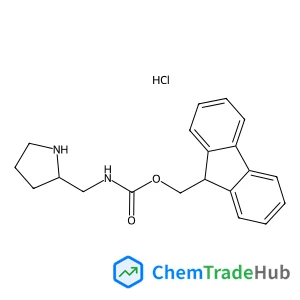
(S)-(9H-Fluoren-9-yl)methyl (pyrrolidin-2-ylmethyl)carbamate hydrochloride
CAS Number:
1217813-15-4
Molecular Formula:
C20H23ClN2O2
![4-[(2-{2-[2-(2-Aminoethoxy)ethoxy]ethoxy}ethyl)amino]-2-(2,6-dioxo-3-piperidinyl)-1H-isoindole-1,3(2H)-dione structure](https://static.chemtradehub.com/structs/209/2093416-31-8-3162.webp "4-[(2-{2-[2-(2-Aminoethoxy)ethoxy]ethoxy}ethyl)amino]-2-(2,6-dioxo-3-piperidinyl)-1H-isoindole-1,3(2H)-dione structure")
4-[(2-{2-[2-(2-Aminoethoxy)ethoxy]ethoxy}ethyl)amino]-2-(2,6-dioxo-3-piperidinyl)-1H-isoindole-1,3(2H)-dione
CAS Number:
2093416-31-8
Molecular Formula:
C21H28N4O7

1-(3-Fluorophenyl)-1H-1,2,4-triazole-3-carboxylic acid
CAS Number:
1292369-51-7
Molecular Formula:
C9H6FN3O2
Recommended Suppliers




Disclaimer
This page provides academic journal information for reference and research purposes only. We are not affiliated with any journal publishers and do not handle publication submissions. For publication-related inquiries, please contact the respective journal publishers directly.
If you notice any inaccuracies in the information displayed, please contact us at support@chemtradehub.com. We will promptly review and address your concerns.