













Front cover
Literature Information
Publication Date
2023-11-09
DOI
10.1039/D3TC90235H
Impact Factor
7.393
Authors
View Original
Abstract
A graphical abstract is available for this content
Related Literature
Bond angle variations in XH3 [X = N, P, As, Sb, Bi]: the critical role of Rydberg orbitals exposed using a diabatic state model
Ross H. McKenzie
2015-07-08
Paper
DOI: 10.1039/C5CP02237A
Reverse solvatochromism in solvent binary mixtures: a case study using a 4-(nitrostyryl)phenolate as a probe
Rafaela I. Stock, Adriana D. S. Schramm, Marcos C. Rezende, Vanderlei G. Machado
2016-07-05
Communication
DOI: 10.1039/C6CP03875A
The properties of substituted 3D-aromatic neutral carboranes: the potential for σ-hole bonding
Rabindranath Lo, Jindřich Fanfrlík, Martin Lepšík
2015-07-20
Paper
DOI: 10.1039/C5CP03617H
Thermodynamic properties of neutral and charged oxygen vacancies in BaZrO3 based on first principles phonon calculations
Tor S. Bjørheim, Marco Arrigoni, Denis Gryaznov, Joachim Maier
2015-07-27
Paper
DOI: 10.1039/C5CP02529J
Cysteine containing dipeptides show a metal specificity that matches the composition of seawater
Luca Belmonte, Daniele Rossetto, Michele Forlin, Simone Scintilla, Claudia Bonfio, Sheref S. Mansy
2016-05-10
Communication
DOI: 10.1039/C6CP00608F
Possible interstellar formation of glycine through a concerted mechanism: a computational study on the reaction of CH2NH, CO2 and H2
Zanele P. Nhlabatsi, Priya Bhasi, Sanyasi Sitha
2016-03-22
Paper
DOI: 10.1039/C5CP07124K
Behaviour of NBD-head group labelled phosphatidylethanolamines in POPC bilayers: a molecular dynamics study
2015-05-22
Paper
DOI: 10.1039/C5CP01596K
Electronic structures of bare and terephthalic acid adsorbed TiO2(110)-(1 × 2) reconstructed surfaces: origin and reactivity of the band gap states
Wenhua Zhang, Liming Liu, Li Wan, Lingyun Liu, Liang Cao, Faqiang Xu
2015-07-02
Paper
DOI: 10.1039/C5CP01298H
Hydrogen-doping induced reduction in the phase transition temperature of VO2: a first-principles study
Yuanyuan Cui, Lanli Chen, Yanfeng Gao
2015-07-27
Paper
DOI: 10.1039/C5CP03267A
You might also like
Compound Q&A
What is Ethyl 3-cyclohexylpropanoate (CAS: 10094-36-7)?
Ethyl 3-cyclohexylpropanoate is a clear, colorless to light yellow liquid with a...
10094-36-7Ethyl 3-cyclohexylpr...
Compound Q&A
How should waste containing 2-(Hydroxymethyl)-5-(methoxycarbonyl)-6-methyl-4-(2-nitrophenyl)nicotinic acid (CAS: 34783-31-8) be handled?
Waste containing 2-(Hydroxymethyl)-5-(methoxycarbonyl)-6-methyl-4-(2-nitrophenyl...
34783-31-82-(Hydroxymethyl)-5-...
Compound Q&A
How should waste containing 2,4,6-Tris(pentafluoroethyl)-1,3,5-triazine (CAS: 858-46-8) be handled?
Waste containing 2,4,6-Tris(pentafluoroethyl)-1,3,5-triazine (CAS: 858-46-8) sho...
858-46-82,4,6-Tris(pentafluo...
Compound Q&A
What precautions should be taken when handling Chloroac-nle-oh (CAS: 56787-36-1)?
When handling Chloroac-nle-oh (CAS: 56787-36-1), it is essential to wear appropr...
56787-36-1Chloroac-nle-oh
Compound Q&A
What industries use Ethyl 6-phenylimidazo[2,1-b][1,3]thiazole-3-carboxylate (CAS: 752244-05-6)?
Ethyl 6-phenylimidazo[2,1-b][1,3]thiazole-3-carboxylate is primarily used in the...
752244-05-6Ethyl 6-phenylimidaz...
Compound Q&A
Are there alternatives to alpha-(2-Bromophenyl)benzylamine (CAS: 55095-15-3) in synthesis?
Alternatives to alpha-(2-Bromophenyl)benzylamine (CAS: 55095-15-3) in synthesis ...
55095-15-3alpha-(2-Bromophenyl...
Compound Q&A
How should waste containing 2-Chloro-5-methoxypyridine (CAS: 139585-48-1) be handled?
Waste containing 2-Chloro-5-methoxypyridine (CAS: 139585-48-1) should be managed...
139585-48-12-Chloro-5-methoxypy...
Compound Q&A
What industries use 1-(4-Methoxyphenyl)-2,5-dimethyl-1H-pyrrole (CAS: 5044-27-9)?
1-(4-Methoxyphenyl)-2,5-dimethyl-1H-pyrrole (CAS: 5044-27-9) is used in various ...
5044-27-91-(4-Methoxyphenyl)-...
Compound Q&A
Are there alternatives to 3-Bromo-5-(N-Boc)aminomethylisoxazole (CAS: 903131-45-3) in synthesis?
There are alternative reagents and compounds that can be used in the synthesis o...
903131-45-33-Bromo-5-(N-Boc)ami...
Compound Q&A
What is Tungsten(IV) oxide (CAS: 12036-22-5)?
Tungsten(IV) oxide, also known as tungsten dioxide, is a chemical compound with ...
12036-22-5Tungsten(IV) oxide
Source Journal
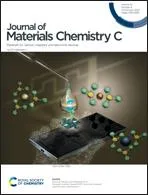
Journal of Materials Chemistry C
CiteScore:
10.8
Self-citation Rate:
7%
Articles per Year:
1601
Journal of Materials Chemistry A, B & C cover high quality studies across all fields of materials chemistry. The journals focus on those theoretical or experimental studies that report new understanding, applications, properties and synthesis of materials. The journals have a strong history of publishing quality reports of interest to interdisciplinary communities and providing an efficient and rigorous service through peer review and publication. The journals are led by an international team of Editors-in-Chief and Associate Editors who are all active researchers in their fields. Journal of Materials Chemistry A, B & C are separated by the intended application of the material studied. Broadly, applications in energy and sustainability are of interest to Journal of Materials Chemistry A, applications in biology and medicine are of interest to Journal of Materials Chemistry B, and applications in optical, magnetic and electronic devices are of interest to Journal of Materials Chemistry C. More than one Journal of Materials Chemistry journal may be suitable for certain fields and researchers are encouraged to submit their paper to the journal that they feel best fits for their particular article. Example topic areas within the scope of Journal of Materials Chemistry C are listed below. This list is neither exhaustive nor exclusive. Bioelectronics Conductors Detectors Dielectrics Displays Ferroelectrics Lasers LEDs Lighting Liquid crystals Memory Metamaterials Multiferroics Photonics Photovoltaics Semiconductors Sensors Single molecule conductors Spintronics Superconductors Thermoelectrics Topological insulators Transistors
Recommended Compounds
![3-[(4-Nitrobenzyl)oxy]-3-oxopropanoic Acid structure](https://static.chemtradehub.com/structs/773/77359-11-6-0d04.webp "3-[(4-Nitrobenzyl)oxy]-3-oxopropanoic Acid structure")

Recommended Suppliers







Disclaimer
This page provides academic journal information for reference and research purposes only. We are not affiliated with any journal publishers and do not handle publication submissions. For publication-related inquiries, please contact the respective journal publishers directly.
If you notice any inaccuracies in the information displayed, please contact us at support@chemtradehub.com. We will promptly review and address your concerns.