


Hydroxyapatite nanoparticle-modified porous bone grafts with improved cell attachment
Literature Information
Publication Date
2023-10-19
DOI
10.1039/D3TB01839C
Impact Factor
6.331
Authors
Prachi Dhavalikar, Dana Jenkins, Natalie Rosen, Aparajith Kannapiran, Karim Salhadar, Orren Shachaf, Michael Silverstein, Elizabeth Cosgriff-Hernández
View Original
Abstract
Emulsion-templated foams have displayed promise as injectable bone grafts; however, the use of a surfactant as an emulsifier resulted in relatively small pores and impedes cell attachment. Hydroxyapatite nanoparticles were explored as an alternative stabilizer to address these limitations. To this end, hydroxyapatite nanoparticles were first modified with myristic acid to generate the appropriate balance of hydrophobicity to stabilize a water-in-oil emulsion of neopentyl glycol diacrylate and 1,4-butanedithiol. In situ surface modification of the resulting foam with hydroxyapatite was confirmed with elemental mapping and transmission electron microscopy. Nanoparticle-stabilized foams displayed improved human mesenchymal stem cell viability (91 ± 5%) over surfactant-stabilized foams (23 ± 11%). Although the pore size was appropriate for bone grafting applications (115 ± 71 μm), the foams lacked the interconnected architecture necessary for cell infiltration. We hypothesized that a co-stabilization approach with both surfactant and nanoparticles could be used to achieve interconnected pores while maintaining improved cell attachment and larger pore sizes. A range of hydroxyapatite nanoparticle and surfactant concentrations were investigated to determine the effects on microarchitecture and cell behavior. By balancing these interactions, a co-stabilized foam was identified that possessed large, interconnected pores (108 ± 67 μm) and improved cell viability and attachment. The co-stabilized foam was then evaluated as an injectable bone graft including network formation, microscale integration with bone, push out strength, and compressive properties. Overall, this work demonstrated that in situ surface modification with nHA improved cell attachment while retaining desirable bone grafting features and injectability.
Recommended Journals

Journal of Heterocyclic Chemistry

Fibre Chemistry

European Journal of Wood and Wood Products

Kinetics and Catalysis

Journal of Physics and Chemistry of Solids

Journal of Medicinal Chemistry

Science

Russian Chemical Reviews

Proceedings of the National Academy of Sciences of the United States of America

Helvetica Chimica Acta
Related Literature
Electrochemical impedance spectroscopy reveals a new mechanism based on competitive binding between Tris and protein on a conductive biomimetic polydopamine surface
Nimisha Singh, Jyotsnamayee Nayak, Khushbu Patel, Suban K. Sahoo, Rajender Kumar
2018-09-14
Paper
DOI: 10.1039/C8CP05391J
Charged impurity-tuning of midgap states in biased Bernal bilayer black phosphorus: an anisotropic electronic phase transition
K. Mirabbaszadeh, M. Davoudiniya, M. Yarmohammadi
2018-09-11
Paper
DOI: 10.1039/C8CP04446E
Self-healing and dewetting dynamics of a polymer nanofilm on a smooth substrate: strategies for dewetting suppression
Yu-Hsuan Weng, Yu-Jane Sheng
2018-07-16
Paper
DOI: 10.1039/C8CP03215G
Correction: Convective heat transfer in a measurement cell for scanning electrochemical microscopy
Javor K. Novev, Richard G. Compton
2018-09-28
Correction
DOI: 10.1039/C8CP91865A
X-Ray scattering and physicochemical studies of trialkylamine/carboxylic acid mixtures: nanoscale structure in pseudoprotic ionic liquids and related solutions
Kevin G. Yager
2018-06-25
Paper
DOI: 10.1039/C8CP02854K
F(2P) + C2H6 → HF + C2H5 kinetics study based on a new analytical potential energy surface
J. Espinosa-Garcia, J. C. Corchado, M. Garcia-Chamorro, C. Rangel
2018-07-16
Paper
DOI: 10.1039/C8CP03103G
Analysis of epoxy functionalized layers synthesized by plasma polymerization of allyl glycidyl ether
Anton Manakhov, David Nečas, Sergey Ershov, Zakhar Popov
2018-07-09
Paper
DOI: 10.1039/C8CP01452C
A 4,4′-bis(2-benzoxazolyl)stilbene luminescent probe: assessment of aggregate formation through photophysics experiments and quantum-chemical calculations
Matteo Ambrosetti, Giacomo Ruggeri, Chiara Cappelli, Andrea Pucci
2018-09-24
Paper
DOI: 10.1039/C8CP04450C
Fitting electron density as a physically sound basis for the development of interatomic potentials of complex alloys
Jose M. Ortiz-Roldan, Gustavo Esteban-Manzanares, Sofía Calero, A. Rabdel Ruiz-Salvador, Said Hamad
2018-06-15
Paper
DOI: 10.1039/C8CP02591F
You might also like
Compound Q&A
What precautions should be taken when handling 4-(2-Furylmethyl)thiomorpholine 1,1-dioxide (CAS: 79206-94-3)?
When handling 4-(2-Furylmethyl)thiomorpholine 1,1-dioxide (CAS: 79206-94-3), it ...
79206-94-34-(2-Furylmethyl)thi...
Compound Q&A
What precautions should be taken when handling 4-Chloro-N-[2-(4-morpholinyl)ethyl]benzamide (CAS: 71320-77-9)?
When handling 4-Chloro-N-[2-(4-morpholinyl)ethyl]benzamide (CAS: 71320-77-9), it...
71320-77-94-Chloro-N-[2-(4-mor...
Compound Q&A
How should waste containing 2-[2-(2-Methoxyethoxy)ethoxy]ethyl 4-methylbenzenesulfonate (CAS: 62921-74-8) be handled?
Waste containing this compound (CAS: 62921-74-8) should be handled according to ...
62921-74-82-[2-(2-Methoxyethox...
Compound Q&A
How should waste containing (S)-Methyl 2-amino-3-cyclohexylpropanoate be handled?
Waste containing (S)-Methyl 2-amino-3-cyclohexylpropanoate should be collected i...
40056-18-6(S)-Methyl 2-amino-3...
Compound Q&A
How is 5-({4-[(2S,4R)-4-Hydroxy-2-methyltetrahydro-2H-pyran-4-yl]-2-thienyl}sulfanyl)-1-methyl-1,3-dihydro-2H-indol-2-one (CAS: 166882-70-8) typically synthesized?
This compound can be synthesized using a multi-step process involving the conjug...
166882-70-85-({4-[(2S,4R)-4-Hyd...
Compound Q&A
Are there alternatives to (2E)-3-(3,4-Dichlorophenyl)acrylic acid (CAS: 7312-27-8) in synthesis?
There are several alternatives to (2E)-3-(3,4-Dichlorophenyl)acrylic acid in syn...
7312-27-8(2E)-3-(3,4-Dichloro...
Compound Q&A
How should Ethyl 6-(2-nitrophenyl)imidazo[2,1-b][1,3]thiazole-3-carboxylate (CAS: 925437-84-9) be stored?
Ethyl 6-(2-nitrophenyl)imidazo[2,1-b][1,3]thiazole-3-carboxylate (CAS: 925437-84...
925437-84-9Ethyl 6-(2-nitrophen...
Compound Q&A
How should waste containing 2-(1,3-Thiazol-2-yl)ethanamine (CAS: 18453-07-1) be handled?
Waste containing 2-(1,3-Thiazol-2-yl)ethanamine (CAS: 18453-07-1) should be coll...
18453-07-12-(1,3-Thiazol-2-yl)...
Compound Q&A
How is Methyl 5-iodo-2-methylbenzoate (CAS: 103440-54-6) typically synthesized?
Methyl 5-iodo-2-methylbenzoate can be synthesized through the iodination of meth...
103440-54-6Methyl 5-iodo-2-meth...
Compound Q&A
How is 5-Chloro[1,2,4]triazolo[1,5-a]pyridine (CAS: 1427399-34-5) typically synthesized?
5-Chloro[1,2,4]triazolo[1,5-a]pyridine is commonly synthesized via the condensat...
1427399-34-55-Chloro[1,2,4]triaz...
Source Journal
Journal of Materials Chemistry B

CiteScore:
12
Self-citation Rate:
4.9%
Articles per Year:
831
Journal of Materials Chemistry A, B & C cover high quality studies across all fields of materials chemistry. The journals focus on those theoretical or experimental studies that report new understanding, applications, properties and synthesis of materials. The journals have a strong history of publishing quality reports of interest to interdisciplinary communities and providing an efficient and rigorous service through peer review and publication. The journals are led by an international team of Editors-in-Chief and Associate Editors who are all active researchers in their fields. Journal of Materials Chemistry A, B & C are separated by the intended application of the material studied. Broadly, applications in energy and sustainability are of interest to Journal of Materials Chemistry A, applications in biology and medicine are of interest to Journal of Materials Chemistry B, and applications in optical, magnetic and electronic devices are of interest to Journal of Materials Chemistry C. More than one Journal of Materials Chemistry journal may be suitable for certain fields and researchers are encouraged to submit their paper to the journal that they feel best fits for their particular article. Example topic areas within the scope of Journal of Materials Chemistry B are listed below. This list is neither exhaustive nor exclusive. Antifouling coatings Biocompatible materials Bioelectronics Bioimaging Biomimetics Biomineralisation Bionics Biosensors Diagnostics Drug delivery Gene delivery Immunobiology Nanomedicine Regenerative medicine & Tissue engineering Scaffolds Soft robotics Stem cells Therapeutic devices image block All articles published in Journal of Materials Chemistry B from 2019 onwards will be indexed in MEDLINE®. Articles that primarily focus on providing insight into the underlying science and performance of biomaterials within a biological environment are more suited to our companion journal, Biomaterials Science.
Recommended Compounds
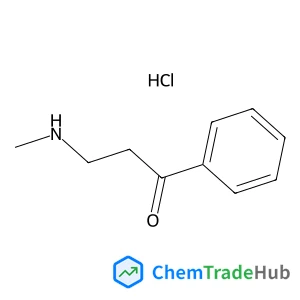
3-(Methylamino)-1-phenyl-1-propanone hydrochloride (1:1)
CAS Number:
2538-50-3
Molecular Formula:
C10H14ClNO
![[4-(Heptyloxy)phenyl]boronic acid structure](https://static.chemtradehub.com/structs/136/136370-19-9-ad33.webp "[4-(Heptyloxy)phenyl]boronic acid structure")

![5-Acetyl-2,3-dihydrobenzo[b]furan structure](https://static.chemtradehub.com/structs/908/90843-31-5-eea4.webp "5-Acetyl-2,3-dihydrobenzo[b]furan structure")
Recommended Suppliers




Disclaimer
This page provides academic journal information for reference and research purposes only. We are not affiliated with any journal publishers and do not handle publication submissions. For publication-related inquiries, please contact the respective journal publishers directly.
If you notice any inaccuracies in the information displayed, please contact us at support@chemtradehub.com. We will promptly review and address your concerns.