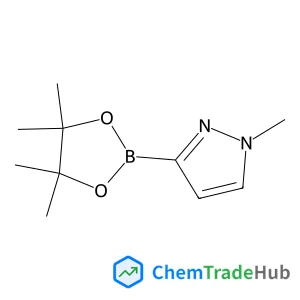
1-Methyl-3-(4,4,5,5-tetramethyl-1,3,2-dioxaborolan-2-yl)-1H-pyrazole
CAS Number:
1020174-04-2
Molecular Formula:
C10H17BN2O2
Wei Xiong, Lingmei Yuan, Jinyang Huang, Bin Pan, Ling Guo, Guowen Qian
Many traditional Chinese medicine monomers, such as naringin (NG), can regulate the local immune microenvironment to benefit osteogenesis. However, the rapid release of NG from scaffolds severely influences the osteogenesis-promoting effect. Herein, NG was loaded into mesoporous bioglass (MBG) to achieve sustained release through physical adsorption and the barrier role of mesoporous channels, then MBG loaded with NG was added to poly(L-lactic acid) (PLLA) to fabricate composite scaffolds by selective laser sintering (SLS) technology. The results showed that the NG-MBG/PLLA scaffolds could continuously and slowly release NG for 14 days compared with NG/PLLA scaffolds, and the cumulative release amount for the NG-MBG/PLLA scaffolds was 44.26%. In addition, the NG-MBG/PLLA scaffolds can promote the proliferation and osteogenesis differentiation of mouse bone marrow mesenchymal stem cells (mBMSCs). Meanwhile, the composite scaffolds decreased the reactive oxygen species (ROS) level of RAW264.7 under the stimulation of lipopolysaccharide (LPS) and significantly suppressed interleukin-6 (IL-6) and enhanced arginase-1 (Arg-1) protein expressions. Moreover, calcium nodule and alkaline phosphatase production of mBMSCs in a macrophage-conditioned medium for the NG-MBG/PLLA group also evidently increased compared with the PLLA and MBG/PLLA groups. These NG sustained-release composite scaffolds with osteo-immunomodulation function have great application prospects in the clinic.
Jonathan Sjögren, Fredrik Olsson, Alain Beck
DOI: 10.1039/C6AN00071A
Rini Majumder, Yeasmin Sarkar, Suresh K. Jewrajka, Ambarish Ray, Partha Pratim Parui
DOI: 10.1039/C6AN00582A
Manman Lin, Bin Xu, Huilu Yao, Aiguo Shen, Jiming Hu
DOI: 10.1039/C5AN02315G
Wen Chen, Mei Yang, Na Luo, Fenglin Wang, Ru-Qin Yu, Jian-Hui Jiang
DOI: 10.1039/C9AN01778J
Hiroki Segawa, Takao Fukuoka, Tamitake Itoh, Yuichi Imai, Yuko T. Iwata, Tadashi Yamamuro, Kenji Kuwayama, Kenji Tsujikawa, Tatsuyuki Kanamori, Hiroyuki Inoue
DOI: 10.1039/C9AN01512D
Yuan Yu, Jie Shen, Jinfang Zhi
DOI: 10.1039/C5AN02478A
Han Zhao, Ying Yan, Mingjian Chen, Tingting Hu, Kefeng Wu, Haisheng Liu, Changbei Ma
DOI: 10.1039/C9AN01659G
Bartolomeo Della Ventura, Martina Banchelli, Riccardo Funari, Anna Illiano, Marella De Angelis, Paola Taroni, Angela Amoresano, Paolo Matteini, Raffaele Velotta
DOI: 10.1039/C9AN00443B
Wen Yang, Jianniao Tian, Lijun Wang, Shui Fu, Hongyun Huang, Yanchun Zhao, Shulin Zhao
DOI: 10.1039/C6AN00184J
When handling 4-(2-Furylmethyl)thiomorpholine 1,1-dioxide (CAS: 79206-94-3), it ...
When handling 4-Chloro-N-[2-(4-morpholinyl)ethyl]benzamide (CAS: 71320-77-9), it...
Waste containing this compound (CAS: 62921-74-8) should be handled according to ...
Waste containing (S)-Methyl 2-amino-3-cyclohexylpropanoate should be collected i...
This compound can be synthesized using a multi-step process involving the conjug...
There are several alternatives to (2E)-3-(3,4-Dichlorophenyl)acrylic acid in syn...
Ethyl 6-(2-nitrophenyl)imidazo[2,1-b][1,3]thiazole-3-carboxylate (CAS: 925437-84...
Waste containing 2-(1,3-Thiazol-2-yl)ethanamine (CAS: 18453-07-1) should be coll...
Methyl 5-iodo-2-methylbenzoate can be synthesized through the iodination of meth...
5-Chloro[1,2,4]triazolo[1,5-a]pyridine is commonly synthesized via the condensat...
Journal of Materials Chemistry A, B & C cover high quality studies across all fields of materials chemistry. The journals focus on those theoretical or experimental studies that report new understanding, applications, properties and synthesis of materials. The journals have a strong history of publishing quality reports of interest to interdisciplinary communities and providing an efficient and rigorous service through peer review and publication. The journals are led by an international team of Editors-in-Chief and Associate Editors who are all active researchers in their fields. Journal of Materials Chemistry A, B & C are separated by the intended application of the material studied. Broadly, applications in energy and sustainability are of interest to Journal of Materials Chemistry A, applications in biology and medicine are of interest to Journal of Materials Chemistry B, and applications in optical, magnetic and electronic devices are of interest to Journal of Materials Chemistry C. More than one Journal of Materials Chemistry journal may be suitable for certain fields and researchers are encouraged to submit their paper to the journal that they feel best fits for their particular article. Example topic areas within the scope of Journal of Materials Chemistry B are listed below. This list is neither exhaustive nor exclusive. Antifouling coatings Biocompatible materials Bioelectronics Bioimaging Biomimetics Biomineralisation Bionics Biosensors Diagnostics Drug delivery Gene delivery Immunobiology Nanomedicine Regenerative medicine & Tissue engineering Scaffolds Soft robotics Stem cells Therapeutic devices image block All articles published in Journal of Materials Chemistry B from 2019 onwards will be indexed in MEDLINE®. Articles that primarily focus on providing insight into the underlying science and performance of biomaterials within a biological environment are more suited to our companion journal, Biomaterials Science.
![5-Acetyl-2,3-dihydrobenzo[b]furan structure](https://static.chemtradehub.com/structs/908/90843-31-5-eea4.webp "5-Acetyl-2,3-dihydrobenzo[b]furan structure")