












Free-standing multi-hierarchical MoC-based catalyst for pH-universal hydrogen evolution reaction at ultra-high current density
Literature Information
Publication Date
2023-12-19
DOI
10.1039/D3TA06588J
Impact Factor
12.732
Authors
Nan Lu, Yue Liang, Cai-Yun Ren, Xue Liang, Yong-Chao Zhang, Xiao-Dong Zhu, Jian Gao
View Original
Abstract
An efficient and durable free-standing electrocatalyst is the key to achieving pH-universal hydrogen evolution reaction under ultra-high current density. Herein, the free-standing three-stage concentric shaft structure of MoC@C shell-supported MoC nanoparticles anchored Ni@N-doped carbon nanotube vertical nanoarrays (P-MoC/Ni@NCNTs-MoC@C) are fabricated through a simple spraying and pyrolysis process. The formation of a MoC@C shell facilitates Ni nanoparticles' anchoring, resulting in Ni@N-doped carbon nanotube vertical arrays (Ni@NCNTs). Additionally, the Ni@NCNTs effectively capture the escaped molybdenum vapor, leading to the generation of MoC nanoparticles. The unique structure provides increased catalytic active sites and larger specific surface area, improving charge transfer and the release of bubbles. As such, the free-standing P-MoC/Ni@NCNTs-MoC@C catalyst exhibits lower overpotentials compared to previously reported articles, with values of 238.1 mV in 1.0 M KOH (1800 mA cm−2), 250.2 mV in 0.5 M H2SO4 (1800 mA cm−2), and 567.9 mV in 1.0 M PBS (1000 mA cm−2). Additionally, it represents low Tafel slopes of 71.1 mV dec−1, 67.4 mV dec−1, and 130.3 mV dec−1 in alkaline, acidic, and neutral condition, respectively. The current work may provide insight into the rational design of free-standing catalysts for practical applications.
Related Literature
First example of chiral N-heterocyclic carbenes as catalysts for kinetic resolution
Yumiko Suzuki, Kaori Yamauchi, Kazuyuki Muramatsu, Masayuki Sato
2004-10-11
Communication
DOI: 10.1039/B411855C
Indium sulfide nanorods from single-source precursor
Mohammmad Afzaal, Mohammad A. Malik, Paul O'Brien
2004-01-08
Communication
DOI: 10.1039/B313116E
Oxidative coupling of epigallocatechin gallate amplifies antioxidant activity and inhibits xanthine oxidase activity
Hiroshi Uyama, Shiro Kobayashi
2003-12-19
Communication
DOI: 10.1039/B312311A
In flagrante metallo-cyclophane self-assembly?
Peter J. Cragg, Fenton R. Heirtzler, Mark J. Howard, Ivan Prokes, Thomas Weyhermüller
2004-01-07
Communication
DOI: 10.1039/B310558J
11-Aminoundecanoic acid: a versatile unit for the generation of low molecular weight gelators for water and organic solvents
Anthony D'Aléo, Jean-Luc Pozzo, Frédéric Fages, Marc Schmutz, Gudrun Mieden-Gundert, Fritz Vögtle, Vesna Caplar, Mladen Zinic
2003-11-18
Communication
DOI: 10.1039/B307846A
Artificial muscle: movement and position control
T. F. Otero, M. T. Cortes
2003-12-16
Communication
DOI: 10.1039/B313132G
Intramolecular charge separation in a hydrogen bonded tyrosine–ruthenium(ii)–naphthalene diimide triad
Olof Johansson, Henriette Wolpher, Magnus Borgström, Leif Hammarström, Jonas Bergquist, Licheng Sun, Björn Åkermark
2003-11-19
Communication
DOI: 10.1039/B308101J
Low temperature 1,1,1-trichloroethane dehydrochlorination over Pt catalysts: from model surfaces to the real world
Adam F. Lee, Paul A. Carr, Karen Wilson
2004-10-22
Communication
DOI: 10.1039/B408745C
Spherical carbon capsules with hollow macroporous core and mesoporous shell structures as a highly efficient catalyst support in the direct methanol fuel cell
Geun Seok Chai, Suk Bon Yoon, Jung Ho Kim, Jong-Sung Yu
2004-10-11
Communication
DOI: 10.1039/B412747C
Proton transfer and N(+)–H⋯S(−) hydrogen bonds in the crystal structure of 4-aminothiophenol
Ram K. R. Jetti, Roland Boese, Tejender S. Thakur, Venu R. Vangala, Gautam R. Desiraju
2004-10-01
Communication
DOI: 10.1039/B407319C
You might also like
Compound Q&A
What precautions should be taken when handling 2-Chloro-1,2-bis(4-methylphenyl)ethanone (CAS: 71193-32-3)?
When handling 2-Chloro-1,2-bis(4-methylphenyl)ethanone (CAS: 71193-32-3), it is ...
71193-32-32-Chloro-1,2-bis(4-m...
Compound Q&A
What industries use 4-Ethoxy-3-(5-methyl-4-oxo-7-propyl-1,4-dihydroimidazo[5,1-f][1,2,4]triazin-2-yl)benzenesulfonyl chloride (CAS: 224789-26-8)?
4-Ethoxy-3-(5-methyl-4-oxo-7-propyl-1,4-dihydroimidazo[5,1-f][1,2,4]triazin-2-yl...
224789-26-84-Ethoxy-3-(5-methyl...
Compound Q&A
How should Methyl 3-Oxo-4-Androsten-17-Carboxylate (CAS: 2681-55-2) be stored?
Methyl 3-Oxo-4-Androsten-17-Carboxylate (CAS: 2681-55-2) should be stored in a c...
2681-55-2Methyl 3-Oxo-4-Andro...
Compound Q&A
What are the main uses of (R)-3-Amino-4-(3-hexylphenylamino)-4-oxobutylphosphonic acid (CAS: 909725-61-7)?
(R)-3-Amino-4-(3-hexylphenylamino)-4-oxobutylphosphonic acid is primarily used i...
909725-61-7(R)-3-Amino-4-(3-hex...
Compound Q&A
What regulatory guidelines apply to 2-Methyl-2-propanyl 3-amino-3-carbamoyl-1-azetidinecarboxylate (CAS: 1254120-14-3)?
2-Methyl-2-propanyl 3-amino-3-carbamoyl-1-azetidinecarboxylate (CAS: 1254120-14-...
1254120-14-32-Methyl-2-propanyl ...
Compound Q&A
Are there alternatives to (E)-4-(tert-Butoxy)-4-oxobut-2-enoic acid (CAS: 135355-96-3) in synthesis?
There are alternative reagents that can be used in synthesis instead of (E)-4-(t...
135355-96-3(E)-4-(tert-Butoxy)-...
Compound Q&A
What are the physical and chemical properties of [2-(3-Chlorophenyl)-1,3-thiazol-4-yl]methanol (CAS: 121202-20-8)?
[2-(3-Chlorophenyl)-1,3-thiazol-4-yl]methanol (CAS: 121202-20-8) is a crystallin...
121202-20-8[2-(3-Chlorophenyl)-...
Compound Q&A
What is the market or research trend for Methyl (2S)-[(4S)-2,2-dimethyl-1,3-dioxolan-4-yl]{[(4-methylphenyl)sulfonyl]oxy}acetate (CAS: 166249-17-8)?
The market and research trends for Methyl (2S)-[(4S)-2,2-dimethyl-1,3-dioxolan-4...
166249-17-8Methyl (2S)-[(4S)-2,...
Compound Q&A
What is the market or research trend for 1-Bromo-2-isocyanatoethane (CAS: 42865-19-0)?
The market for 1-Bromo-2-isocyanatoethane (CAS: 42865-19-0) is driven by its use...
42865-19-01-Bromo-2-isocyanato...
Compound Q&A
What are the main uses of 4-Nitro-D-phenylalanine hydrochloride (CAS: 147065-06-3)?
4-Nitro-D-phenylalanine hydrochloride (CAS: 147065-06-3) is primarily used in re...
147065-06-34-Nitro-D-phenylalan...
Source Journal
Journal of Materials Chemistry A

CiteScore:
19.5
Self-citation Rate:
4.7%
Articles per Year:
2211
Journal of Materials Chemistry A, B & C cover high quality studies across all fields of materials chemistry. The journals focus on those theoretical or experimental studies that report new understanding, applications, properties and synthesis of materials. The journals have a strong history of publishing quality reports of interest to interdisciplinary communities and providing an efficient and rigorous service through peer review and publication. The journals are led by an international team of Editors-in-Chief and Associate Editors who are all active researchers in their fields. Journal of Materials Chemistry A, B & C are separated by the intended application of the material studied. Broadly, applications in energy and sustainability are of interest to Journal of Materials Chemistry A, applications in biology and medicine are of interest to Journal of Materials Chemistry B, and applications in optical, magnetic and electronic devices are of interest to Journal of Materials Chemistry C. More than one Journal of Materials Chemistry journal may be suitable for certain fields and researchers are encouraged to submit their paper to the journal that they feel best fits for their particular article. Example topic areas within the scope of Journal of Materials Chemistry A are listed below. This list is neither exhaustive nor exclusive. Artificial photosynthesis Batteries Carbon dioxide conversion Catalysis Fuel cells Gas capture/separation/storage Green/sustainable materials Hydrogen generation Hydrogen storage Photocatalysis Photovoltaics Self-cleaning materials Self-healing materials Sensors Supercapacitors Thermoelectrics Water splitting Water treatment
Recommended Compounds
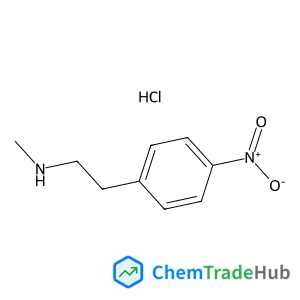
N-Methyl-2-(4-nitrophenyl)ethanamine hydrochloride (1:1)
CAS Number:
166943-39-1
Molecular Formula:
C9H13ClN2O2
![2-Hydroxy-4-[({[(4-methylphenyl)sulfonyl]oxy}acetyl)amino]benzoic acid structure](https://static.chemtradehub.com/structs/501/501919-59-1-579f.webp "2-Hydroxy-4-[({[(4-methylphenyl)sulfonyl]oxy}acetyl)amino]benzoic acid structure")
2-Hydroxy-4-[({[(4-methylphenyl)sulfonyl]oxy}acetyl)amino]benzoic acid
CAS Number:
501919-59-1
Molecular Formula:
C16H15NO7S
Recommended Suppliers




Disclaimer
This page provides academic journal information for reference and research purposes only. We are not affiliated with any journal publishers and do not handle publication submissions. For publication-related inquiries, please contact the respective journal publishers directly.
If you notice any inaccuracies in the information displayed, please contact us at support@chemtradehub.com. We will promptly review and address your concerns.