












![4-Nitrophenyl N-{[(2-methyl-2-propanyl)oxy]carbonyl}-L-isoleucinate structure](https://static.chemtradehub.com/structs/169/16948-38-2-c88f.webp "4-Nitrophenyl N-{[(2-methyl-2-propanyl)oxy]carbonyl}-L-isoleucinate structure")
4-Nitrophenyl N-{[(2-methyl-2-propanyl)oxy]carbonyl}-L-isoleucinate
CAS Number:
16948-38-2
Molecular Formula:
C17H24N2O6
Christian Mark Pelicano, Jiaxin Li, María Cabrero-Antonino, Ingrid F. Silva, Lu Peng, Nadezda V. Tarakina, Sergio Navalón, Hermenegildo García, Markus Antonietti
We present the rational design of carbon/potassium poly(heptazine imide) (KPHI) heterostructures via one-step salt-melt assisted condensation for efficient photocatalysis. Hybridizing KPHI with an adenine-derived carbonaceous material (Ad-carbon) displayed an outstanding photocatalytic H2 evolution activity (738 μmol h−1 gcat−1; with 3 wt% Pt as the cocatalyst) and photocatalytic H2O2 production (3.94 mmol h−1 gcat−1). We establish that the Ad-carbon simultaneously operates as an electron acceptor and a photosensitizer based on structural, optical and photo(electro)chemical characterization. Building an intimate heterojunction between the Ad-carbon and KPHI induced spatial charge separation and prolonged the carrier lifetime. From electrocatalysis, we confirmed that coupling Ad-carbon with KPHI enhanced the surface reaction kinetics towards H2 evolution and O2 reduction reactions. Moreover, visual evidence of superior charge transport in the hybrid photocatalyst is revealed through the photodeposition of smaller Pt nanoparticles (∼7 nm) with uniform distribution on the carbon regions, which also accounts for the increased catalytic activity.
Pauline Sautrot-Ba, Vlasta Brezová, Jean-Pierre Malval, Annalisa Chiappone, Louise Breloy, Samir Abbad-Andaloussi, Davy-Louis Versace
DOI: 10.1039/D1PY00126D
Chen-Lu He, Zeyu Feng, Yan Li, Manman Zhou, Liyang Zhao, Sizhen Shan, Mengqiao Wang, Xin Chen, Xi-Sheng Wang, Gang Zou
DOI: 10.1039/D1PY00082A
Mathieu A. Ayer, Cheyenne H. Liu, Christoph Weder
DOI: 10.1039/D1PY00420D
Georges M. Pavlov, Anna A. Gosteva, Olga V. Okatova, Olga A. Dommes, Irina I. Gavrilova
DOI: 10.1039/D0PY01725F
Lishan Li, Yiwen Li, Shuyuan Wang, Liandong Ye, Wei Zhang, Nianchen Zhou, Zhengbiao Zhang, Xiulin Zhu
DOI: 10.1039/D1PY00099C
Anna P. Constantinou, Georgios Patias, Birsen Somuncuoğlu, Toby Brock, Daniel W. Lester, David M. Haddleton, Theoni K. Georgiou
DOI: 10.1039/D1PY00444A
Randall A. Scanga, James F. Reuther
DOI: 10.1039/D0PY01558J
Maria Nerantzaki, Capucine Loth, Jean-François Lutz
DOI: 10.1039/D1PY00516B
Waste containing 2-Ethyl-4-Methyl-1H-Imidazole-5-Carbaldehyde (CAS: 88634-80-4) ...
Triethoxy(octyl)silane (CAS: 1385031-14-0) is widely used in the pharmaceuticals...
Several alternatives to 3-iodo-7-nitro-1H-indazole (CAS: 864724-64-1) exist in t...
Yes, there are alternatives to Benzene, bis[(trimethoxysilyl)ethyl] (CAS: 266317...
Isothiazole-3-carbonitrile (CAS: 1452-17-1) is generally considered safe when us...
(3-Chlorophenyl)methanol (CAS: 873-63-2) is considered low to moderately toxic. ...
(2S,3S)-2-Hydroxy-3-({[(2-methyl-2-propanyl)oxy]carbonyl}amino)-3-(2-naphthyl)pr...
Proper handling of methyl 2-(bromomethyl)-5-methoxybenzoate requires the use of ...
6,8-Dibromoimidazo[1,2-a]pyridine-2-carboxylic acid (CAS: 904805-36-3) is an aro...
3-Amino-5-bromo-2-pyridinecarbonitrile is considered safe when handled under pro...
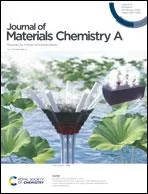
Journal of Materials Chemistry A, B & C cover high quality studies across all fields of materials chemistry. The journals focus on those theoretical or experimental studies that report new understanding, applications, properties and synthesis of materials. The journals have a strong history of publishing quality reports of interest to interdisciplinary communities and providing an efficient and rigorous service through peer review and publication. The journals are led by an international team of Editors-in-Chief and Associate Editors who are all active researchers in their fields. Journal of Materials Chemistry A, B & C are separated by the intended application of the material studied. Broadly, applications in energy and sustainability are of interest to Journal of Materials Chemistry A, applications in biology and medicine are of interest to Journal of Materials Chemistry B, and applications in optical, magnetic and electronic devices are of interest to Journal of Materials Chemistry C. More than one Journal of Materials Chemistry journal may be suitable for certain fields and researchers are encouraged to submit their paper to the journal that they feel best fits for their particular article. Example topic areas within the scope of Journal of Materials Chemistry A are listed below. This list is neither exhaustive nor exclusive. Artificial photosynthesis Batteries Carbon dioxide conversion Catalysis Fuel cells Gas capture/separation/storage Green/sustainable materials Hydrogen generation Hydrogen storage Photocatalysis Photovoltaics Self-cleaning materials Self-healing materials Sensors Supercapacitors Thermoelectrics Water splitting Water treatment
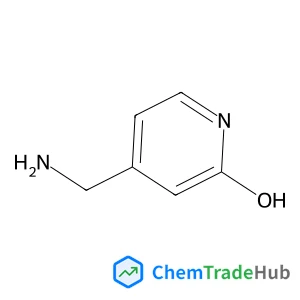
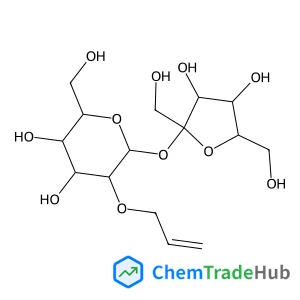
methanone structure](https://static.chemtradehub.com/structs/814/81449-01-6-786d.webp "[4-(Hydroxymethyl)phenyl](phenyl)methanone structure")
![Methyl 8-azabicyclo[3.2.1]octane-3-carboxylate hydrochloride structure](https://static.chemtradehub.com/structs/179/179022-43-6-77f5.webp "Methyl 8-azabicyclo[3.2.1]octane-3-carboxylate hydrochloride structure")








